






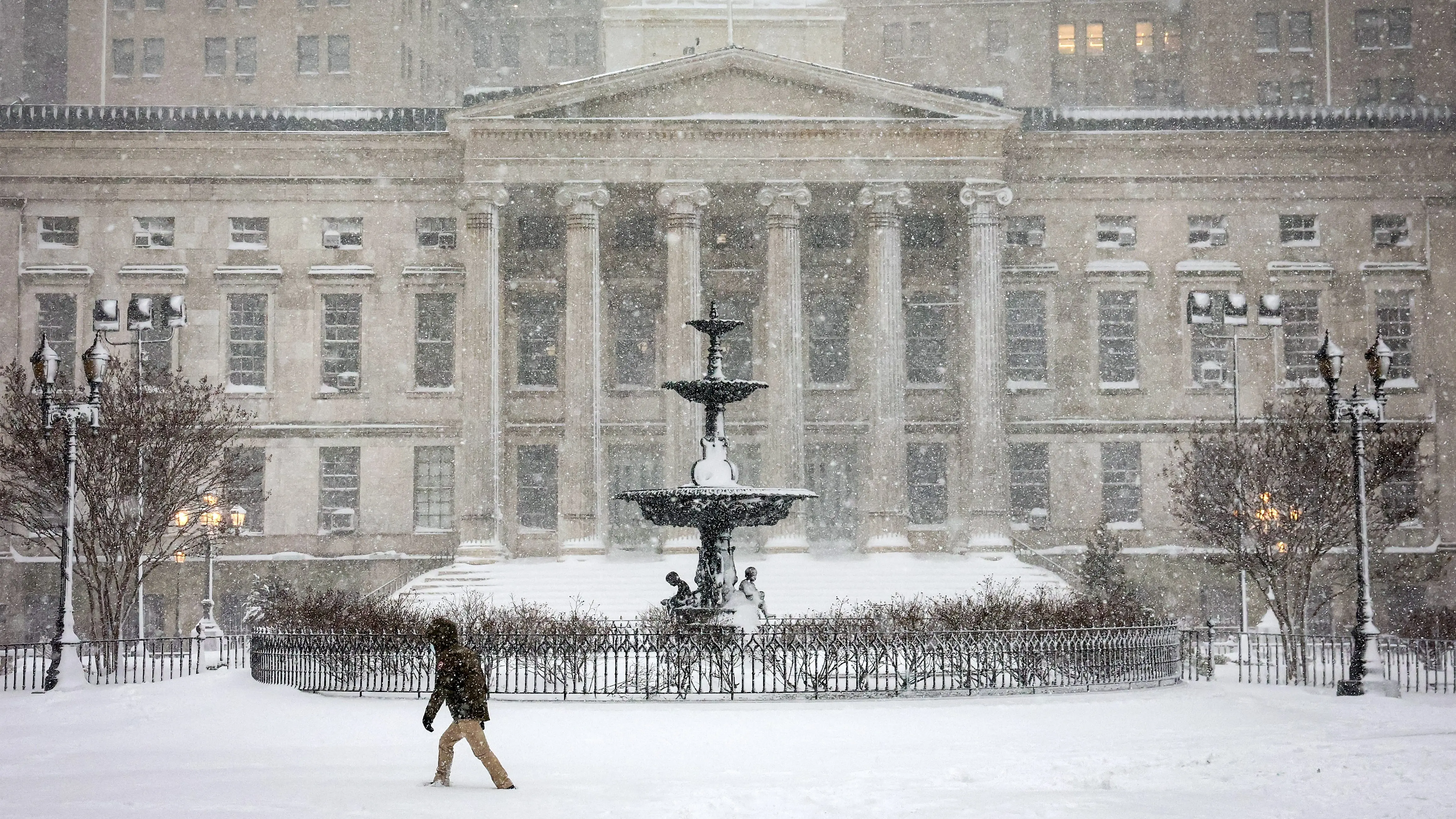
A man makes his way through the snow outside Brooklyn Borough Hall during a powerful winter storm that forced school closures and pushed offices and transit systems onto emergency schedules, in Bay Ridge, Brooklyn, New York City, U.S., February 23, 2026. REUTERS/Brendan McDermid
A historic winter storm is battering more than 70 million Americans along the East Coast, dumping feet of snow, knocking out power, grounding flights and grinding mass transit to a halt.
Forecasters warn the system — dubbed Winter Storm Hernando — could deliver up to 24 inches of snow in parts of the Northeast before tapering off. Blizzard warnings remain in effect across much of the region.
By mid-morning Monday, more than 577,000 customers from Boston to Washington, D.C. were without power, according to outage tracking data — and the number continued climbing as heavy snow and fierce winds persisted.
NYC Under Travel Ban as Mamdani Urges Residents to Stay Indoors
In New York City, Mayor Zohran Mamdani declared a citywide travel ban for non-essential vehicles through noon Monday, warning residents to remain indoors as conditions deteriorated.
The mayor encouraged New Yorkers to stay home but stopped short of confirming whether homeless individuals would be forcibly removed from the streets for their safety — a sensitive issue after more than a dozen people reportedly died in recent cold snaps.
The city opened dozens of warming centers and deployed buses to assist residents dealing with heating outages. Locations are available through the city’s 311 system.
Transit in Chaos: Subways Delayed, Railroads Suspended
The storm wreaked havoc across the region’s transportation network.
-
The Long Island Rail Road and NJ Transit suspended service.
-
Metro-North operated on a reduced, holiday-style schedule.
-
Several subway lines were suspended or hit with “severe” delays.
The MTA halted all C train service and the Staten Island Railway. At least eight additional subway lines reported major disruptions, with only a handful operating without active alerts by late morning.
Air travel fared no better. Thousands of flights in and out of the New York metro area were canceled as airlines scrambled to respond to worsening conditions.
Where Can I Get Food?
With roads restricted and transit limited, many New Yorkers are wondering where to find essentials.
Both Gristedes and D’Agostino confirmed they remain open during the storm.
Stores are operating to provide groceries and household essentials as the blizzard continues. Residents are encouraged to shop safely, bundle up, and check local store hours before heading out.
Brooklyn Buried: Snow Totals Approach Record Territory
Snowfall totals across New York City surged into double digits overnight — and in some neighborhoods, much higher.
According to the National Weather Service:
-
Crown Heights, Brooklyn: 18 inches
-
Williamsburg: 17.4 inches
-
Sheepshead Bay: 17 inches
-
Mott Haven, Bronx: 17.9 inches
-
Washington Heights: 17.1 inches
-
Central Park: 15.1 inches
If totals in Central Park exceed 20.9 inches, the storm would rank among the top five single-storm snowfalls in recorded city history. The all-time record stands at 27.5 inches, set in 2016.
Outside the five boroughs, Suffolk County saw an eye-popping 23.5 inches in Quogue, while Westchester County approached 20 inches in some areas.
Meteorologists expect an additional 4 to 8 inches before the storm moves out.
Wind Gusts Top 75 MPH, Plows Overturn
While snowfall totals in Boston remained lower — just over five inches — Massachusetts recorded some of the strongest winds in the region. Gusts hit 77 miles per hour in Wellfleet.
Long Island wasn’t far behind, with a 74 mph gust recorded in Stony Brook.
The fierce winds led to whiteout conditions and dangerous roadways. On Long Island, a state Department of Transportation snowplow truck overturned while spreading salt on Sunrise Highway.
New Jersey Hit Hard: 100,000+ Without Power
Across the Hudson, New Jersey reported more than 100,000 outages at the height of the storm.
Ocean County led the state with 34,000 outages, followed by Monmouth, Cape May and Atlantic counties.
Governor Mikie Sherrill declared a state of emergency Sunday afternoon, urging residents to stay off the roads as snowfall projections climbed toward two feet in some coastal areas.
Digging Out — But Not Done Yet
By dawn Monday, New Yorkers were already shoveling sidewalks, plowing driveways and clearing transit hubs. Parks workers and sanitation crews fanned out across the city, battling heavy, wind-driven snow.
Despite the progress, officials warn the storm isn’t finished. Blizzard conditions remain in effect, and dangerous travel is expected to continue through the evening.
For millions across the Northeast, the message is simple: stay home, stay warm — and prepare for more snow.