






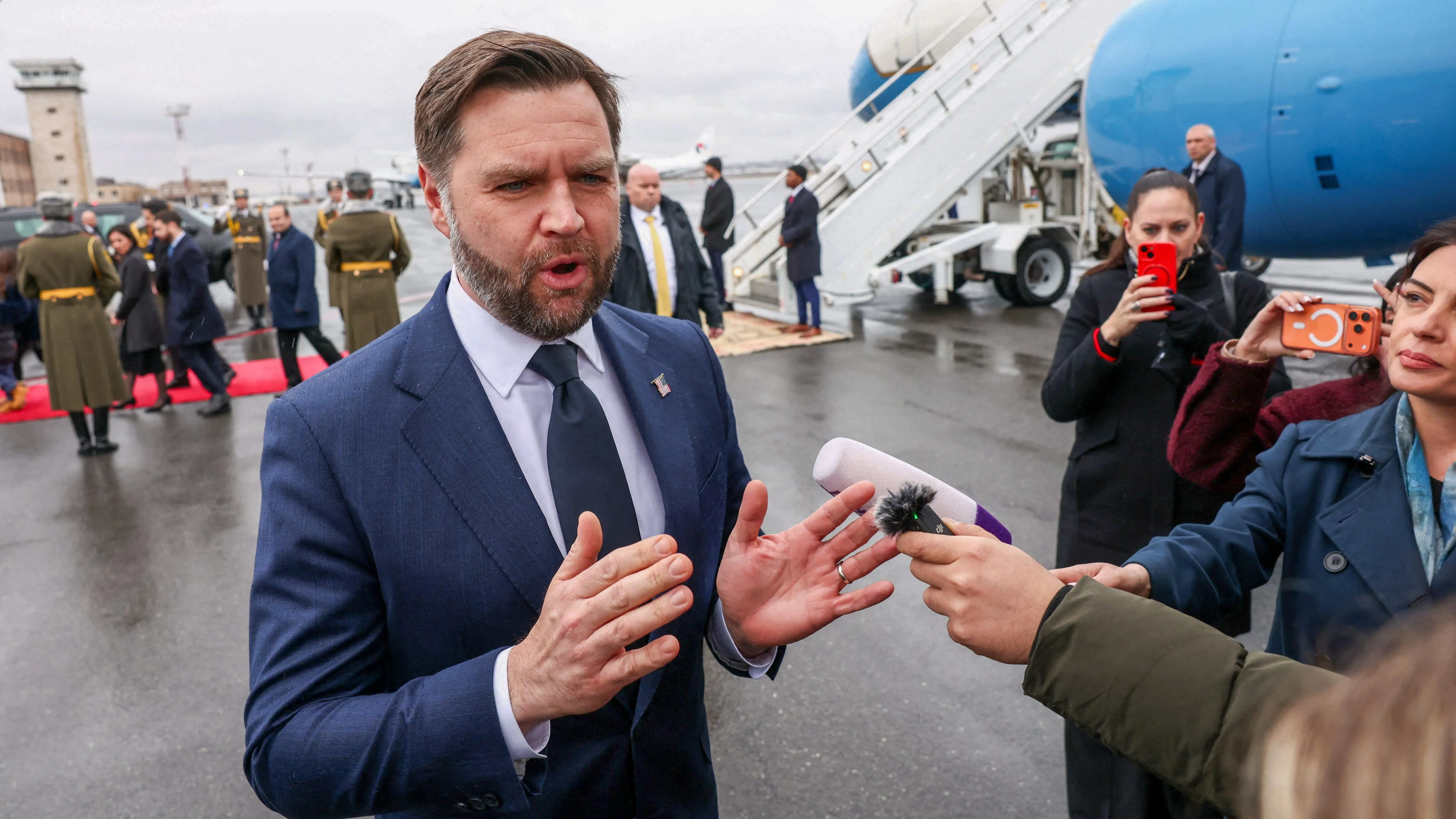
U.S. Vice President JD Vance speaks to the media before boarding Air Force Two upon departure for Azerbaijan, at Zvartnots International Airport in Yerevan, Armenia, February 10, 2026. REUTERS/Kevin Lamarque/Pool
(Washington, DC) – Vice President JD Vance’s planned trip to Pakistan for peace negotiations has been put on hold, as uncertainty grows around Iran’s participation in the talks.
According to reports, Iran has not agreed to key U.S. conditions tied to the negotiations and has yet to confirm whether it will attend at all. The lack of commitment has cast doubt over the viability of the entire diplomatic effort.
The proposed talks were expected to focus on easing regional tensions and opening a path toward broader stability, with Pakistan positioned as a potential host for discussions involving U.S. officials and regional players.
However, without Iran at the table, officials face a significant obstacle. Iran’s role is seen as central to any meaningful progress, particularly given its influence across multiple ongoing conflicts and strategic interests in the region.
The delay of Vance’s trip signals a pause rather than a full collapse of the initiative, but it underscores the challenges facing U.S. diplomacy in the current geopolitical climate.
For now, it remains unclear whether negotiations will be rescheduled—or if shifting positions from key players will derail the effort altogether.