





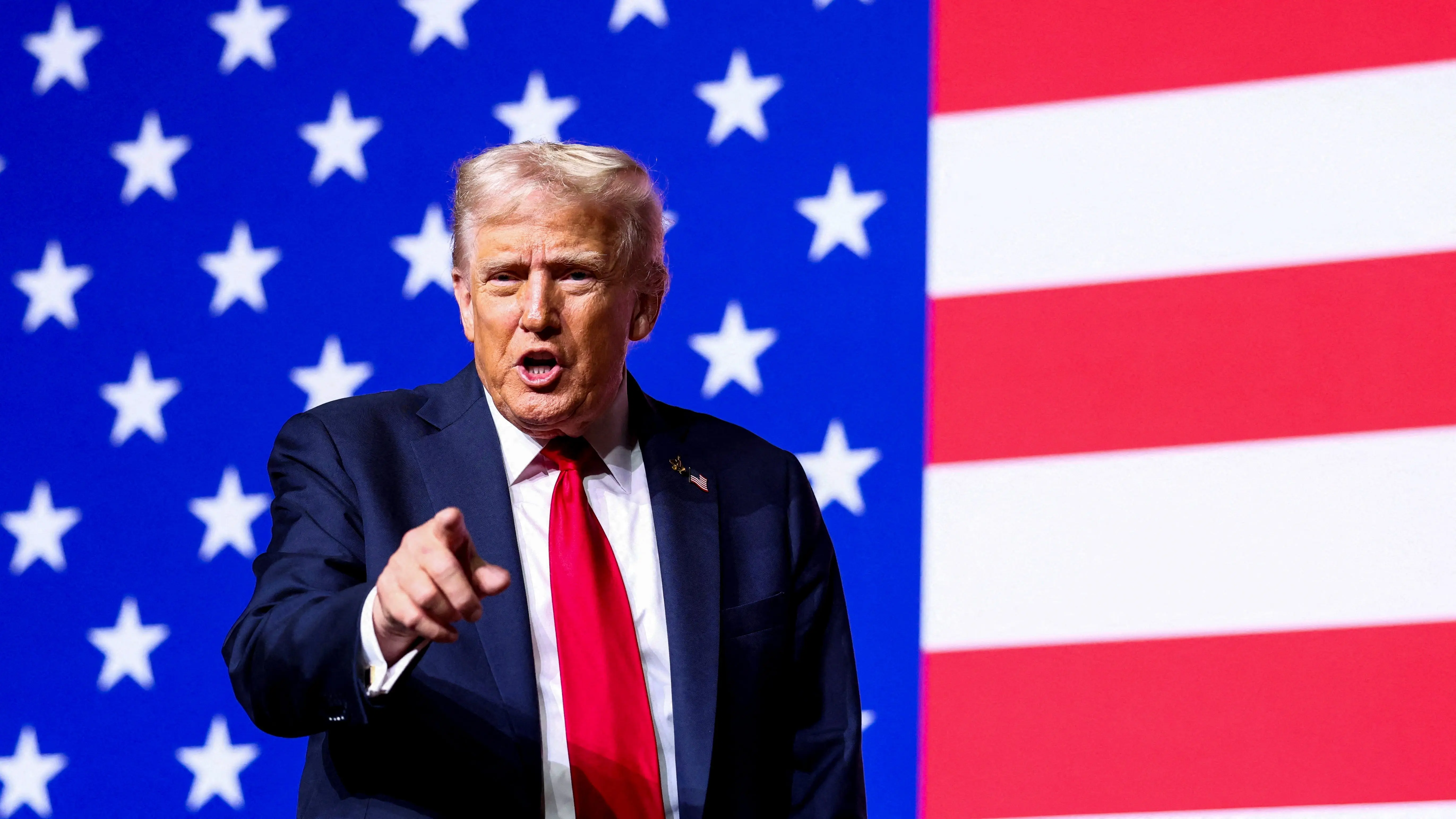
U.S. President Donald Trump gestures after speaking during a meeting of senior military leaders convened by U.S. Defense Secretary Pete Hegseth, at Marine Corps Base Quantico in Quantico, Virginia, U.S., September 30, 2025. REUTERS/Kevin Lamarque TPX IMAGES OF THE DAY
(Washington, DC) – The U.S. Treasury Department is preparing a major change to American money, announcing plans to include President Donald Trump’s signature on newly printed U.S. paper currency.
The move would mark the first time a sitting president’s signature appears on U.S. banknotes—breaking from a long-standing tradition in which only the Treasury Secretary and U.S. Treasurer sign the nation’s currency.
Officials say the change is part of a broader effort to commemorate America’s 250th anniversary, tying the milestone celebration directly to the money circulating across the country. Treasury leadership indicated the president’s signature would appear alongside existing signatures, rather than replacing them entirely.
The proposal is the latest in a series of efforts to link Trump’s name to national symbols ahead of the 2026 semiquincentennial. Plans are already underway for commemorative items tied to the anniversary, including a high-value gold coin bearing the president’s likeness.
Supporters of the move argue it reflects the significance of the 250-year milestone and serves as a lasting tribute embedded in everyday American life. Treasury officials have described the change as a symbolic way to recognize the country’s history and achievements.
Still, the decision is expected to spark debate, as U.S. currency design has traditionally followed institutional norms rather than highlighting sitting political leaders.
The Bureau of Engraving and Printing, which produces the nation’s paper money, would be responsible for rolling out the updated bills. A timeline for when the new currency will enter circulation has not yet been announced.
As the country approaches its 250th birthday, one of the most familiar symbols of American life—the dollar bill—could soon carry a historic addition.