





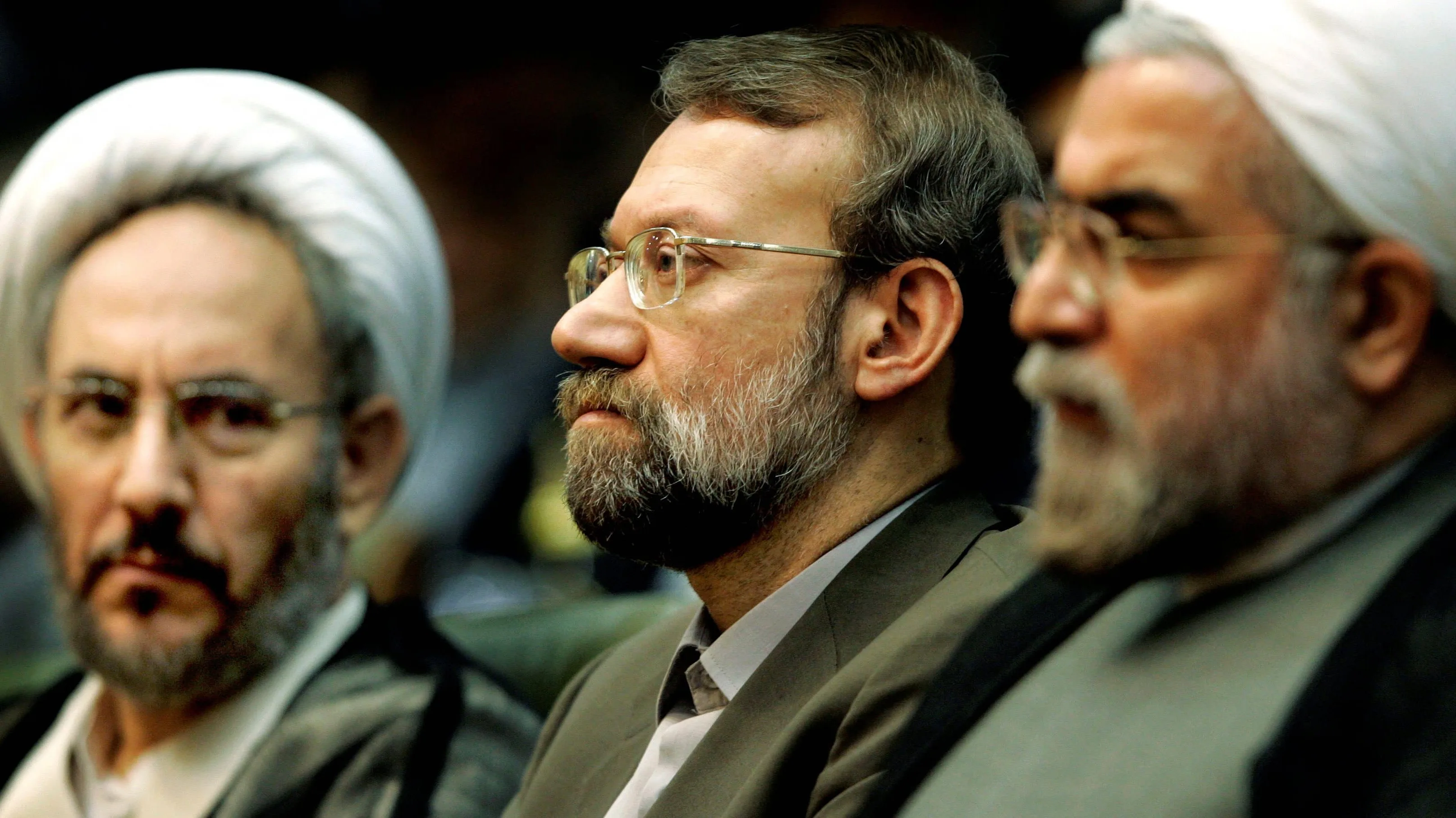
FILE PHOTO: Iran's former Intelligence Minister Ali Younesi (L), chief nuclear negotiator Ali Larijani and former chief nuclear negotiator Hassan Rouhani (R) attend a conference on Iran's Nuclear Policies and Prospects in Tehran April 25, 2006. REUTERS/Raheb Homavandi/File Photo
(New York, NY) – After three weeks of joint US-Israeli military operations, there are not many leaders left in the Islamic Republic. The fall of the so-called “Council of Experts” who make governing decisions for the regime continues, and the path forward for the country is uncertain as ever. President Trump and Israeli Prime Minister Benjamin Netanyahu both vow to keep up military strikes until Iran surrenders and is no longer considered a threat. Top leaders, including the Supreme Leader, have been killed so far.
During the first weekend of Operation Epic Fury, as it’s been dubbed by the Trump administration, Ayatollah Ali Khomeini was killed during strikes on his residence. Khomeini had been ruling over the country since 1989. After Khomeini’s passing, his second son Mojtaba was named as the new Supreme Leader. Mojtaba has not been seen in public since the strikes that killed his father, wife and son. American leaders, like War Secretary Pete Hegseth, believe Mojtaba is gravely injured or even possibly deceased.
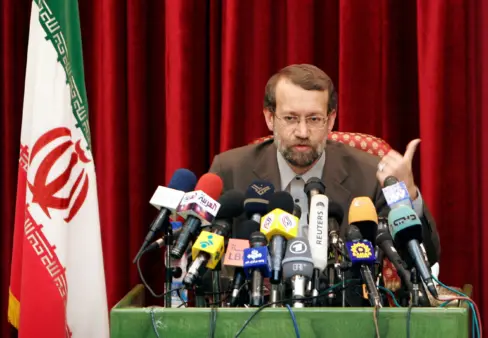
On Tuesday, Ali Larijani, head of the Supreme National Security Council of Iran, was killed by an airstrike. Meanwhile, the Islamic Revolutionary Guard Corps has been elevating hardline leaders as replacements, ramping up fears that more radical leaders will fill the vacuum left by their predecessors during the war with the US and Israel. As it stands, a three-man panel is technically leading the nation of over 92 million. Iranian President Masoud Pezeshkian; Ayatollah Alireza Aarafi, the head of Iran’s Guardian Council; and Justice Gholam-Hossein Mohseni-Ejei, the head of the courts are currently the heads of state making decisions in the wake of Khomeini’s death.