




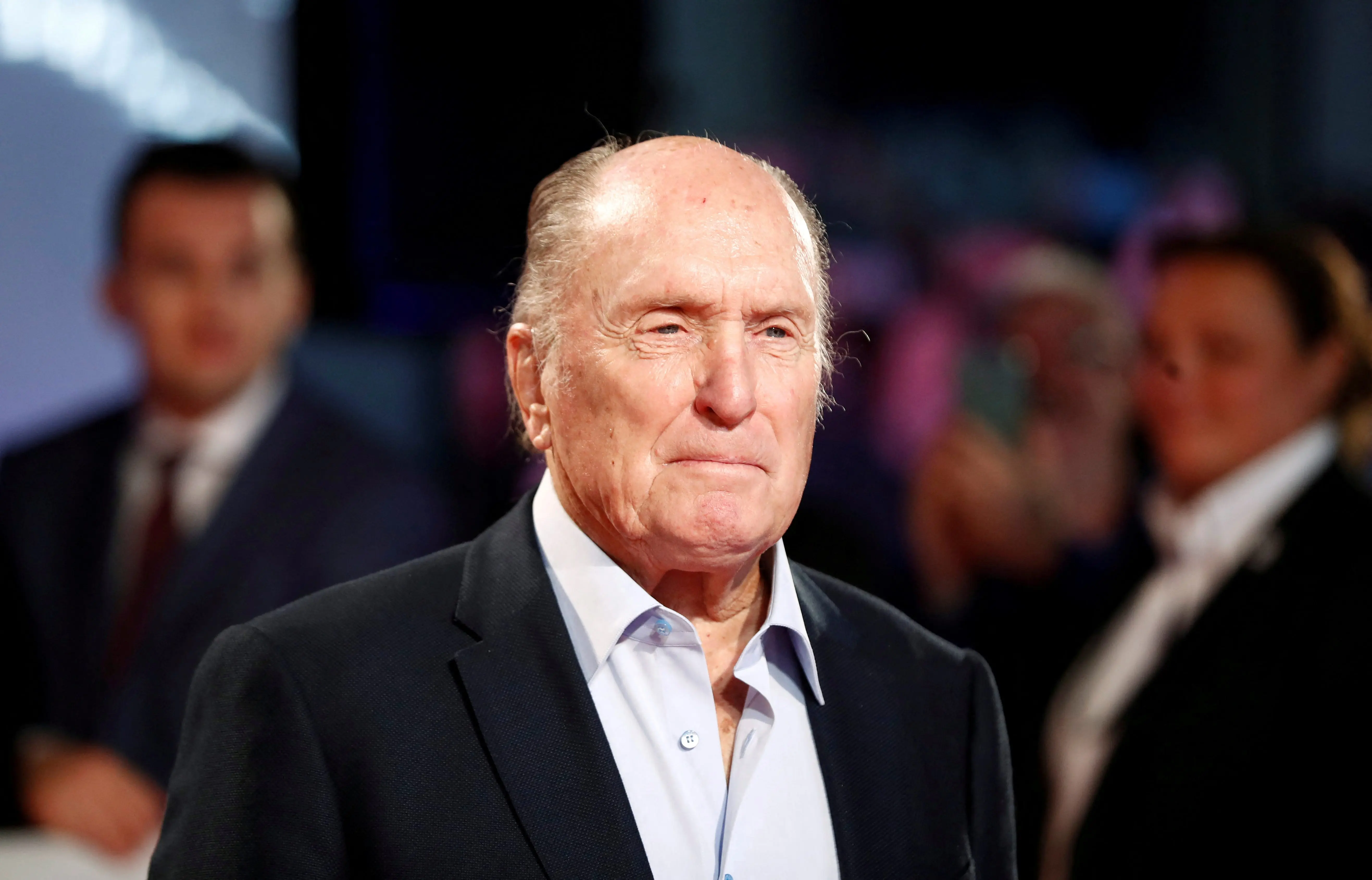
Actor Robert Duvall arrives for the world premiere of Widows at the Toronto International Film Festival (TIFF) in Toronto, Canada, Photo Credit-REUTERS/Mark Blinch/
Actor Robert Duvall arrives for the world premiere of Widows at the Toronto International Film Festival (TIFF) in Toronto, Canada, Photo Credit-REUTERS/Mark Blinch/
Los Angeles, CA- Robert Duvall, the Oscar-winning actor whose quiet intensity and “anti-method” acting on screen shaped some of the most legendary films of the last century, has died at the age of 95. His passing marks the end of a career that spanned more than seven decades and left a mark on modern American cinema. In addition to his Academy Award win and six other Oscar nominations, he earned a BAFTA Award, four Golden Globe Awards, two Primetime Emmy Awards and a Screen Actors Guild Award.
Born January 5, 1931, in San Diego, California, Duvall trained in the Neighborhood Playhouse School of the Theatre in New York before steadily building a reputation as a disciplined and deeply intuitive performer. His early film appearance as Boo Radley in To Kill a Mockingbird signaled the arrival of a talent capable of commanding attention with few words and subtle expression.
He became widely known for his portrayal of Tom Hagen in The Godfather and its sequel, embodying the calm, calculating consigliere at the heart of the Corleone family. In Apocalypse Now, he delivered one of cinema’s most quoted performances as Lt. Col. Bill Kilgore, blending swagger with unsettling intensity.
Duvall’s range extended well beyond supporting roles. He earned the Academy Award for Best Actor for his performance in Tender Mercies, playing a broken country singer seeking redemption. The role reflected the grounded realism that became his trademark.
Throughout his career, Duvall moved easily between Westerns, crime dramas, historical epics, and independent films. He also directed and produced, most notably The Apostle, demonstrating his commitment to character-driven storytelling.
Reserved off screen and exacting in his craft, Duvall was widely respected by peers as an “actor’s actor.” Early on he roomed with fellow actors, Dustin Hoffman and Gene Hackman, of whom he remained close to throughout his life. His body of work leaves behind not just memorable scenes, but a standard of authenticity that influenced generations of performers.