






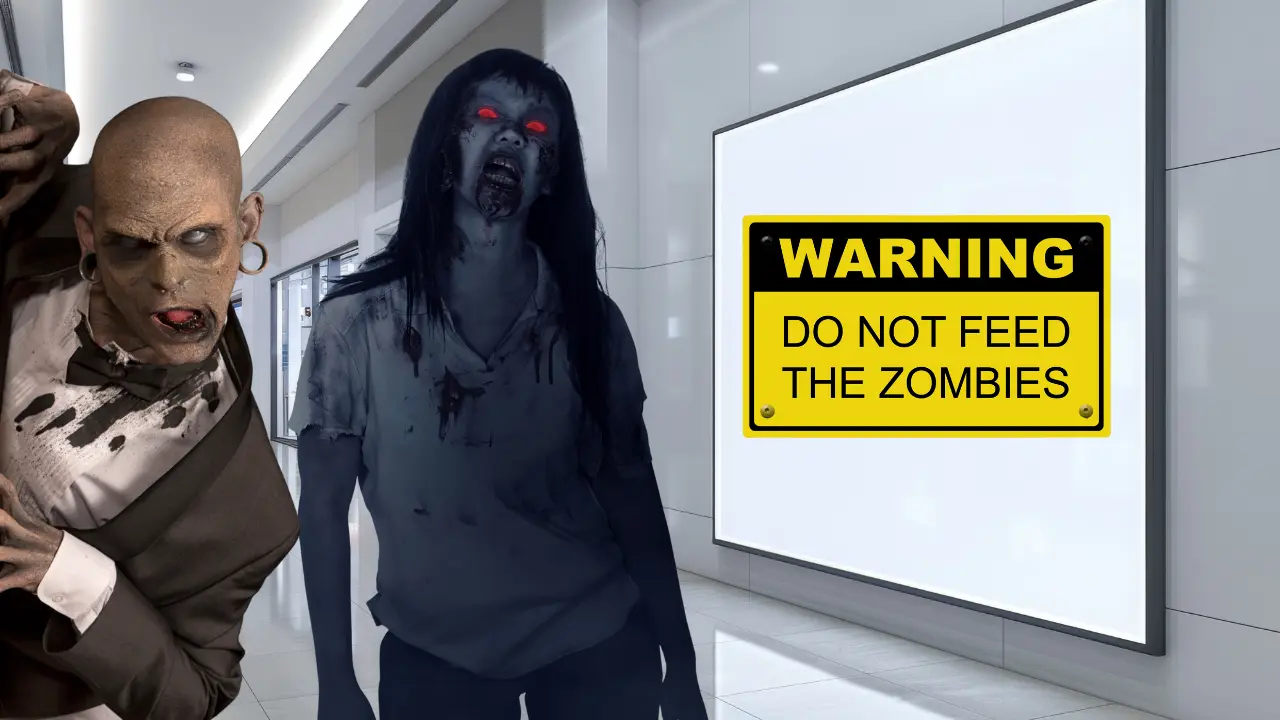
Illustration made with Canva
(Livingston, NJ) – The shopping mall has faded from prominence in American society. Once it was a ubiquitous setting for sitcoms, and movies, and real-life angsty teens. Young people would walk along the storefronts, lounge in the food court, and check out new music at the record store. How quaint. Now, while some remain busy — especially around the holidays — a number of once bustling malls are dark.
As we approach Valentine’s Day, some last-second shoppers may hit up the mall looking for a gift. The well-heeled clientele of Livingston, New Jersey could hit up the Short Hills Mall. It’s less likely they’d go to the Livingston Mall — which has experienced such a sharp decline since it opened in 1972 that many now call it a “zombie mall.”
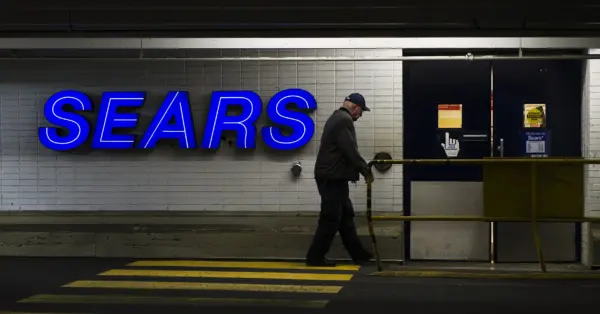
Located along the Eisenhower Parkway in Western Essex County, the Livingston Mall boasted a prime location near Newark, easily accessible to New York City via Route 280. Anchor tenants included Lord & Taylor, Sears, KB Toys, Victoria’s Secret, and Bath & Body Works. But in 1980, when the Short Hills Mall opened, competition slowly ate away at the Livingston Mall. So too did big box retail stores such as Target and Walmart. Then, around 2007-2008, online shopping really took a bite out of American malls.
NorthJersey.com took a deep dive into the Livingston Mall’s decline. James Hughes, a Rutgers University professor of urban planning, says: “People would spend their Saturday afternoons and Sunday afternoons strolling the mall, looking at new goods, figuring out what’s fashionable and the like.” And while online shopping and Short Hills mall grew, urban centers such as Newark and Jersey City rebounded. Suburban downtowns took on renewed prominence in places Ridgewood and Westfield.
And then, the Pandemic…
COVID-19 hit, and the American mall — already reeling — was brought to its knees in many spots. In April 2020, Sears closed. Then it was Lord & Taylor that shuttered its Livingston Mall location that August. State-mandated lockdowns left many stores facing massive back rent payments — with an inability to pay. The cycle proved deadly for the mall as a whole. Luis Castillo is the general manager at the mall’s Popeyes, which opened in 2017. He admits “We never thought it would go down so fast.” The entire central corridor of the mall is dark — literally — relying on overhead natural light from the atrium roof.
From there, many accuse the property’s owners of allowing the mall to fall into neglect. Simon Property Group was the previous owner, but the company’s focused shifted when it acquired Taubman Realty Group — which includes the nearby luxury Mall at Short Hills. Livingston Township Manager Barry Lewis says: “From that point forward, it was clear that Simon was no longer committed to the success of the Livingston Mall, and the neglect of the property was immediate.” In 2022, Kohan Retail Investment Group bought the mall from Simon. Lewis is critical of Kohan’s track record, calling it a “mall scavenger” with poor management. “As soon as Kohan bought the property, the decline accelerated and the conditions at the Livingston Mall quickly deteriorated and have continued to do so,” he argues.
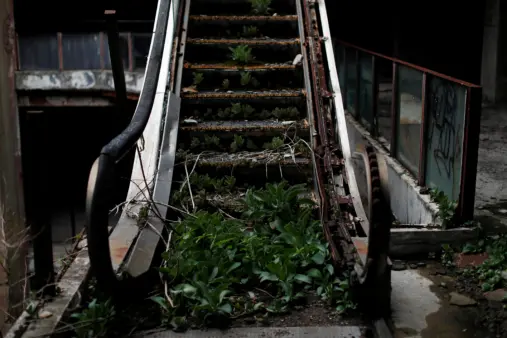
In early February 2026, NorthJersey.com reported on the mall’s conditions. They reflect severe decay: pothole-filled, unplowed parking lots; power cutoffs by JCP&L due to unpaid bills; non-functional food court sinks; no air conditioning during the summer months; leaking ceilings; and minimal heat in winter.
Popeyes staff wear coats indoors and handle fixes themselves. The manager, Castillo, puts it bluntly: “There is no management.” Real estate experts say the location has no future as a mall. Macy’s announced it was shuttering its Livingston Mall location. Book seller Barnes & Noble plans to relocate less than two miles to the Livingston Shopping Center by mid-to-late 2027.
The township designated the site an “area in need of redevelopment” in 2024, with a redevelopment plan approved in 2025. In theory, the site could help meet Livingston’s affordable housing obligation. Livingston Mayor Shawn Klein isn’t giving up on the site: “There is no other property almost anywhere of this size in such a prime location that holds such promise.”
Malls aren’t entirely dead— the International Council of Shopping Centers says 72% of holiday shoppers visited suburban centers or malls in recent months. But analysts agree that Livingston Mall is a “dead” or “a zombie,” that faces an uncertain future.