






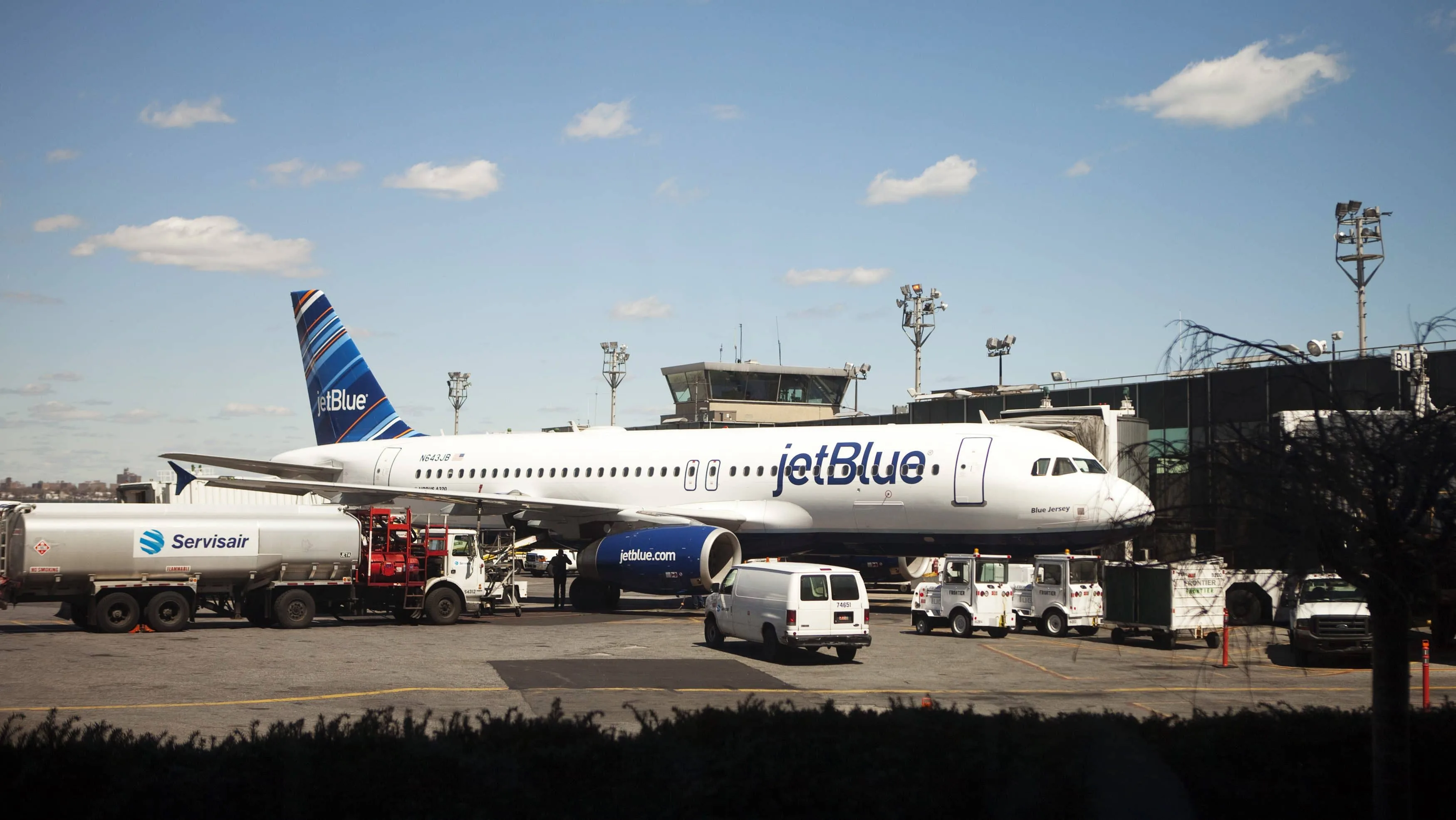
A JetBlue Airways plane awaits take off at LaGuardia Airport in New York April 5, 2012. © REUTERS/Lucas Jackson
(Newark, NJ) – In late October, a plane that was headed toward Newark Airport suddenly plunged thousands of feet. The terrifying mid-air experience also left 20 passengers hurt — 15 of which had to be hospitalized. The JetBlue flight, utilizing an Airbus A320, had taken off from Cancún en route to New Jersey. In a follow-up inquiry, Airbus blamed “intense solar radiation” — which negatively affected the 20-year-old plane’s navigation computer.
But was solar radiation the true reason problems occurred? That’s not entirely certain. Clive Dyer is a space radiation expert with the University of Surrey — and he told Space.com that solar activity was not strong enough on October 30 (the day of the incident) in order to cause the problem. He instead maintains the real cause was likely high-energy cosmic rays — which originated from a supernova explosion. That explosion happened millions of years ago, in a distant galaxy. So the timing was just bad for the JetBlue flight.
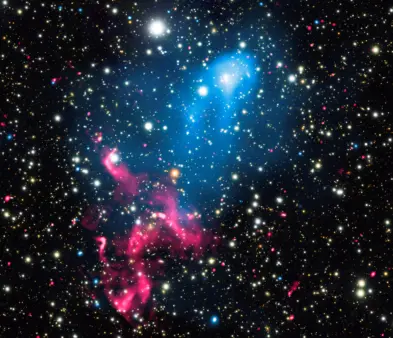
Dyer says, “cosmic rays can interact with modern microelectronics and change the state of a circuit. They can cause a simple bit flip, like a zero to one or one to zero. They can mess up information and make things go wrong. But they can cause hardware failures too, when they induce a current in an electronic device and burn it out.”
Thankfully the reports say none of the passengers suffered significant injuries — and the plane itself was able to complete its journey. But what a mind/time warp it is to imagine cosmic rays crossing billions of miles, across millions of years, and causing a scary drop in 2025.