







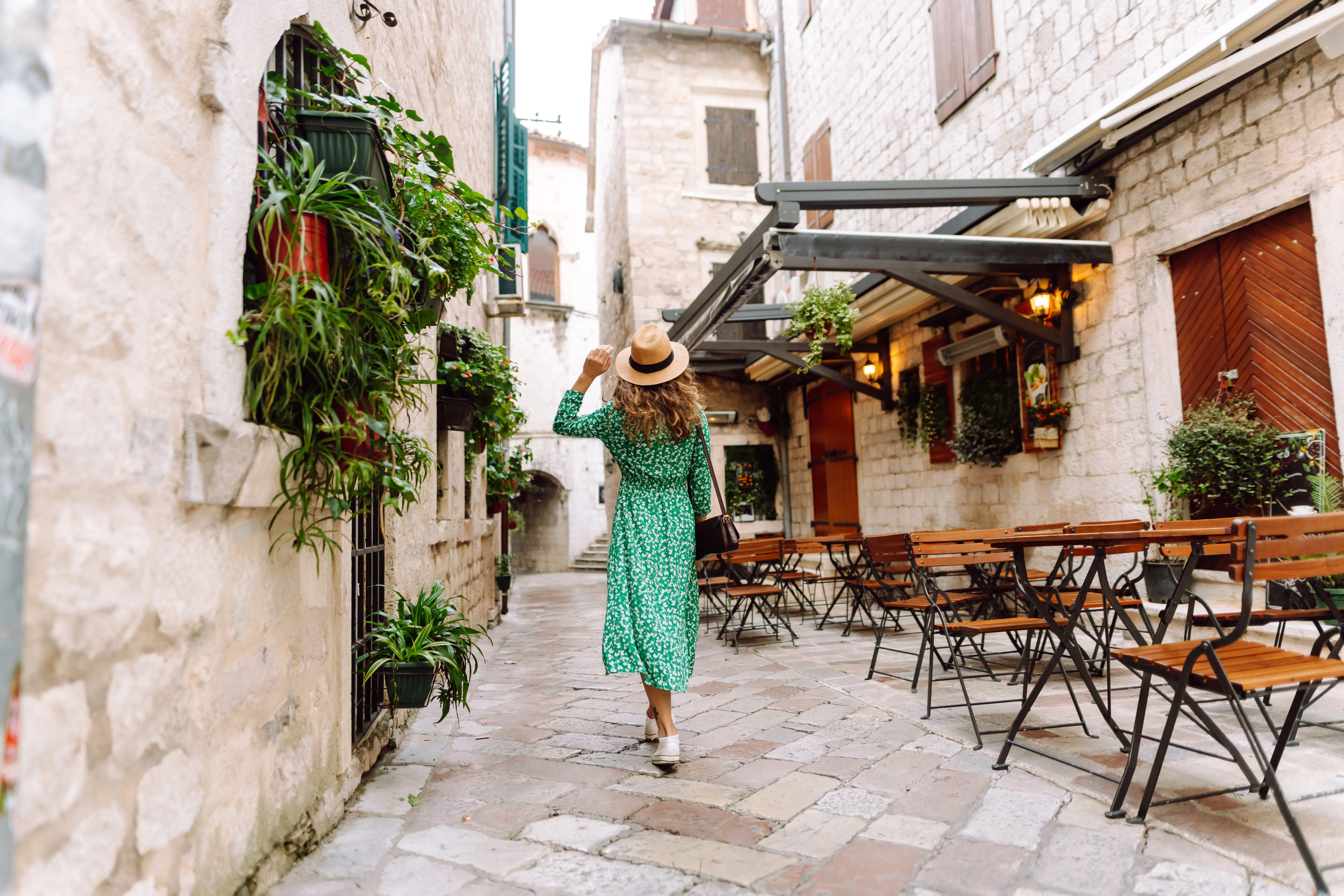
walking in European city
walking in the street -Europe
Living in New York all my life, the hustle and bustle became second nature, until I began spending more time in Europe. At first, I thought, “things are slow here!” But gradually, I began adapting to the rhythm, noticing how people valued quality of life over constant rush. I quickly realized that health is not only what we eat, but what mental state we are in, how we live, how we pace ourselves, connect, rest, and enjoy life’s simplest moments, especially in nature.
Why Slow Living Can Help You Live Longer
Slow living is a conscious way of life that values presence and intention over speed and quantity. It’s about reclaiming time, restoring balance, and reducing stress, one of the biggest accelerators of aging. Scientific studies show that prolonged stress elevates cortisol, disrupts immune function, and even shortens telomeres, the DNA “caps” that protect our cells from aging (Epel etal., PNAS,2004).
Mindfulness and slower daily rhythms activate the body’s parasympathetic nervous system, our natural “rest and restore” mode, which helps lower blood pressure and inflammation while improving cognitive health (Harvard Health, 2022). It’s not about doing less, it’s about doing within our capabilities and awareness.
The Mediterranean Example: More Than a Diet
The Mediterranean diet has been hailed as the gold standard of healthy eating because it is rich in olive oil, fresh produce, legumes, and fish. Yet, it’s not just the food it’s the lifestyle, as promoted by the father of Medicine, Hippocrates. Across Mediterranean cultures, meals are longer, social, and fully enjoyed; people walk more daily, take time for rest, and maintain strong social and family ties. This rhythm of life has been proven as nourishing as the diet itself, and together they foster both mental well-being and physical vitality (Buettner, The Blue Zones, 2021).
Everyday Habits to Practice Slow Living
Slow living is accessible anywhere, no matter your environment. Integrate these habits into your routine:
- Start Mornings Mindfully: Skip your phone for the first 30 minutes. Stretch, breathe, be still. Mindfulness and breathing techniques calm your nervous system and set your focus.
- Savor Your Meals: Eat slowly and intentionally. This practice improves digestion and promotes appreciation and awareness of what you are eating.
- Just Move!: Incorporate gentle daily movement, brisk walking, gardening, tai chi, stretching, yoga, dance, all proven to boost heart and brain health (PMCID.PMC10643563)
- Set Limits with Digital screen time: Reduce screen exposure (especially before bedtime), this is of major importance for slow living.
- Daily Social Connection: Strong social bonds enhance longevity and emotional resilience, being part of a community has shown a sense of purpose.
- Take a break: Short power naps and mental downtime regulate heart health and restore energy (Harvard Health).
Top 5 Places in the World Known for Slow Living and Longevity
- Ikaria, Greece – Nicknamed “the island where people forget to die,” Ikaria’s residents enjoy relaxed days filled with conversation, fresh food, walking, and strong community ties.
- Sardinia, Italy – A region with one of the world’s highest concentrations of centenarian men, where family, laughter, and pastoral life define the pace.
- Okinawa, Japan – Locals follow the philosophy of ikigai—living with purpose. Their calm pace, plant-based diet, and tight social circles foster both joy and longevity.
- Nicoya Peninsula, Costa Rica – A tropical haven where faith, optimism, fresh food, and daily movement create a balanced, low-stress lifestyle.
- Loma Linda, California, USA – America’s only Blue Zone, home to a community of Seventh-day Adventists who emphasize plant-based diets, rest, and spiritual well-being.
Source: (Buettner, The Blue Zones, 2021).
Slow Is the New Strong
Fast living in big cities can bring success, however, it can also steal your presence, peace, and take a toll on your health. Slow living invites us to perform, however at a slower pace, but allows us to live a more quality of life. It reminds us that longevity isn’t only achieved through nutrition and supplements, but through harmony between the body, mind, and purpose. When we pair the principles of the Mediterranean diet with the art of slowing down, we nurture not only longer lives, but a life that puts you in a healthier place.
“No wonder the Blue Zones show us that slow living is a pathway to a longer, healthier life.”
Sources & Scientific References
- Epel et al., PNAS (2004): “Accelerated telomere shortening in response to stress.”
- Harvard Health (2022): “Taking It Slow: Why Pacing Yourself Benefits Health.”
- Buettner, D. The Blue Zones of Happiness (National Geographic, 2021).
- Holt-Lunstad et al., PLOS Medicine (2010): “Social Relationships and Mortality Risk.”
- The Wellbeing Collective
- Health Line