






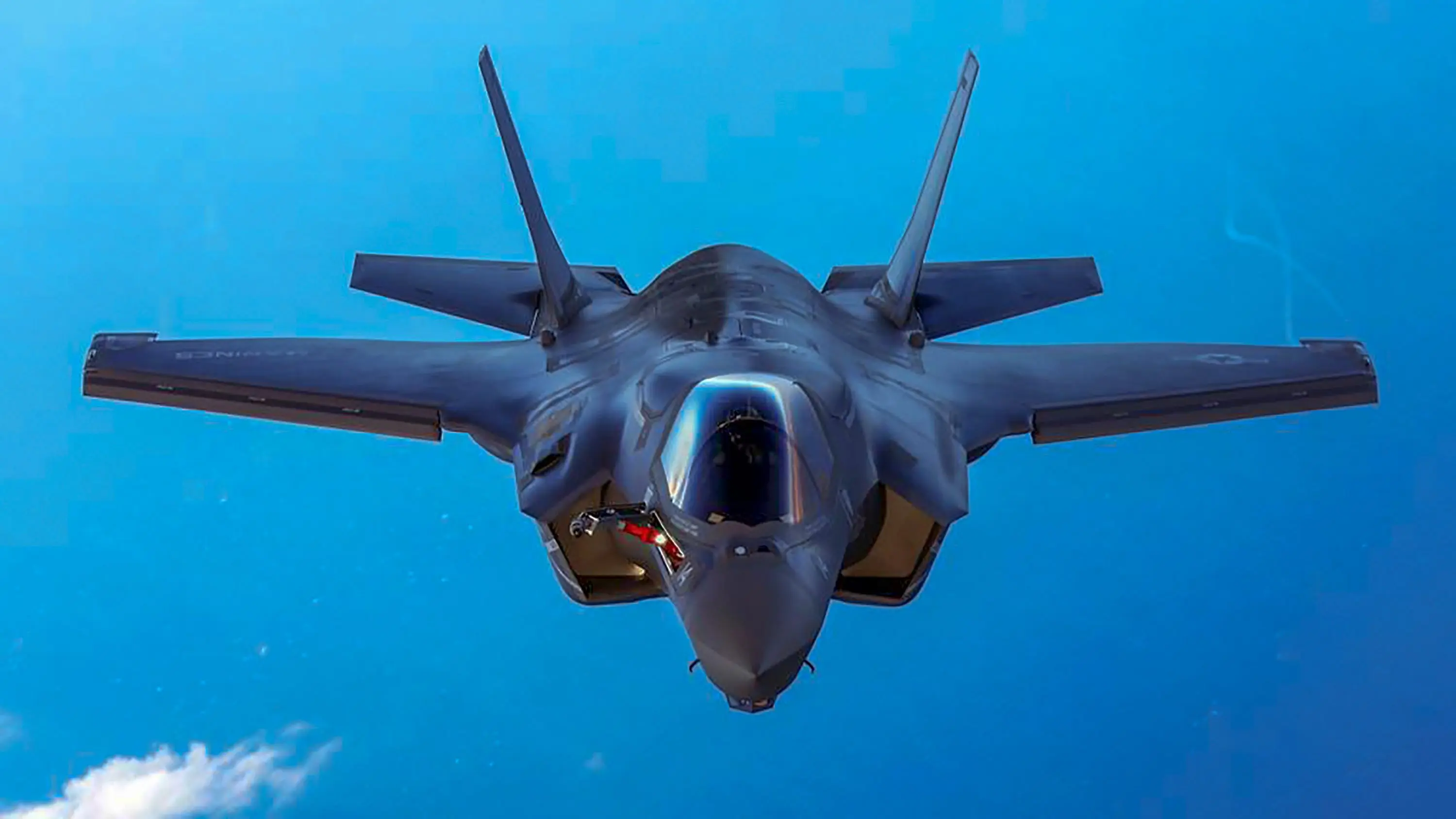
A U.S.Marine Corps F-35B joint strike fighter jet conducts aerial maneuvers during aerial refueling training over the Atlantic Ocean in this undated picture released August 20, 2015. The Marine Corps' F-35B model can take off from warships and aircraft carriers and land like a helicopter. REUTERS/US Marine Corps/Handout THIS IMAGE HAS BEEN SUPPLIED BY A THIRD PARTY. IT IS DISTRIBUTED, EXACTLY AS RECEIVED BY REUTERS, AS A SERVICE TO CLIENTS. FOR EDITORIAL USE ONLY. NOT FOR SALE FOR MARKETING OR ADVERTISING CAMPAIGNS
(Tehran, Iran) – A U.S. F-35 Lightning II was forced to make an emergency landing in the Middle East after sustaining damage during a combat mission over Iran, raising questions about whether Tehran successfully struck one of America’s most advanced fighter jets.
U.S. officials confirmed that the aircraft landed safely at a regional air base and that the pilot is in stable condition. The incident, which occurred during ongoing military operations in the region, is currently under investigation.
Shortly after reports of the emergency landing emerged, Iran’s Islamic Revolutionary Guard Corps (IRGC) claimed responsibility, stating that its air defense systems had successfully targeted the stealth aircraft during the mission. Iranian state-affiliated outlets also circulated footage allegedly showing the jet being hit, though the video has not been independently verified.
American officials, however, have not confirmed Iran’s claim. While acknowledging that the aircraft sustained damage mid-flight, the U.S. has stopped short of attributing the incident to enemy fire.
If confirmed, the strike would mark a significant development in modern warfare. The F-35, a fifth-generation stealth fighter designed to evade radar and operate in contested airspace, has long been considered one of the most advanced aircraft in the world. There have been no confirmed instances of the jet being successfully hit by enemy air defenses in combat since its deployment.
The aircraft, which costs upwards of $100 million per unit, plays a central role in U.S. and allied military operations. Its combination of stealth, advanced sensors, and electronic warfare capabilities is intended to give it a decisive edge in high-threat environments.
The incident comes amid an intensifying conflict involving the United States, Israel, and Iran, now entering its third week. Reports indicate the U.S. has lost multiple aircraft during the conflict, including drones and other planes involved in separate incidents. At least 13 U.S. service members have been killed and more than 200 injured.
Despite the developments, senior U.S. officials maintain that operations against Iran have been successful. Defense Secretary Pete Hegseth said the U.S. is “winning decisively,” while Israeli Prime Minister Benjamin Netanyahu claimed Iran’s ability to enrich uranium and produce ballistic missiles has been severely degraded.
For now, key questions remain unanswered — including what exactly caused the damage to the F-35 and whether Iran’s claim represents a breakthrough in countering stealth technology.
As investigations continue, the incident is likely to draw global attention, not only for its immediate military implications but also for what it could reveal about the evolving capabilities of modern air defense systems.