




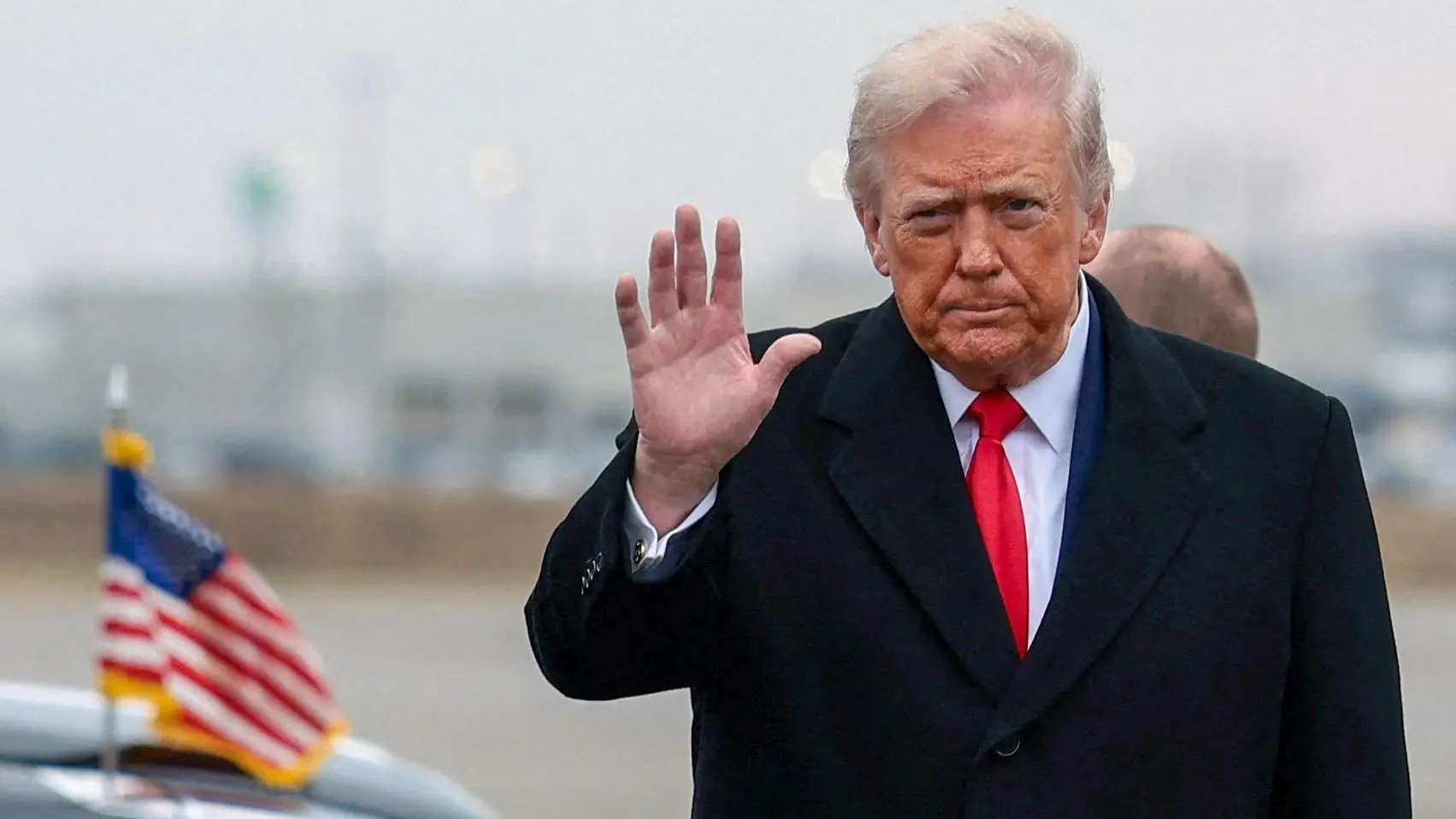
U.S.President Donald Trump arrives at Detroit Metropolitan Wayne County Airport, in Michigan, U.S., January 13, 2026. REUTERS/Evelyn Hockstein
(Washington, DC) – President Donald Trump is drawing attention after a sharp exchange with a Japanese reporter over U.S. military actions involving Iran.
During a press interaction, a reporter questioned why Japan had not been informed in advance of a reported strike related to Iran, raising concerns about communication with key allies. In response, Trump pushed back with a historical comparison, saying: “Why didn’t you tell me about Pearl Harbor?”
The remark—referencing the 1941 surprise attack by Japan on the United States that led to America’s entry into World War II—quickly sparked reactions, with critics and supporters offering differing interpretations.
Some viewed the comment as dismissive or provocative, particularly given the historical sensitivity of Pearl Harbor in U.S.-Japan relations. Others argued Trump was using the analogy to underscore the unpredictability of military actions and the reality that not all operations are disclosed ahead of time, even to allies.
The exchange highlights ongoing tensions surrounding U.S. foreign policy decisions, particularly when it comes to coordination with international partners. It also reflects the broader scrutiny Trump continues to face over his rhetoric and approach to diplomatic communication.
Neither Trump nor representatives for the Japanese government have issued further clarification on the exchange.