






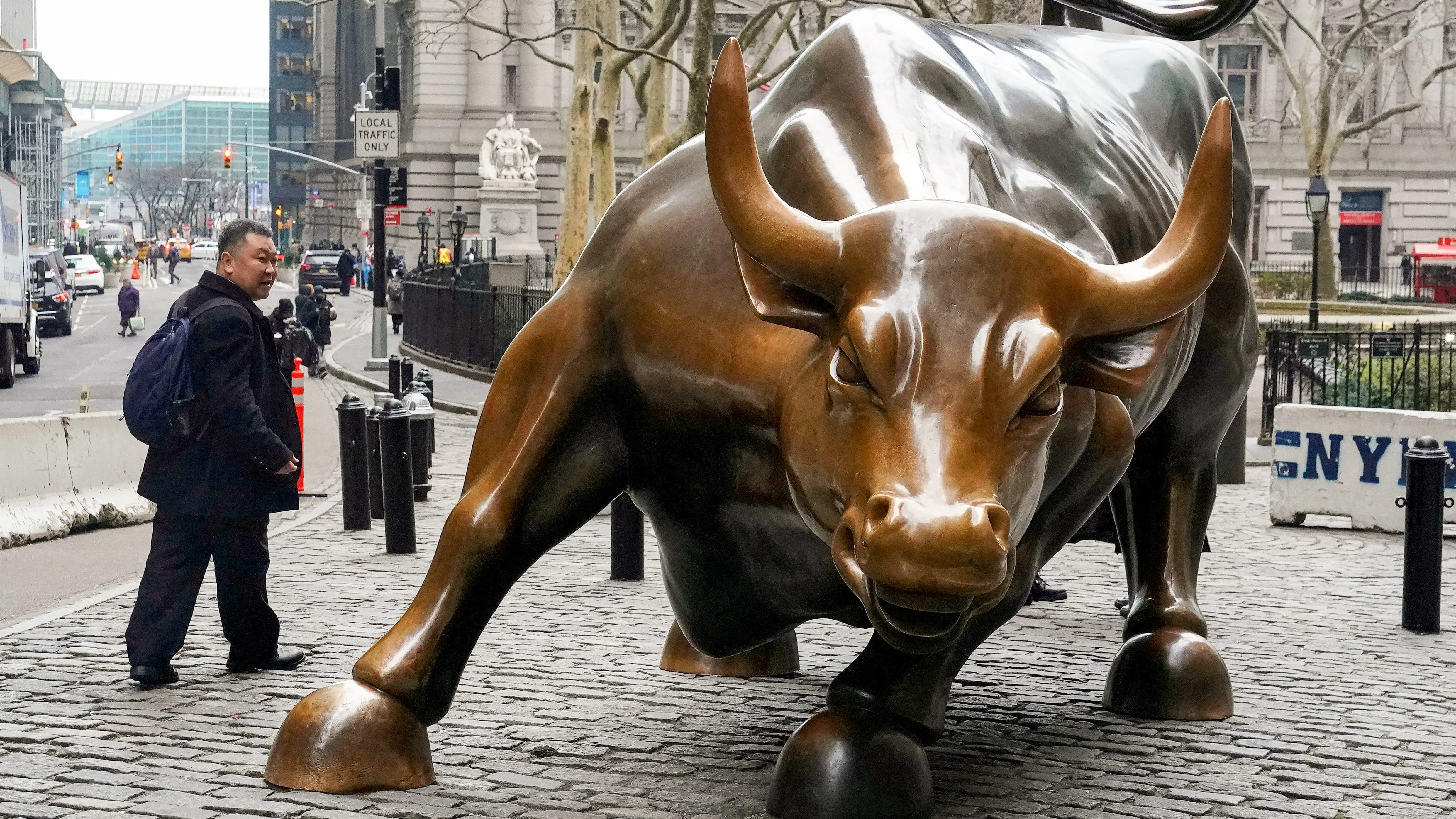
The Charging Bull or Wall Street Bull is pictured in the Manhattan borough of New York City, New York, U.S., January 16, 2019. REUTERS/Carlo Allegri
(Wall Street, New York) – A growing wave of financial strain is hitting America’s banking system, with 63 U.S. banks collectively reporting $517 billion in losses, according to newly released data.
While the figure is eye-popping, experts say the real question is whether these losses signal an impending crisis — or a manageable correction in a high-interest-rate environment.
What’s Behind the Losses?
Most of the reported losses are tied to what’s known as “unrealized losses.”
Over the past two years, the Federal Reserve aggressively raised interest rates to combat inflation. As rates rise, the value of older bonds — which banks purchased when rates were lower — declines.
Many banks are sitting on large portfolios of these bonds. On paper, they are now worth far less than what banks originally paid for them.
Key drivers include:
-
Higher interest rates reducing bond values
-
Commercial real estate stress
-
Reduced loan demand
-
Rising credit risk in certain sectors
Is This a Repeat of 2008?
Not necessarily.
Unlike the 2008 financial crisis, today’s banks generally hold stronger capital reserves and are subject to stricter regulations. Most of the losses remain unrealized — meaning banks don’t take the hit unless they are forced to sell those assets.
However, the risk increases if:
-
Depositors begin withdrawing large amounts of money
-
Commercial real estate defaults spike
-
Credit markets tighten further
Recent regional bank failures have already shown how quickly confidence can shift.
What Does This Mean for You?
For everyday Americans, the immediate impact depends on where you bank and how the broader economy responds.
Here’s what to know:
-
FDIC insurance still protects deposits up to $250,000 per account holder, per bank.
-
Interest rates on savings accounts may remain elevated.
-
Lending standards could tighten, making mortgages and business loans harder to obtain.
-
Stock market volatility may increase if investor confidence weakens.
Should You Be Worried?
Financial analysts say panic isn’t warranted — but awareness is.
The banking system today is more transparent and better capitalized than in previous crises. Still, the combination of high interest rates and slowing economic growth creates pressure points.
The coming months will determine whether these losses stabilize — or whether more institutions begin to feel the squeeze.
For now, regulators are closely monitoring the situation, and markets are watching for signs of stress.