






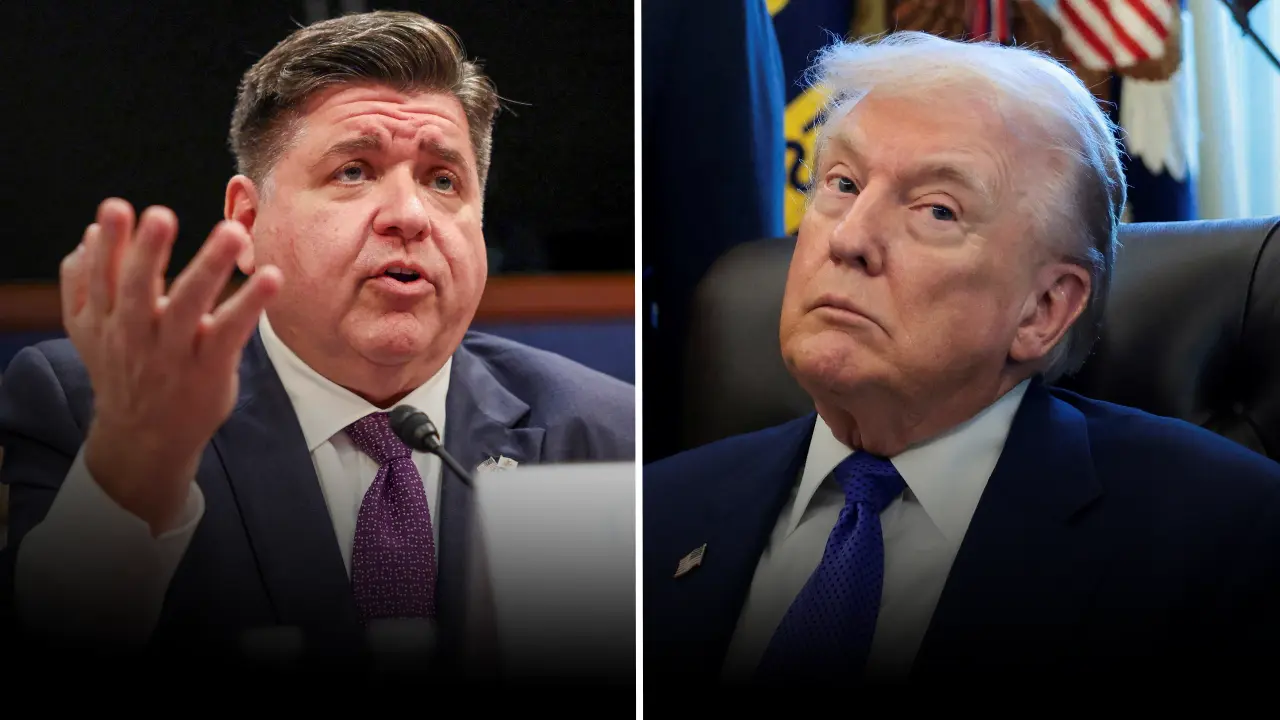
Reuters
(Washington, DC) – Illinois Governor JB Pritzker is demanding financial compensation for families in his state after the U.S. Supreme Court ruled President Donald Trump’s sweeping tariffs unconstitutional.
In a formal letter addressed to President Trump at the White House, Pritzker called for a $1,700 refund per Illinois household, arguing that the tariffs drove up consumer prices and harmed families across the state.
“There are 5,105,448 households in my state,” Pritzker wrote, calculating total damages at $8,679,261,600 owed to Illinois residents.
The Letter
Pritzker’s letter cites the Supreme Court’s 6–3 decision striking down Trump’s use of emergency powers to impose broad global tariffs. The governor argued the policy “wreaked havoc on farmers, enraged our allies, and sent grocery prices through the roof.”
He described the Court’s ruling as confirmation that the tariffs were unconstitutional and framed his demand as an official notice of compensation owed to the people of Illinois.
“If you do not comply we will pursue further action,” the letter states.
Political Fallout
The demand escalates tensions between Democratic governors and the White House following the Court’s decision earlier Friday. While the ruling invalidated the legal authority used to impose the tariffs, it did not automatically order refunds of duties already collected.
Businesses nationwide have paid billions in import taxes under the now-invalidated framework, but the legal pathway for repayment remains unclear.
Pritzker’s move positions Illinois at the forefront of potential state-led efforts to seek restitution on behalf of residents.
What Happens Next?
It remains uncertain whether the federal government would entertain such refund demands. The administration has not yet publicly responded to Pritzker’s letter.
Meanwhile, President Trump has indicated he plans to pursue alternative legal avenues to implement new tariffs, signaling that the broader trade battle may be far from over.
For now, Pritzker’s letter marks one of the most aggressive state-level responses to the Supreme Court’s decision — and sets the stage for a potential new legal fight over whether American families are entitled to compensation.