





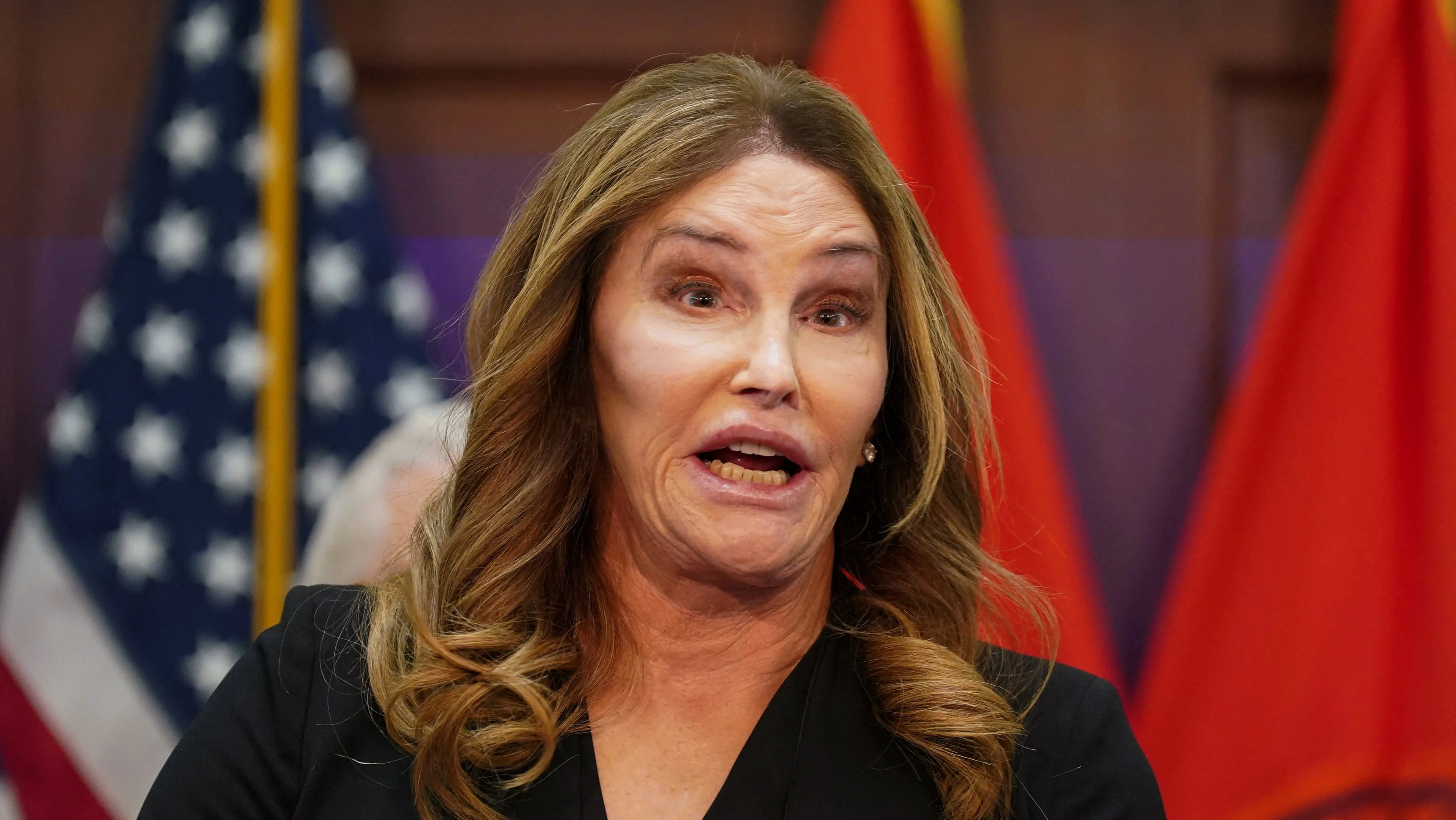
Former Olympian Bruce Jenner after sex-reassignment as Caitlyn Jenner
tag:reuters.com,2024:newsml_RC2FO6A5D9IK:482694232
(Nationwide) – There is a growing frequency in mass shootings by transgender people.
In less than a week, eight people were murdered in two separate public shootings — one in a Canadian public school and another in Rhode Island — committed by two self-identified transgender women (who were biological men).
The back-to-back massacres have reignited allegations from conservative pundits that transgender ideology and individuals are more prone to violence and that the reason that transgender people engage in mass shootings is explicitly tied to their incongruent gender identity.
But hours after 56-year-old Robert Dorgan, also known as Roberta Esposito, opened fire at an ice rink February 16th where his son was playing hockey, killing his ex-wife, one of his children, and himself. Democratic Rhode Island Gov. Dan McKee made no mention of Dorgan’s documented history of mental illness or transgender identity, instead labelling the shooting to be another incident of “gun violence.”
Social media influencer pastor Rev. Jordan Wells criticized McKee, “He completely skips the shooter’s documented mental illness and transgender issues—his own daughter even called it out!” Wells wrote on X. “But Democrats stay silent on the real roots. No matter how many gun laws you pile on, without addressing repentance, the mental health crisis, and societal breakdown, this nightmare will keep repeating.”

Dorgan underwent gender reassignment surgery in 2020 causing his wife to divorce him. His “narcissistic personality disorder traits” were also listed as a reason for his marriage’s breakdown, but his gender identity served as a focal point in court battles for years. After the shooting, Dorgan’s daughter confirmed her father suffered from “mental health issues” and was “very sick.” The night before the attack, Dorgan responded to a negative post about a transgender congresswoman, writing, “do not wonder why we go berserk.”
Not even a week earlier, on February 10th, 18-year old Canadian Jesse Van Rootselaar, who has identified as a girl since he was 12-years-old, murdered his mother and stepbrother before heading to Tumbler Ridge secondary school where he shot and killed five students and a teacher. The incident marked the deadliest shooting in British Columbia’s history. Van Rootselaar was found dead of a self-inflicted gunshot wound.
Like Dorgan, Van Rootselaar had a documented history of mental illness issues. Van Rootselaar claimed on a Reddit account linked to him that he was diagnosed with ADHD and OCD. He said that he was on antidepressants in 2023 and that he has been prescribed antipsychotics.
On August 27, 2025, a transgender woman, 23-year-old Robin Westman, opened fire during an Annunciation Catholic Church mass, killing two children. Westman also had a lengthy history of mental illness, and killed himself on the scene. In a disturbing manifesto, Westman wrote that he “was tired of being trans” and wished he “never brain-washed” himself.
The mass shooting sparked national outcry and concerns about the mental wellbeing of trans people, prompting Democratic leaders like Minneapolis Mayor Jacob Frey to come to the defense of transgender community. In the wake of the Annunciation Catholic Church mass shooting, the late Charlie Kirk, founder of Turning Point USA called for transgender Americans to not be allowed to own guns. Kirk’s alleged assassin Tyler Robinson was in a relationship with a transgender woman.
Meanwhile, transgender advocacy groups accuse conservative leaders of demonizing the transgender community by saying mass shootings committed by trans people are linked to their transgenderism. GLAAD pointed to the Gun Violence Archive data, revealing that of the 5,748 mass shootings between January 1, 2012 and September 15, 2025, only five were confirmed to be transgender. Even so, some of the shooters explicitly point to their gender identity as being directly linked to their killings.
For instance, in May 2019, two shooters, 18 year old Devon Michael Erickson and 16-year old transgender boy Alec McKinney, (aka Maya Elizabeth McKinney) carried out a mass shooting at their high school – STEM School Highlands Ranch in Colorado. Alec explicitly stated she was explicitly targeting two students because they had bullied her for her gender ideology. She also said she suffered from homicidal and suicidal thoughts since she was 12 but refused to take medication.
On March 27, 2023, a mass shooting occurred at The Covenant School, a Presbyterian Church in America parochial elementary school in the Green Hills neighborhood of Nashville, Tennessee, when 28-year-old Aiden Hale killed three 9‑year‑old children and three adults before being shot and killed by two Metropolitan Nashville Police Department officers. Hale was a former student of the school who had been planning the attack for years. It is the deadliest school shooting in Tennessee history.
In November 2022, Anderson Lee Aldrich, who identified as nonbinary, opened fire inside a gay bar in Colorado Springs, killing five people.
And in 2018, a transgender man named Snochia Mosley, who also suffered from bipolar disorder, killed three co-workers at a Rite Aid warehouse in Maryland. She started hormone therapy a year prior to the shooting,
The transgender population is considered to be a high risk group when it comes to the develop of mental health illnesses. A study at Yale University found that people diagnosed with “gender incongruence” are six times more likely to have a mood or anxiety disorder than the general population, three times as likely to be prescribed antidepressants and anti anxiety medication than the general population and six times as likely to attempt suicide resulting in hospitalization than the general population.
LISTEN🎧 Dominic Carter responded to the Rhode Island shooting…
What’s Being Done?
Washington Democratic Congresswoman Pramila Jayapal’s proposed “Trans Bill of Rights” is drawing sharp political reactions — but beyond the culture war rhetoric, a key question remains: would the legislation carry a cost for taxpayers?
While the full fiscal impact has not yet been formally scored by the Congressional Budget Office, the proposal could involve federal spending in several areas. Expanding anti-discrimination enforcement, increasing oversight through federal agencies, and potentially conditioning federal funding on compliance with new gender identity protections could require additional administrative resources.
Healthcare provisions could also carry financial implications. If the bill strengthens protections for gender-affirming care under federal programs such as Medicaid, Medicare, or Affordable Care Act exchanges, taxpayers could see increased federal expenditures tied to coverage mandates, litigation defense, and regulatory implementation. Supporters argue these costs would be marginal relative to overall healthcare spending, while critics contend federal mandates could drive broader compliance expenses for states and private institutions.
Advocates of the bill argue that stronger anti-discrimination protections could reduce long-term costs associated with mental health crises, homelessness, and unemployment among transgender Americans. They contend that preventative healthcare access and legal clarity may ultimately save money by reducing emergency interventions and litigation.
Until a formal budget analysis is released, the true taxpayer impact remains uncertain. What is clear is that the legislation would not simply be symbolic — if enacted, it would require federal agencies, healthcare systems, and possibly states to adjust policies, regulations, and funding structures.
As debate intensifies, fiscal impact is likely to become just as central to the conversation as the cultural and political implications of the bill itself.
LGBT & Mass Shootings… What Mainstream Media Wants you to ignore
Two bills restricting protections for transgender people are moving to the state House. Despite raucous objections in subcommittee meetings, the two bills advanced through committee along party-line votes. One of the bills would eliminate gender identity as a protected class in the Iowa Civil Rights Act. The second bill exempts conversion therapy from the definition of child abuse and permits parents to decline gender-affirming care. Republicans say it prevents parents and foster parents from being investigated and punished for raising a child consistent with their biological sex.
An Illinois lawmaker is pushing a controversial bill regarding transgender people. Republican State Senator Andrew Chesney has introduced legislation that would change the state’s Mental Health and Developmental Disabilities Code to expand the definition of mental illness to include those who identify as transgender. Chesney claims the measure will keep what he calls “radical gender ideology” from shaping Illinois law. The bill is currently awaiting its committee assignment in the Senate.
On February 18th, NYU Langone Health shut down its program providing gender-affirming care for minors, according to sources familiar with the decision. The Manhattan-based hospital system had offered services that included medical and psychological support for transgender and gender-diverse youth. The program’s closure marks a significant shift for one of New York City’s largest and most prominent healthcare providers. NYU Langone has not publicly detailed whether the suspension is temporary or permanent or explained the reasoning behind the shutdown.