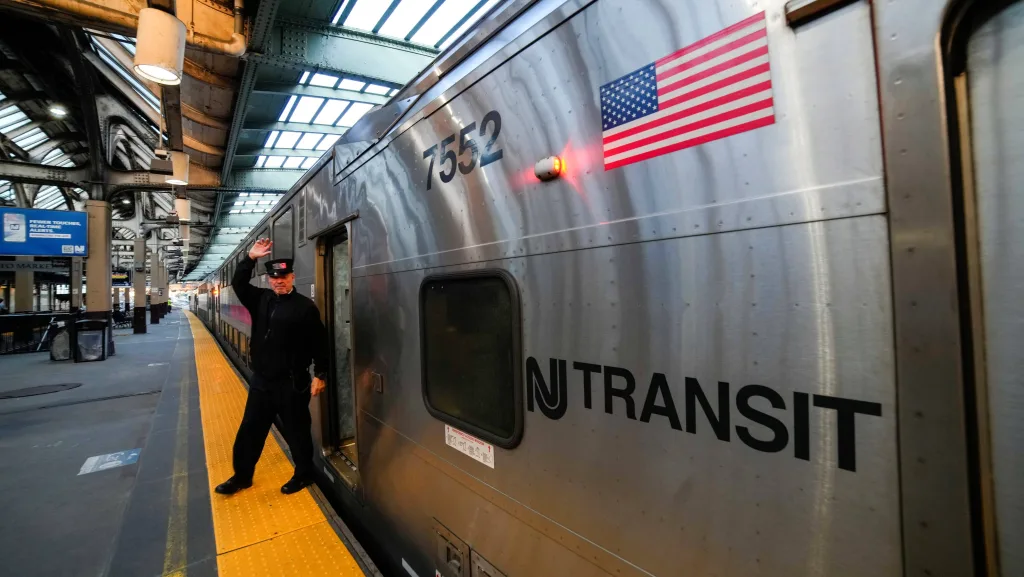





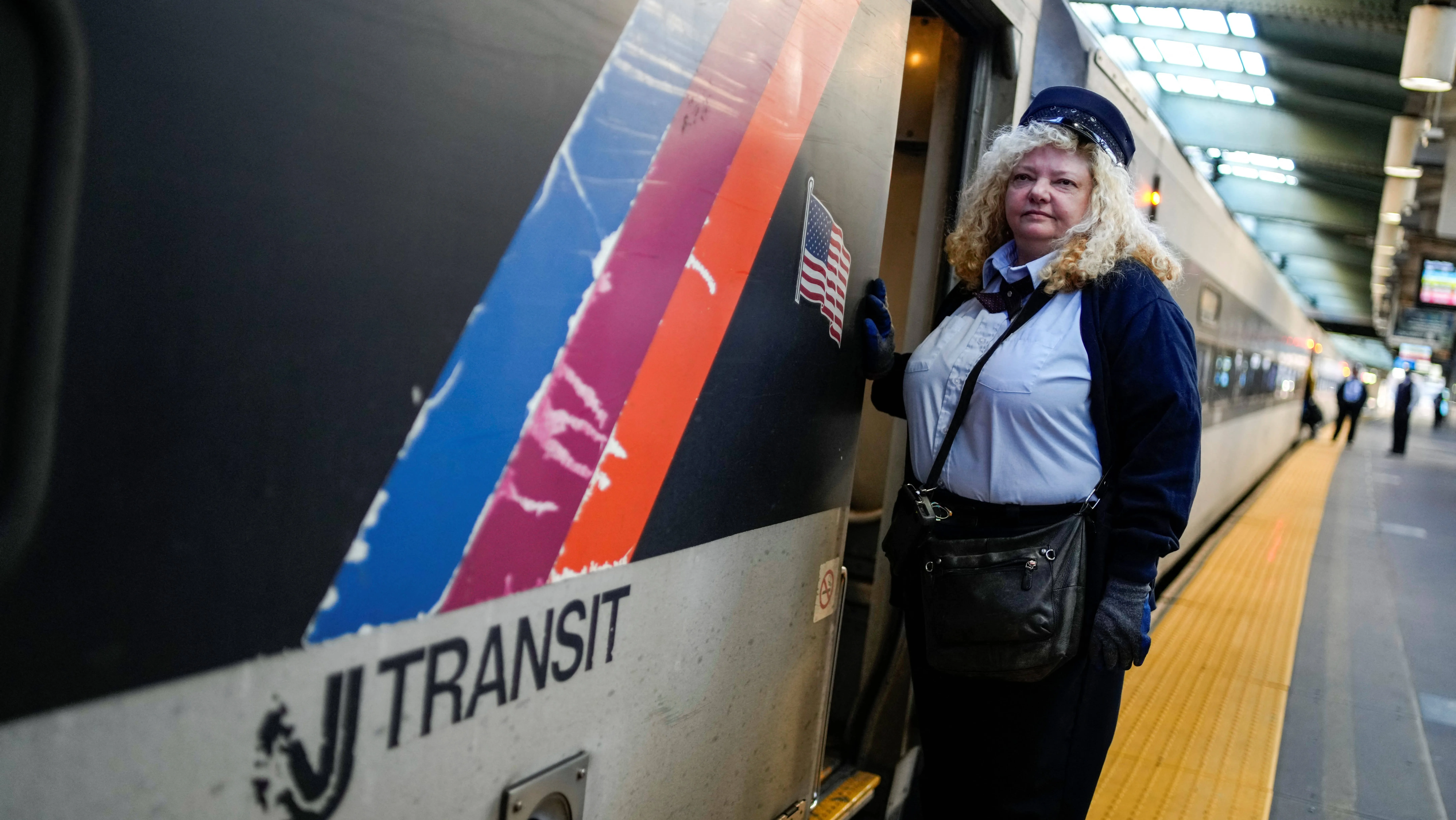
A train conductor stands on an NJ Transit platform at Newark-Penn Station, in Downtown Newark, May 20, 2025. REUTERS/Eduardo Munoz
(Newark, NJ) – For more than 110 years, the current “portal bridge” over the Hackensack River has been the main route from North Jersey into New York City. The entire train commuter experience changed for hundreds of thousands near the year 2000 as Midtown Direct service was established, meaning more people had the ability to get directly to Manhattan. Prior to that, many in Montclair and suburbs west of that town were forced to commute to Hoboken, then take a ferry or PATH train into New York.
Over the next month or so, commuters will feel like they’ve gone back to the pre-2000 reality, as construction work will take the portal bridge offline for at least a month.
What’s Happening Here, and Why?
Because the existing portal bridge is so old, it uses technology that can best be described as “ancient.” When ships travel up and down the Hackensack River, the bridge must “swing open,” — and then close — in order to get the ships through.
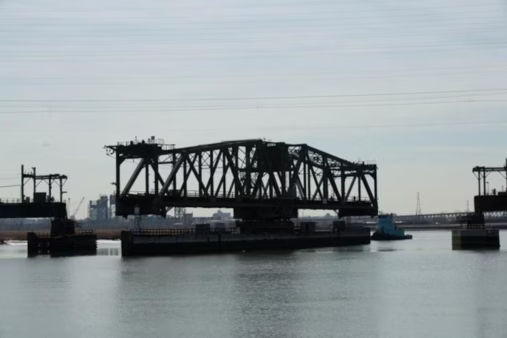
The bigger issue for NJ Transit — and Amtrak, which maintains the tracks themselves — is that the bridge routinely gets stuck in the open position. Men using sledgehammers are then called in to close to bridge, which is obviously an inefficient and outdated method of operating a bridge in 2026.
For years officials have discussed the need to replace the existing portal bridge, which has finally happened. A new, taller bridge that can have ship traffic pass underneath the permanent structure was built during the past couple years — using funding from the Gateway Project. Now, the old bridge is being taken offline, and construction crews must connect the existing track to the new bridge. Officials have been referring to this as a “cutover” maneuver.
How This Impacts NJ Transit Service
The “cutover” is the final phase of the the $1.5 billion Portal North Bridge project. During this period, only one track is available between Newark and Secaucus, cutting rail capacity roughly in half. There will be about 50% fewer trains running along the Northeast Corridor into New York City. All lines except the Atlantic City Line are affected, with modified schedules, earlier departures, possible cancellations, longer travel times, and heavy crowding — especially during rush hours. Many lines will not go to New York Penn Station but will instead re-route to Hoboken Terminal.
Key impacts for Midtown Direct riders (Morristown Line, Gladstone Branch, Montclair-Boonton Line):
Weekdays (Feb 15 – March 15): No direct service to New York Penn Station — trains terminate in Hoboken. Buy tickets/passes to/from Hoboken.
Weekends: Midtown Direct trains continue to run to Penn Station New York.
At Hoboken, PATH trains are cross-honoring your NJ Transit ticket/pass, but capacity will be limited and you can expect very crowded trains, especially rush hours. PATH is only cross-honoring Hoboken to 33rd Street trains. The New York Waterway Ferries is adding extra peak service between Hoboken and West 39th Street. NJ Transit’s Bus 126 from Port Authority Bus Terminal is also an option for New Jersey commuters.
When Will This All End?
NJ Transit and Amtrak officials say the cutover work will be completed by Saturday, March 14, 2026. The tentative plan is to have the regular full schedules resume the following day, Sunday — pending final safety testing. NJ Transit has a section of their website dedicated to information on the project, as well as information posted as its stations.
Transit officials have urged people to consider working from home, shifting commute times (before 7 a.m. or after 9 a.m. mornings), or using alternatives. The working line is that this is uncomfortable now — but should lead to more reliable service. For years the portal bridge has been blamed for delays. So, this is a temporary pain aimed at a major infrastructure upgrade benefiting the Northeast Corridor. And with the Gateway Project also aiming to replace an existing tunnel under the Hudson River — and repair an existing one — the entire system could be on the upswing.
Then again, when will we replace or upgrade the dreaded “overhead wires”?