






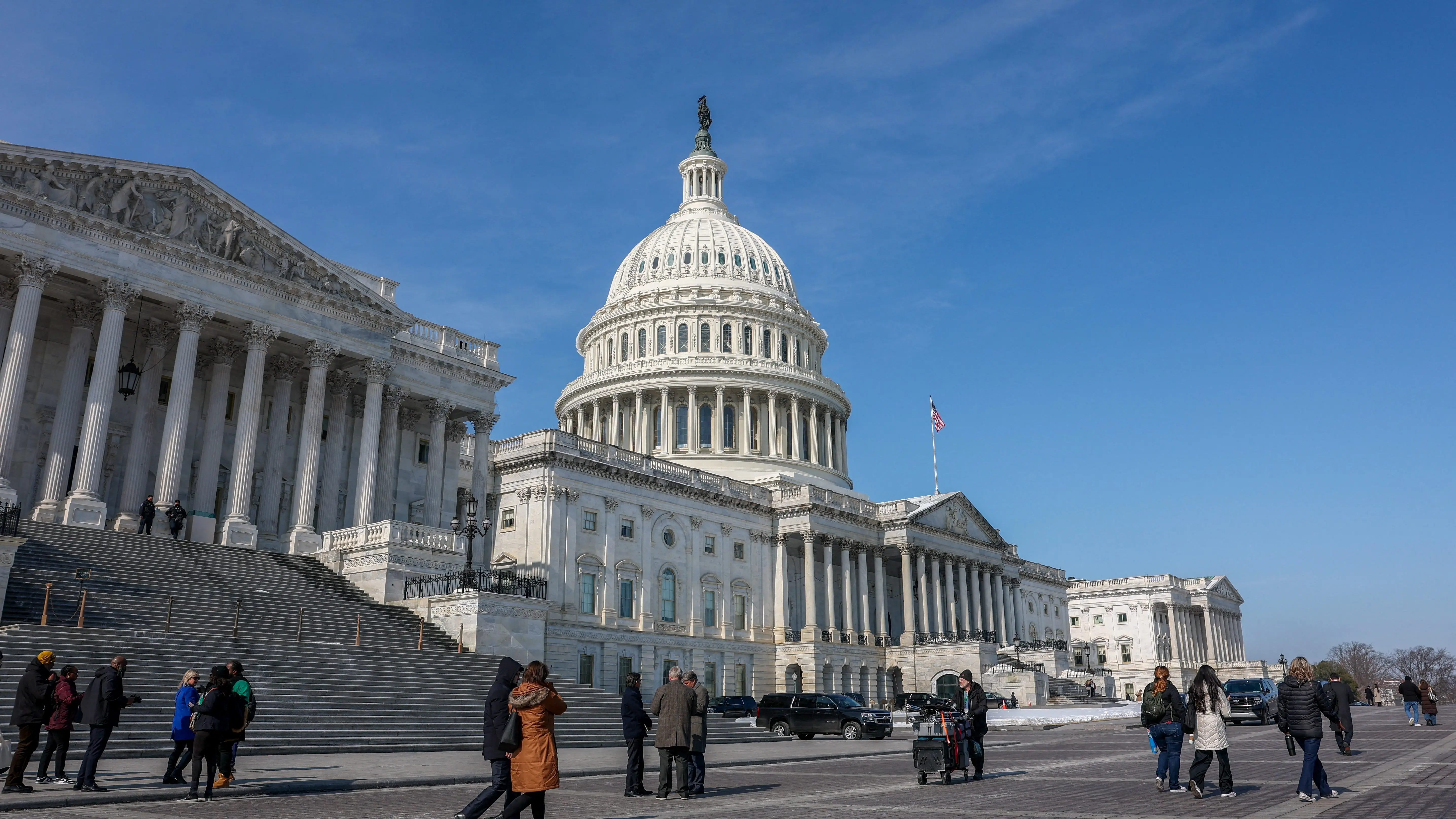
People walk near the U.S. Capitol building in Washington, D.C., U.S., February 4, 2026. REUTERS/Kylie Cooper
(Washington, DC) – The U.S. House of Representatives on Wednesday passed a sweeping election integrity bill that would require proof of citizenship to register to vote and photo ID to cast a ballot in federal elections.
The legislation – the SAVE America Act — passed 218–213, with just one Democrat, Henry Cuellar, voting in favor. All other House Democrats opposed the measure.
The bill, led by Chip Roy, R-Texas, expands on the earlier Safeguarding American Voter Eligibility (SAVE) Act passed by the House in 2025 but stalled in the Senate.
What the Bill Would Do
The updated legislation would:
-
Require documentary proof of U.S. citizenship when registering to vote in federal elections
-
Mandate photo ID to cast ballots
-
Require states to share voter roll data with federal agencies
-
Allow the Department of Homeland Security to pursue immigration cases if non-citizens are found on voter rolls
Supporters argue the measure is necessary to restore public confidence in elections.
“If we want to rebuild confidence again in American elections, we need to pass the SAVE Act,” Rep. Mike Haridopolos, R-Fla., said.
Republican leaders framed the bill as a safeguard against non-citizen voting, particularly after increased illegal border crossings in recent years.
Democrats Call It Voter Suppression
House Minority Leader Hakeem Jeffries and other Democrats blasted the bill as voter suppression.
House Minority Whip Katherine Clark argued the proof-of-citizenship requirements could disproportionately impact married women whose legal names differ from their birth certificates.
“Republicans aren’t worried about non-citizens voting. They’re afraid of actual American citizens voting,” Clark said during debate.
What Happens Next
The bill now heads to the U.S. Senate, where it faces a significant hurdle. Under current rules, it would likely need at least 60 votes to overcome a filibuster — meaning several Democrats would need to cross party lines for it to advance.
If enacted, the new requirements could take effect as early as this November’s federal elections.