






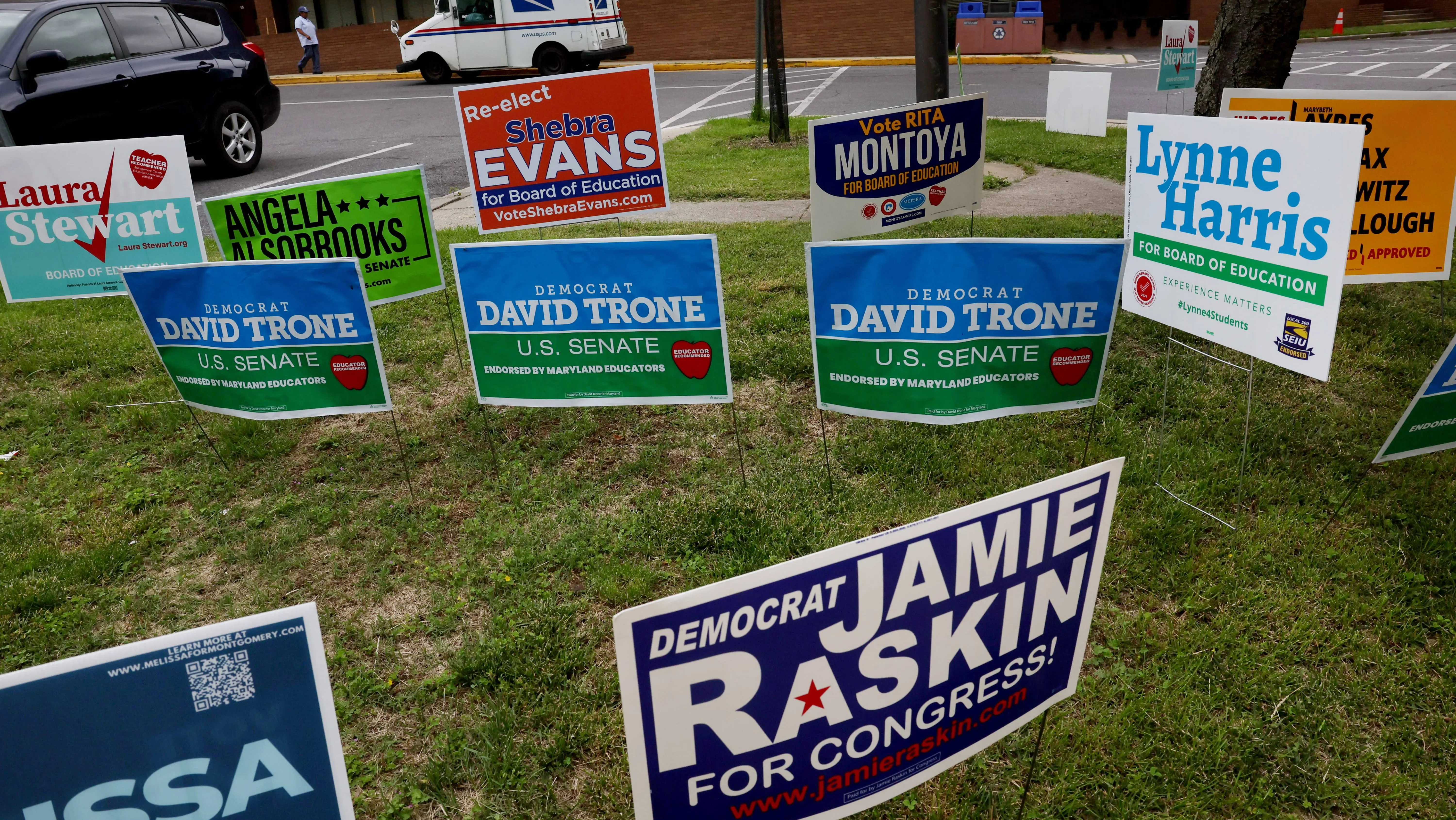
Election yard signs are set up outside a polling place
tag:reuters.com,2024:newsml_RC2BQ7AQ035W:551086848
(Washington, DC) — The Safeguard American Voter Eligibility Act, or SAVE Act, would require states to obtain “documentary” proof of citizenship in person before registering an individual to vote for a federal election. States would also be required to establish programs to identify and remove non-citizens from voter registration lists. The legislation would significantly limit, or effectively eliminate, mail-in voter registration, online voter registration, and automatic voter registration by requiring in-person documentation.
President Trump has made comments this past week that suggested Republicans should “nationalize” elections.
White House Press Secretary Karoline Leavitt says President Trump has been pushing Republicans to get behind it and has been in contact with House Speaker Mike Johnson and Senate Majority Leader John Thune. It would face an uphill battle in the Senate due to the 60-vote majority required for passage. House Republicans and President Trump have encouraged Thune to get rid of the filibuster for passage.
PRO: Proponents, including Republican leadership, argue that the act is necessary to ensure that only U.S. citizens vote, thereby enhancing election integrity.
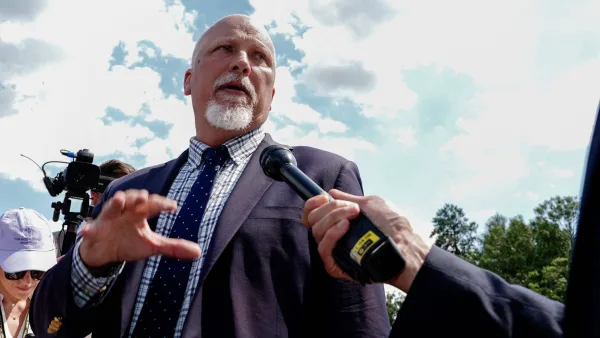
Among those who support the SAVE Act, Tennessee Senator Bill Hagerty is pushing for the SAVE act to move forward. The second-term Republican defended the voter ID legislation and Texas Republican Representative Chip Roy who is the primary sponsor of the bill in the House.
CON: Critics, including voting rights organizations, argue the act would disenfranchise millions of eligible voters who may not have ready access to documents like birth certificates or passports.
House Minority Leader Hakeem Jeffries says President Trump’s effort to nationalize elections will be stopped. Jeffries made the comment on CNN’s “State of the Union”, adding that the President is trying to steal elections. His comments come after Trump told reporters in the Oval Office earlier this week that if states can’t run elections fairly, then the federal government should get involved. Trump also said some states run their elections “horribly,” and made renewed claims of past election fraud.
California Democratic Senator Adam Schiff said the President is doing anything he can to “suppress the vote.”
New York Democratic Representative Joe Morelle who is the top Democrat of the Committee on House Administration.
Meanwhile, Democrat Sen. Jon Ossoff, who openly opposes voter ID and the SAVE Act, required attendees to show ID to enter his event. Email confirmation information for an Ossoff rally in Atlanta detailed that “a matching government-issued ID will be verified against the RSVP list by name to enter.”
The bill (H.R. 8281) was introduced in the House of Representatives in May 2024 by Representative Chip Roy (R-TX). The House passed the initial version of the SAVE Act in July 2024 with a 221–198 vote, but it did not pass the Senate. In the 119th Congress, the bill was reintroduced as H.R. 22 on January 3, 2025, by Rep. Roy. The House passed H.R. 22 on April 10, 2025, with a 220–208 vote, but the bill has faced intense opposition in the Senate and from voting rights advocates. In early 2026, a new version of the bill, often referred to as the “SAVE America Act,” was introduced with renewed efforts, including provisions that would require proof of citizenship and potentially stricter photo ID requirements.