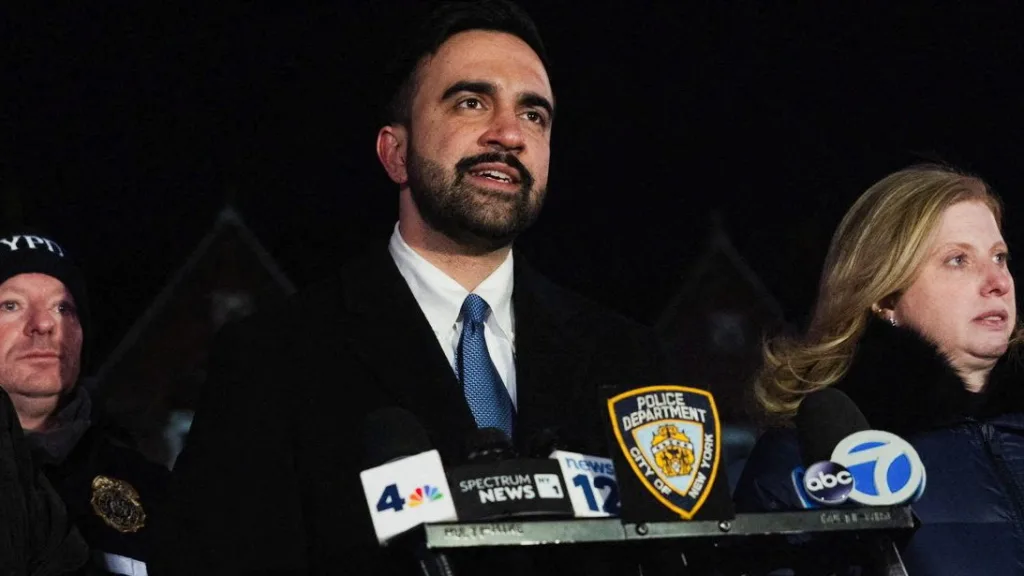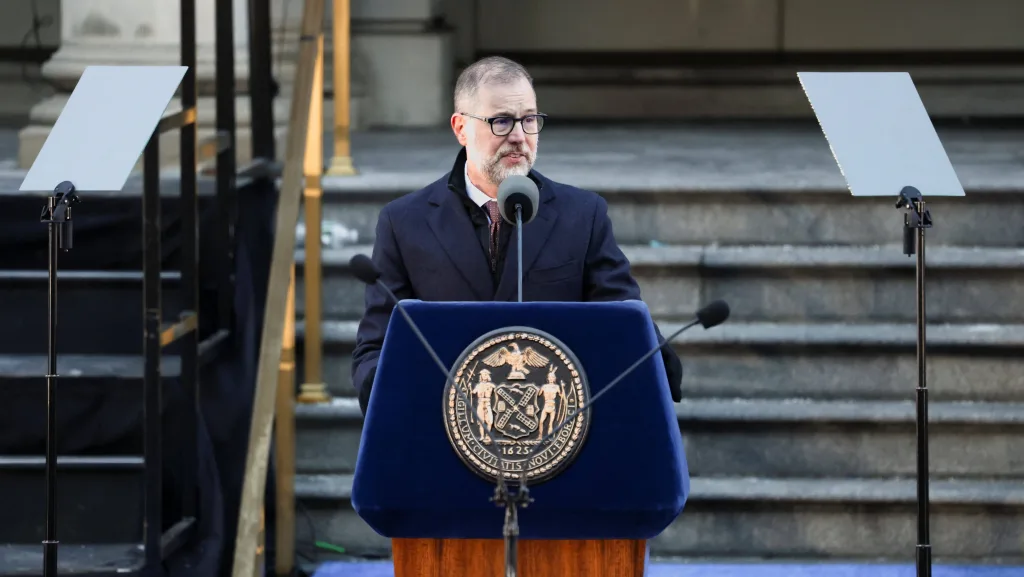






Chair and CEO of the Metropolitan Transportation Authority (MTA) Janno Lieber speaks in the Bronx, February 12, 2024. REUTERS/Brendan McDermid
(New York, NY) – In the week that was for the MTA, there was a celebration. Officials spiked the football as they marked the one-year mark for Manhattan Congestion Pricing — a fancy name for a simple tax. Now, unlike ever before, motorists are charged a fee for simply driving within Manhattan’s rarefied air. And its all supposed to plug the massive budget hole caused by fare evasion, or turnstile jumping, or just outright refusing to pay, as often happens on city buses.
At a hearing, MTA Chair and CEO Janno Lieber was less-than-pleased to have to defend recent fare evasion mitigation efforts, during an exchange with a Republican lawmaker. State Senator Mario Mattera was questioning Lieber about a $35 million contract with Allied Universal Security Services (a Pennsylvania-based contractor) after reports showed guards opening emergency doors for fare beaters, or turning a blind eye. Senator Mattera, a Republican from Smithtown, was not impressed with the price tag. But Lieber was dogged in his defense. He shouted “Let me finish!” and defended the program, yelling that it “has reduced fare evasion by 36%, mister.”
If that 36% figure is to be believed, it’s a good start. Estimates say the MTA lost around $1 billion in revenue to fare evasion during 2024. Lieber and Sen. Mattera more or less screamed at each other until the hearing’s chair — Assemblyman J. Gary Pretlow (D-Mount Vernon) — thundered “Shut up.”

Digging in deeper on fare evasion, Lieber says its long term goal is to cut it down to 10%. He argues subways are close to that figure, while a higher percentage of bus riders don’t pay the fare. An analysis from Citizens Budget Commission says subway evasion dropped from 13.5% in late 2022 to 10.1% recently — which does translate to a 25% relative decrease. As of late 2025, bus fare evasion is estimated at a whopping 49%.
The hearing pressed Lieber further on fare evasion, and the MTA boss eventually estimated that annual fare-evasion losses add up to $500–700 million. He also says that down by a third, from a peak of $800–900 million. Lieber, despite admitting it’s a “huge number,” bristled at scrutiny over the issue. Circling back to the Allied Universal Security Services contract, Lieber said the price tag has actually gone down from $35 million.
Following the outburst, Lieber apologized for raising his voice. Sen. Mattera argued that he was being respectful and only pushed the MTA boss because his questions weren’t being answers. Pretlow, the hearing chair, apologized. He said the hearing “went off the rails” but got back on track. The New York Post says it asked the MTA to comment on the entire situation, but didn’t hear back from the transit agency.
Good conversation with @NYCComptroller — a fellow transit fan and strong partner for the work ahead. pic.twitter.com/uALNzj8s1M
— MTA News (@MTANewsroom) February 6, 2026
The Rampant Use of Overtime at the MTA
Cracking down on fare evasion is just one financial issue that plagues the MTA. The transit agency also routinely wracks up an unsettling amount of overtime expenses each year — something that’s been abused in the past, as we recently saw an OT scandal ensnare the LIRR. The MTA saw overtime spending reach a record $1.5 billion in 2025 — the highest in the agency’s 60-year history. The number also represented a nearly 27% increase from 2024’s $1.36 billion — exceeding the budgeted amount by more than $300 million (or $367 million per some reports).
Yet bizarrely, Lieber is unbothered by the overtime figures. Quite the opposite. He’s proud of them. At a budget hearing, Lieber said, “I just want to emphasize, we’re going to always be proud of overtime that suggests we’re getting the work on the weekends and nights done, rather than criticizing.” He repeatedly linked the unplanned spending to construction and maintenance work, especially nights/weekends to minimize commuter disruptions. That work costs $318 million, which blew more than 30% past the budgeted amount for 2025. He said that “People talk about one big number… The trends in overtime at MTA are favorable, and a lot of it is attributable to the fact that we are getting more capital work done, which is what you want us to.” He also attributed the growth in OT to “regular wage increases,” though internal MTA finance reports throughout 2025 flagged overtime costs as “unfavorable.” The OT costs appear to have snowballed past expectations even in months when overall operating expenses met or were under budget.
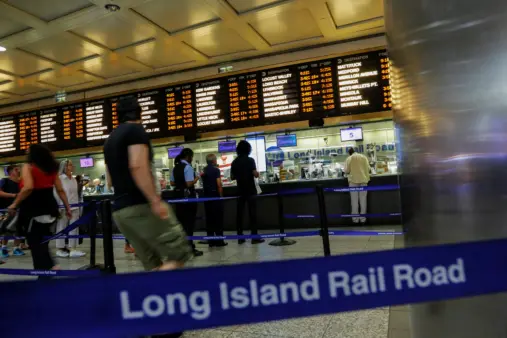
Lieber did suggests that changing union work rules could reduce costs. He said they “make no sense,” while appealing to politicians that the MTA “need(s) your help to rationalize the work rules, and that means helping us to have good discussions with our union friends.” He proposed changes like no overtime pay in weeks when employees use sick time, saying: “If we had, I think, a more effective managerial response, so over time we got rid of some of the work rules that automatically give people overtime, I think we can make some progress on the issue raised.”
The other logical conclusion would be that the MTA uses too much OT because it’s understaffed. Lieber denied that’s the case, saying current vacancies are “normal rotation” due to retirements and job changes. “People retire, they leave for other jobs. We are not chronically understaffed,” he argued.
Fare evasion and cutting own on overtime are two of the bigger challenges for the MTA, from an outsider’s perspective. But to hear Lieber tell it, things are just fine. Turnstile jumping’s been solved, and rampant OT use is a virtue.
Read and Listen to More MTA-related Content from 77 WABC:
Owner-operator John Catsimatidis interviewed Chairman and CEO Janno Lieber several years ago: