






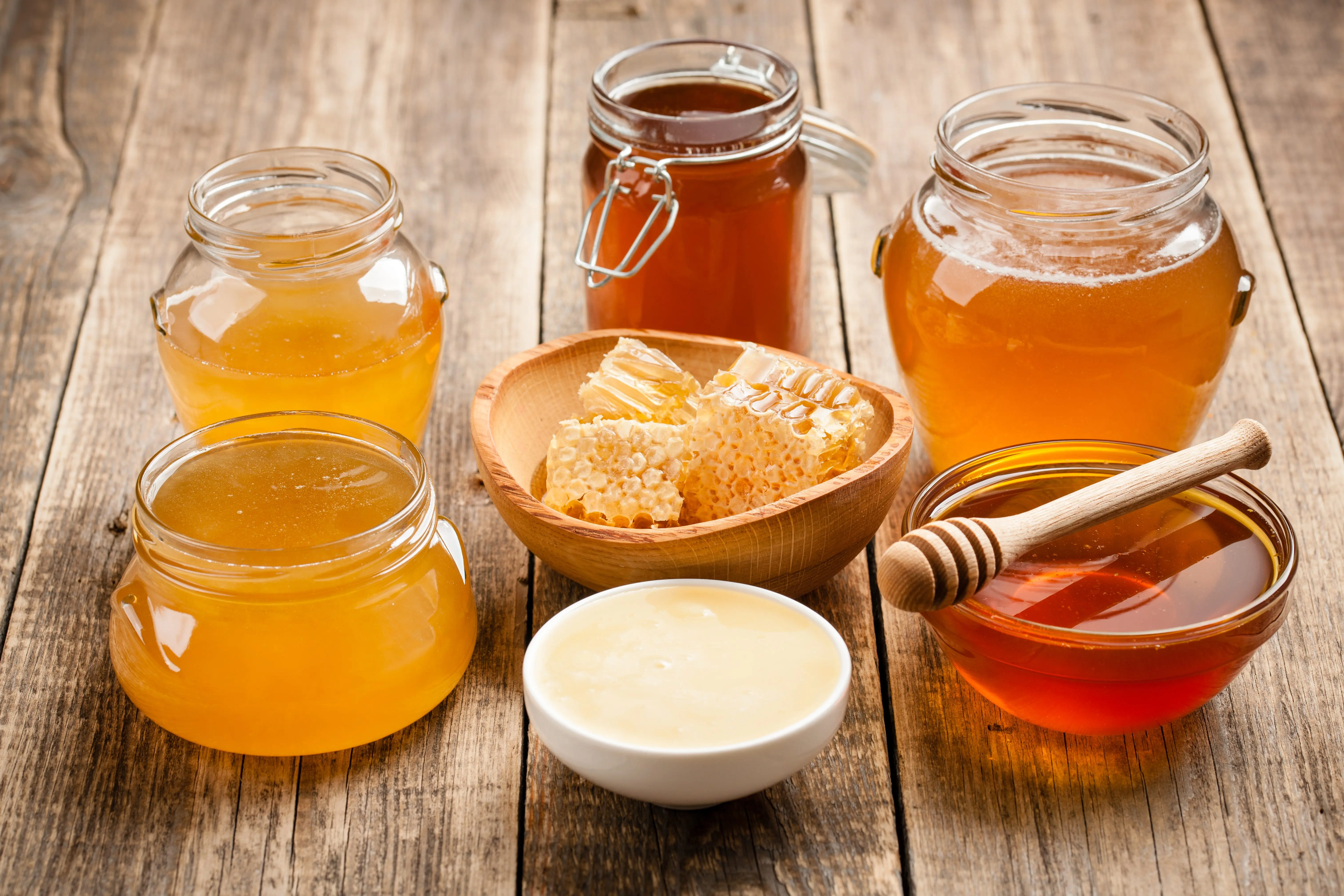
Variety of Honey
Variety of Honey
Honey, one of nature’s sweeteners, has been a staple in the diet since antiquity not only as an ingredient, but also used for its bioactive compounds, playing a role in traditional naturopathic and wellness practices for supporting general health. Scientific research confirms that honey contains natural antioxidants, enzymes, organic acids, and antimicrobial compounds, though their concentration varies widely depending on color, botanical source, processing, and growing environment.
Why Dark Honey Has More Antioxidants
Studies have shown that darker honeys contain higher levels of phenolic compounds and flavonoids, the primary antioxidants responsible for neutralizing free radicals. These compounds increase as honey color deepens, making dark varieties such as buckwheat, chestnut, honeydew, oak, and thyme honey among the most antioxidant-dense types analyzed.
Buckwheat honey has repeatedly ranked at or near the top in laboratory antioxidant testing, sometimes exceeding levels found in Manuka honey when measured by total phenolic content and free-radical scavenging activity. (PubMed) (MDPI)
Does Altitude Matter?
Emerging research suggests honey produced at higher altitudes may contain enhanced antioxidant properties compared with some coastal or lowland honeys. Higher elevations expose plants to greater ultraviolet radiation, temperature variation, and environmental stress, which can stimulate plants to produce more protective phenolic compounds. These compounds are then transferred into nectar and, ultimately, honey.
Several studies comparing honey by geographic origin have found that mountain and upland-highland honeys often show higher total phenolic content and antioxidant activity than honey from flatter or coastal regions, though floral source remains the dominant factor (MDPI) (Nature). For this reason, honey sourced from mountainous regions is often interesting for consumers seeking higher antioxidant potential.
Coastal Honey vs. Mountain Honey
Coastal honeys are nutritious, especially when derived from antioxidant-rich plants, but they are often lighter in color, which generally correlates with lower antioxidant concentration. Altitude alone does not guarantee potency, but high-altitude + dark color + monofloral source is a strong indicator of higher antioxidant potential.
The Value of Lighter Honeys
While darker honeys tend to contain higher antioxidant concentrations, lighter honeys also offer meaningful health benefits and should not be dismissed. Varieties such as acacia, clover, orange blossom, and wildflower honey are often prized for their milder flavor, higher fructose content, and smoother texture, which can make them easier to digest for some individuals. Lighter honeys have been shown to retain natural enzymes, trace minerals, and antibacterial properties, and they are frequently used for soothing coughs, supporting gut comfort, and providing quick energy. Their lower phenolic intensity may also make them better tolerated by people with sensitive palates or digestive systems, and they remain a valuable source of natural carbohydrates and bioactive compounds when consumed in moderation (keep in mind they have higher fructose content). (PubMed) (Healthline)
General Health Benefits of Honey
In addition to antioxidants, studies have shown that honey may:
- Support digestive health
- Exhibit antimicrobial, anti-inflammatory, antiviral and antibacterial activity in laboratory and clinical studies
- Soothe coughs and sore throats
- Provide a natural energy source
- When used topically it may support wound healing.
Raw, unfiltered honey retains more of these properties than heat-processed varieties, including vitamins and minerals. (PubMed) (Healthline)
To maximize benefits for antioxidant support:
- Choosedark-colored honey
- Look forraw and unpasteurized
- Prefermonofloral labeling (buckwheat, chestnut, thyme)
- Considermountain or high-altitude origins
- Avoid ultra-filtered or blended commercial honey
Benefits of Various Honey Types
For sensitive individuals: Those with pollen or bee related allergies check with your doctor about trying new honeys in small amounts especially raw varieties, which may contain trace pollen..
Honey for everyday use and gentle digestion: Lighter honeys like acacia, clover, or orange blossom offer natural enzymes, quick energy, and milder flavor profiles that many people find easier to tolerate.
For immune and throat support: Raw honey, light or dark, has natural antibacterial properties and is commonly used to soothe coughs and sore throats.
Allergy and Safety Considerations
Raw honey contains trace pollen and plant proteins. Those with pollen or bee-related allergies can try new honeys in small amounts, especially raw varieties. Be sure to check with your doctor first. Honey should never be given to infants under one year of age due to the risk of botulism spores. (CDC)
Bottom Line
Scientific evidence shows that dark, raw honeys, especially those from antioxidant-rich plants and higher elevations, offer the highest antioxidant potential. While coastal honeys still provide nutritional value, color, floral source, and processing matter more than location alone when choosing honey for health benefits.
*This article is for informational purposes only. Be sure to ask your doctor what will better support you. Never give honey to infants under one year of age.
Sources: (PubMed) (Healthline) (CDC) (PubMed) (Healthline) (MDPI) (Nature)