


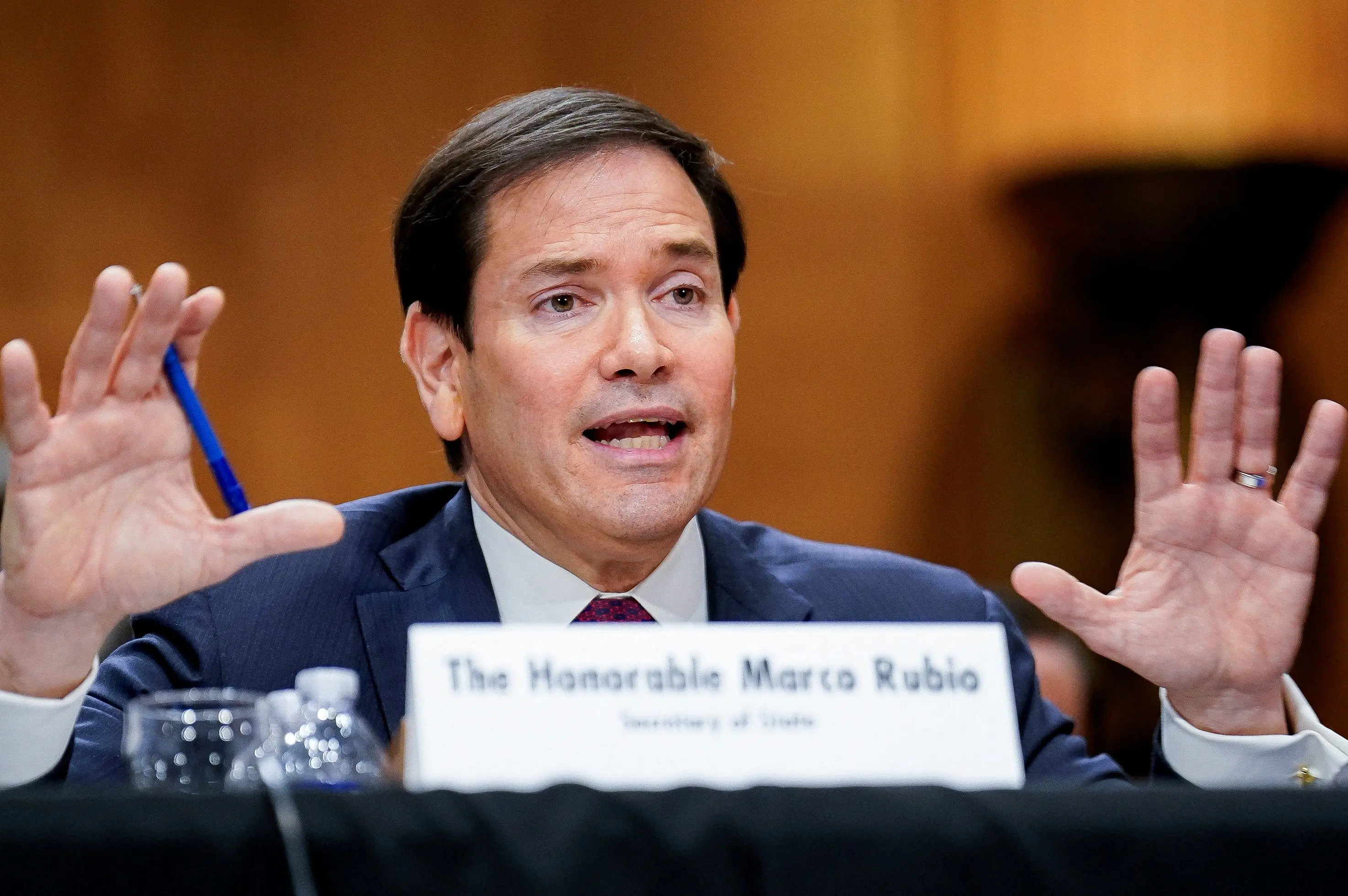
U.S. Secretary of State Marco Rubio testifies before a Senate Foreign Relations Committee hearing titled "U.S. Policy Towards Venezuela", on Capitol Hill in Washington, D.C., U.S., January 28, 2026. Photo Credit: REUTERS/Nathan Howard
Washington, D.C., U.S., January 28, 2026. Photo Credit: REUTERS/Nathan Howard
(Washington, D.C.) – U.S. Secretary of State Marco Rubio appeared before the Senate Foreign Relations Committee on January 28, 2026, in a widely televised hearing to address U.S. policy toward Venezuela following the January U.S. led operation that resulted in the detention of Nicolás Maduro.
During the hearing, Rubio responded to questions from both Republican and Democratic senators regarding congressional notification, oversight, and the administration’s strategy. Secretary Rubio confirmed that the operation involved approximately 200 U.S. personnel, lasted several hours, and included a brief firefight lasting less than half an hour. He said there were no U.S. casualties, while casualties were reported on the Venezuelan side. Rubio described the action as a limited, targeted law-enforcement operation executed after other options had been exhausted. He emphasized that Maduro was not recognized by the United States or most of the international community as Venezuela’s legitimate leader and had been indicted in the United States on narcotics-related charges.
Rubio told lawmakers that he served 14 years in the U.S. Senate, during which he consistently supported efforts to remove Maduro from power. He said multiple U.S. administrations, Republican and Democratic, had sought Maduro’s removal through sanctions, diplomacy, and international pressure but were unsuccessful. Rubio stated that while previous administrations identified Maduro as a threat tied to drug trafficking and regional instability, the January operation marked the first time conditions aligned for his removal.
Rubio told lawmakers that Venezuela under Maduro had become a base of operations for Iran, Russia, and China, as well as drug trafficking organizations, posing what he described as a strategic risk in the Western Hemisphere. He said China had received Venezuelan oil at steep discounts as part of debt arrangements and that the United States had since cut off those flows, increasing U.S. leverage.
Rubio outlined a three-phase approach for Venezuela: stabilization, recovery, and transition. He said the immediate priority is preventing economic and social collapse while maintaining pressure to reduce foreign adversary influence and narcotics trafficking. Rubio stated that proceeds from sanctioned Venezuelan oil sales are being placed under U.S. oversight, with spending limited to approved uses and subject to auditing. He said the administration does not anticipate using U.S. taxpayer funds to rebuild Venezuela.
Several senators raised concerns about congressional consultation, the cost of the operation, and whether power structures inside Venezuela had meaningfully changed. Lawmakers questioned whether interim authorities had reduced ties to Iran, China, and Russia, and sought clarity on timelines for political reform, human rights improvements, and elections.
Rubio said political prisoners have begun to be released and that reforms to Venezuela’s hydrocarbon laws were enacted weeks after Maduro’s removal. Rubio also stated that the administration does not anticipate further military action in Venezuela and that the planned U.S. presence would be limited to diplomatic and security personnel.
The hearing also addressed other issues such as NATO and U.S. alliances. Senators questioned Rubio about the administration’s commitment to NATO and concerns that U.S. rhetoric toward allies could weaken alliance unity. Rubio responded that NATO remains important to U.S. security but said alliance capabilities must be strengthened. He stated that European partners need to invest more in defense and said a more balanced distribution of responsibilities would allow the United States to address security challenges in Europe, the Indo-Pacific, and the Western Hemisphere. Rubio said the administration continues to support NATO and is engaged in ongoing discussions with allies.
The hearing also shifted briefly with questions about Iran, with Rubio stating that its internal protests reflect public demands for change, and acknowledged broader regional challenges.
The hearing marked the first public Senate oversight session on Venezuela since the operation and concluded with some senators signaling continued scrutiny of U.S. actions, costs, and long-term objectives in the country.
Sources: Reuters
Full Hearing: CSPAN: https://www.youtube.com/watch?v=I8BzUlc2lvI