




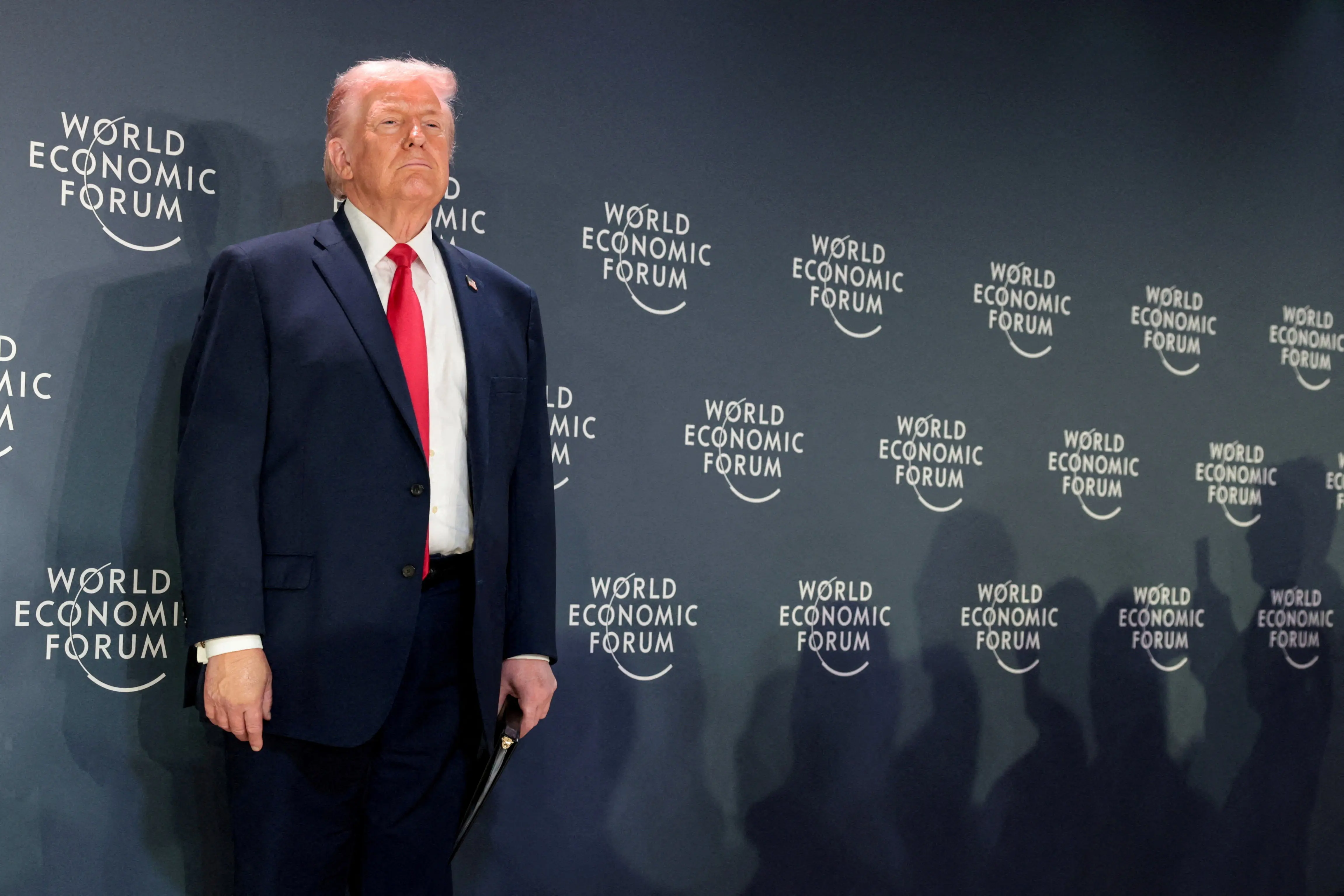
Davos-World Economic Forum-Trump-Credit-Reuters
Davos-World Economic Forum-Trump-Credit-Reuters
(Davos, Switzerland) –White House– President Donald J. Trump made a high-profile appearance at the World Economic Forum in Davos, Switzerland in late January, shaping the global conversation around U.S. foreign policy, economic messaging, and peace initiatives in the Middle East, positioning the United States as a central driver of Western prosperity while urging European partners to rethink economic, energy, and security policies. The White House characterized the trip as a strategic moment for advancing American interests and reinforcing U.S. leadership on critical geopolitical and economic issues.
According to White House materials, Trump’s address focused heavily on domestic economic actions he said were already reshaping the U.S. economy during his first year back in office. He emphasized new measures aimed at lowering costs for American households, including executive action to block large institutional investors from purchasing single-family homes and a push for Congress to make the restriction permanent. The administration has also directed government-backed institutions to purchase large volumes of mortgage bonds, a step the White House says has helped bring mortgage rates lower.
Trump also highlighted proposals targeting consumer debt, calling for a temporary cap on credit card interest rates and arguing that current rates place unnecessary strain on households. In addition, he reaffirmed support for the digital asset sector, telling Davos attendees that his administration intends to position the United States as a global leader in cryptocurrency and financial innovation.
Reviewing economic performance, Trump claimed that inflation had eased significantly while growth accelerated, pointing to reductions in the U.S. trade deficit and increased domestic energy production. He credited expanded oil and natural gas output with helping stabilize fuel prices and said those policies helped insulate the United States from energy disruptions that have affected parts of Europe. The president also cited workforce reductions across federal agencies, spending cuts, and recently enacted tax changes as evidence of a smaller, more efficient government.
Turning to Europe, Trump urged leaders to place greater emphasis on energy independence, economic competitiveness, and border security. He argued that long-term prosperity in the West is tied not only to fiscal policy but to cultural cohesion and social stability, calling on allied nations to reassess policies he argued have weakened growth and strained public institutions.
In his address to the forum, Trump also reiterated long-standing positions on NATO and transatlantic relations, arguing that European allies, benefit from U.S. security commitments and should contribute more robustly to collective defense. He framed U.S. engagement as foundational to global security, even as his rhetoric underscored frustration with alliance dynamics.
According to White House sources, a central focus of Trump’s visit was the launch of a new initiative called the “Board of Peace,” aimed at facilitating a post-conflict framework for Gaza and broader Middle East stability.
White House officials described the Davos appearance as a signal that the administration intends to engage directly with global leaders while advancing an economic model centered on national sovereignty, domestic production, and transatlantic strength.
Source: White House, White House