





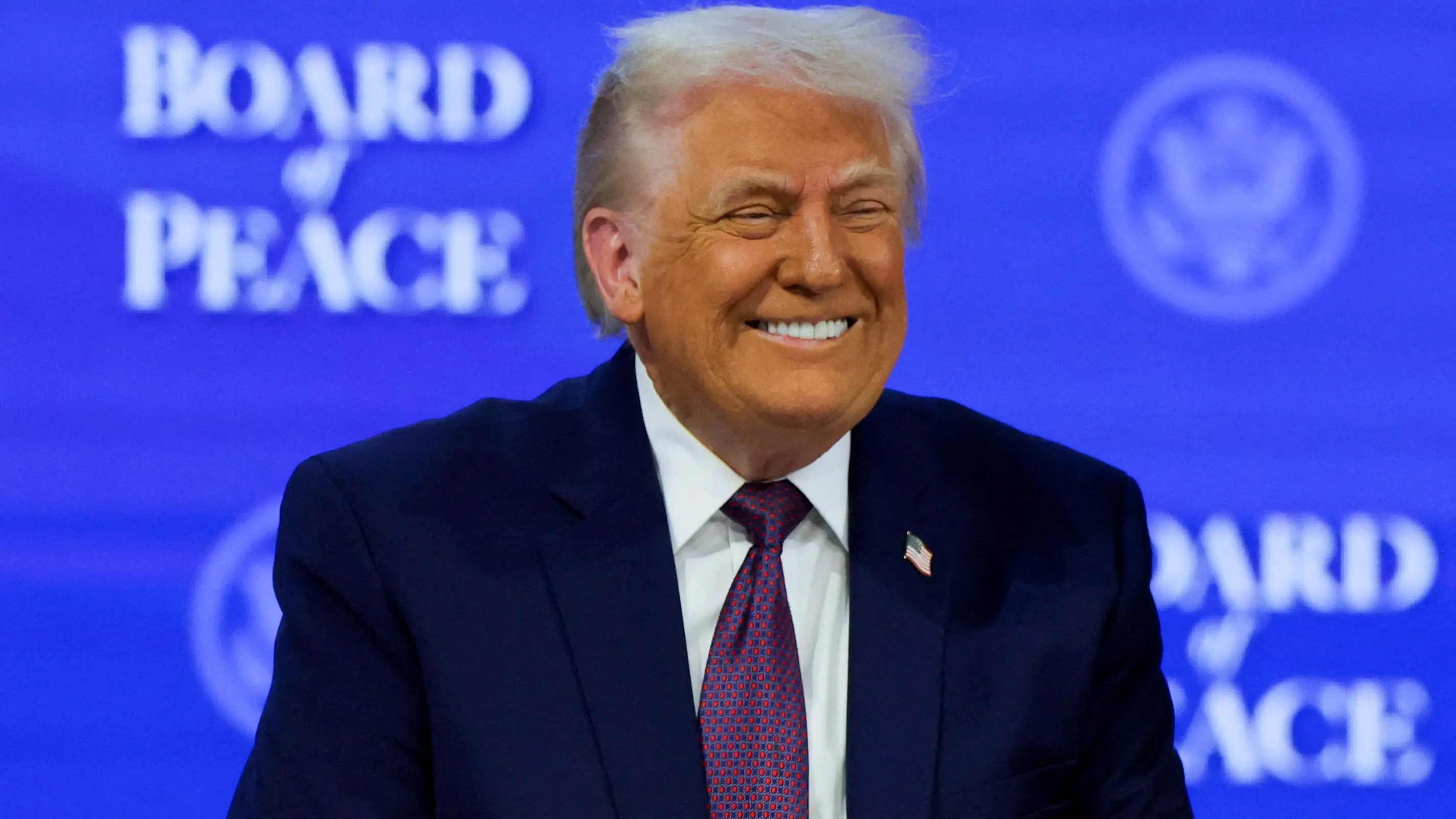
U.S. President Donald Trump reacts, as he takes part in a charter announcement for his Board of Peace initiative aimed at resolving global conflicts, alongside the 56th annual World Economic Forum (WEF), in Davos, Switzerland, January 22, 2026. REUTERS/Denis Balibouse
(Washington, DC) – Murders in the United States fell by more than 20% in 2025 under President Trump, marking the largest single-year drop ever recorded and potentially pushing the national homicide rate to its lowest level since 1900, according to a new study cited by CBS News.
The annual crime trends report from the Council on Criminal Justice analyzed data from 40 major U.S. cities and found homicides dropped 21% from 2024, while carjackings plunged 61% since 2023 and shoplifting declined 10% year over year. Overall violent crime returned to, or fell below pre-pandemic 2019 levels, with drug offenses the only category to rise.
Researchers cautioned that pinning the decline to one cause is difficult, but noted the trend follows a longer-term drop in homicides that began in the late 2000s before spiking during the pandemic. “The overall reduction in crime, especially homicide, is welcome news,” said lead author Ernesto Lopez, adding the data suggests a return to a downward trajectory after the COVID-era surge.
City-level numbers underscore the shift: Richmond, Virginia saw murders fall 59%, Los Angeles dropped 39%, and New York City declined 10%. Across the sample, 27 of 35 cities reported fewer homicides, and researchers said there were 25% fewer murders in 2025 than in 2019.
Experts pointed to a mix of factors behind the drop, including targeted policing in high-risk areas, the return of normal routines after COVID disruptions, court systems resuming operations, and community-based interventions that helped prevent conflicts from escalating. Still, analysts warned national averages can mask disparities, noting some neighborhoods have benefited more than others.