






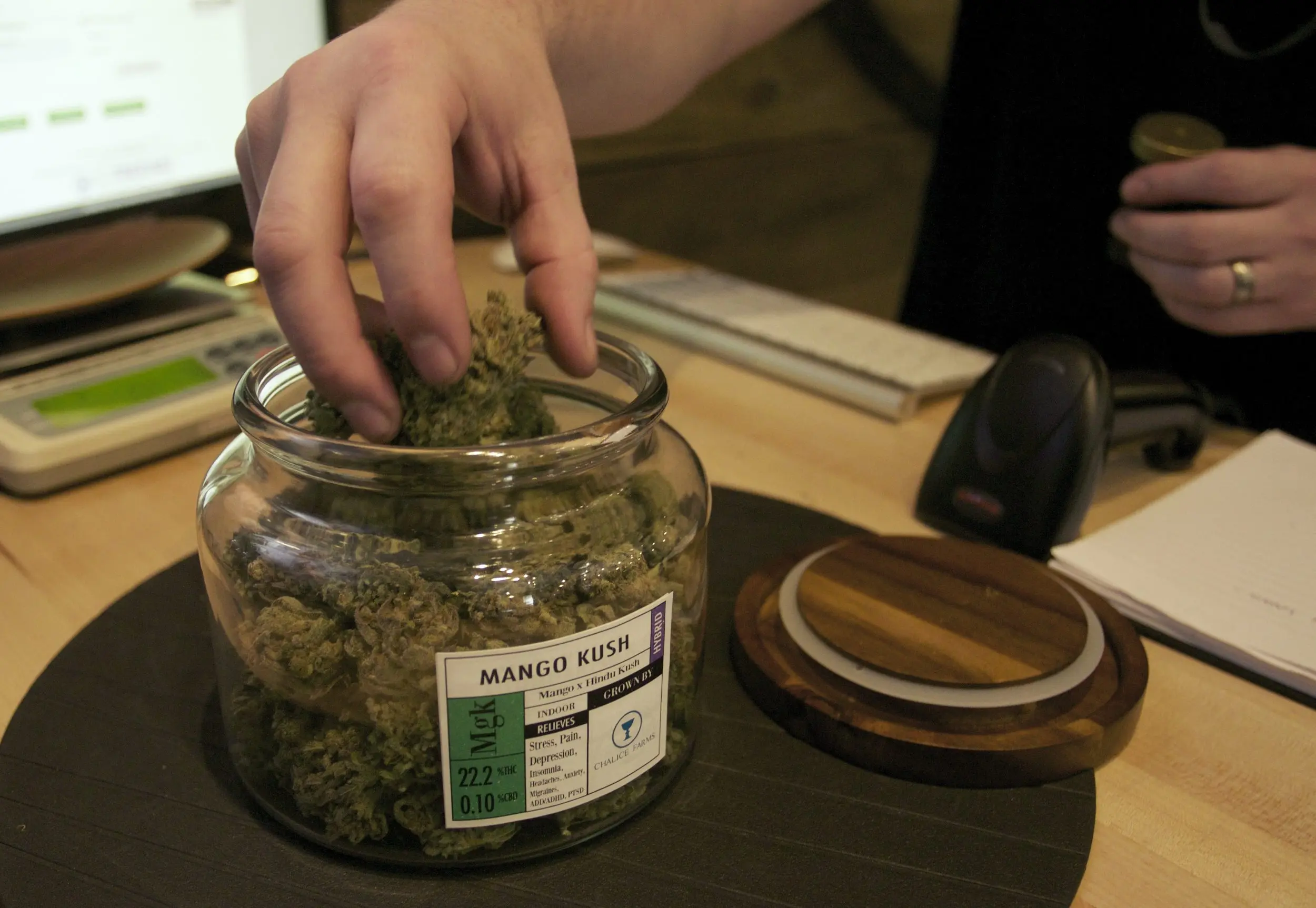
Co-owner Troy Moore measures marijuana at the "Oregon's Finest" medical marijuana dispensary in Portland, Oregon April 8, 2014. © REUTERS/Steve Dipaola
(Cape May, NJ) – For years the argument surrounding legalizing marijuana was rooted in boosting tax revenue. As the sale of weed moved from the streets to licensed storefronts, the state could tax those transactions, and put the money toward good use. In the Garden State, the hope is that selling the green will help an ecologically friendly campaign — to repair the Jersey Shore line.
Down in Cape May County, Upper Township has may grant a permit to a cannabis dispensary just east of the Garden State Parkway — near the entrance to Ocean City — aiming to generate new tax revenue amid ongoing beach erosion issues in areas like Strathmere.
The township plans to impose a 2% local tax on cannabis sales. Whoever runs the dispensary would need to fork over a $7,500 annual licensing fee and a $10,000 application fee (unsuccessful applicants would get back $5,000). Officials estimate annual revenue of around $240,000, or roughly $20,000 per month. And those are considered conservative predictions.

Money doesn’t grow on “trees” so it’s always a benefit to local governments when tax revenues increase. But not all of the cannabis revenue would go toward beach replenishment. Approximately one-third of the tax revenue (close to $70,000 annually) would be dedicated to a special beach replenishment fund. The remaining two-thirds split between recreation programs, capital costs, and the general municipal budget.
Beach erosion is a major problem for Jersey Shore towns. The implications are obvious in terms of potential property damage and the impact to local residents. But there’s also the shore-based economy many towns rely on. Without an attractive shoreline for bathing, sunning, and other recreational activities, these towns can see a negative economic impact.
This cannabis initiative hopes to address severe beach erosion and storms vulnerability. That’s exacerbated by uncertainty in terms of potential federal funding for planned Jersey Shore replenishment projects. Officials say the township has increased its own beach-repair budget but needs additional sources.
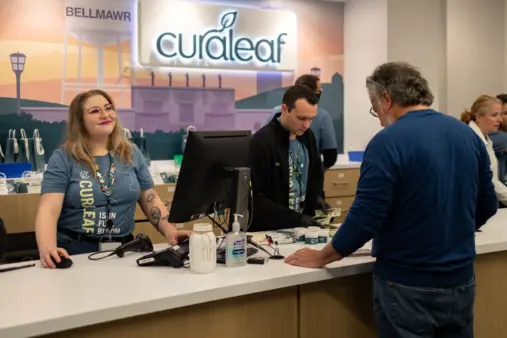
The potential “overlay zone” in which the dispensary would be located was selected for its high vehicle traffic, proximity to Ocean City (a dry town that prohibits the sale of alcohol and cannabis), lack of residential homes, and potential to maximize revenue without impacting core tourist or residential areas.
Still, some residents express quality-of-life worries, including health risks, increased potency of marijuana, and its potential as a gateway drug. Others support it for economic benefits, comparing it favorably to alcohol and noting lost revenue from deliveries from nearby towns; neighboring Ocean City has voiced concerns.
The Star Ledger quoted Upper Township Mayor Curtis Corson, who said “We’re one storm away from having a catastrophic event… we sat here and thought, ‘Where’s the place we can get the best bang for our buck?'” He separately told the Ocean City Sentinel: “The only reason I’m entertaining this is for the revenue side of it.”
Listen 🎧 to more cannabis-related 🌿 content from 77 WABC: