





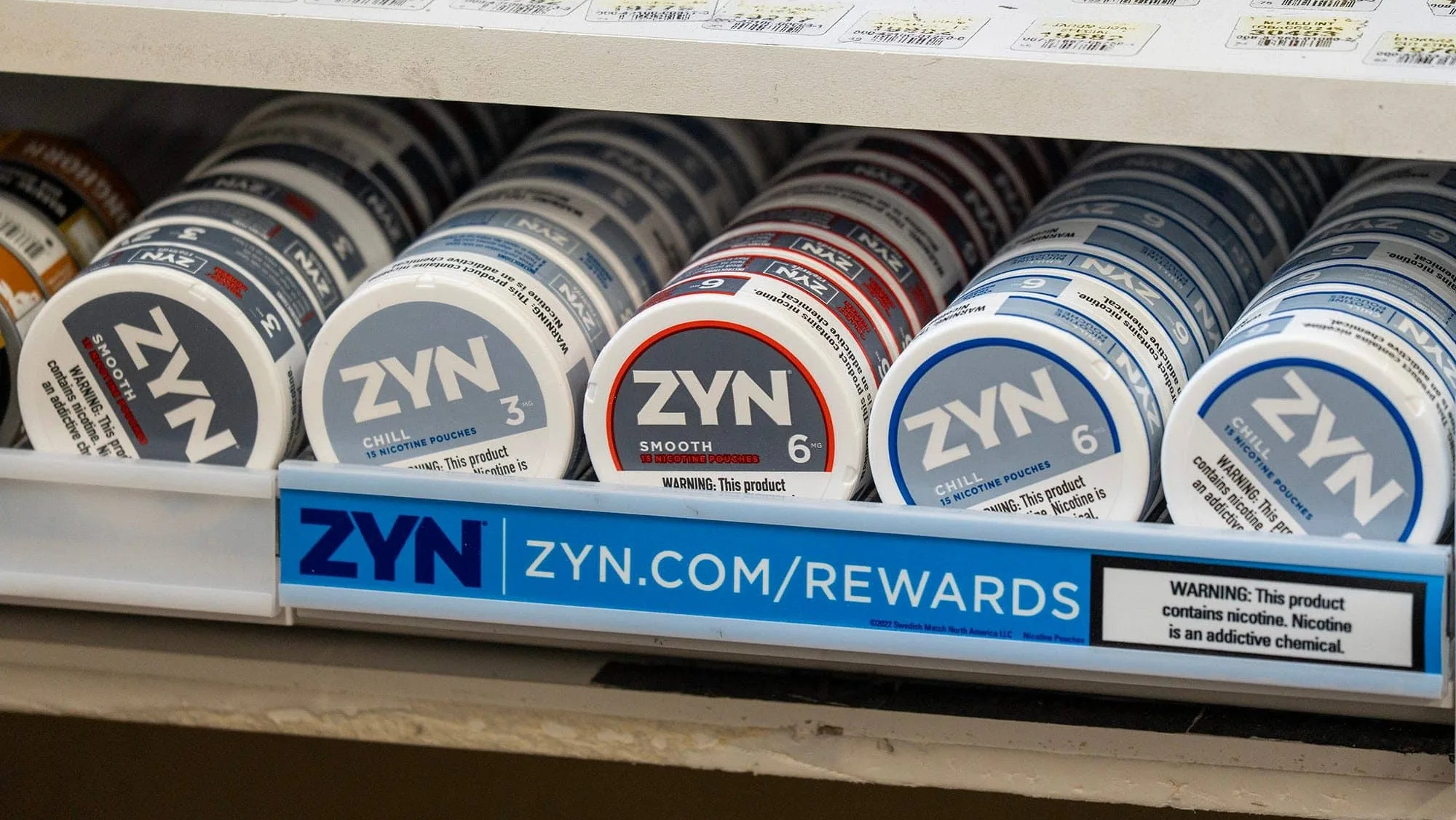
Nicotine pouches behind the counter at an US convenience store. © Rick Cinclair/Telegram & Gazette / USA TODAY NETWORK
(New York, NY) – In recent years, alternative tobacco products including vapes and nicotine pouches have exploded in popularity. This is partly in response to people quitting smoking, dipping, or chewing — but it also represents a shift in cultural trends. Whereas smoking cigarettes has been increasingly ostracized in terms of law, taxation, and typical behavior — “smokeless” consumption of nicotine is on the rise.
Vaping and concerns tied to its popularity have been well documented in news reports. That’s largely due to the fact young people — including teens in school — have taken to vapes. Parents and educators have raised health concerns and noted the debilitating nature of addiction — perhaps especially for young, developing minds.
Now, officials in New York are eyeing the sale of nicotine pouches as a potential source of revenue. Governor Kathy Hochul, who rolled out her budget proposal this week, wants to start taxing the pouches. Hochul’s Fiscal Year 2027 Executive Budget includes a proposal that would expand the definition of “tobacco products” under state tax law to encompass “alternative nicotine products.” This specifically targets nicotine pouches like Zyn, as well as lozenges and similar items that contain nicotine — but no tobacco leaf.
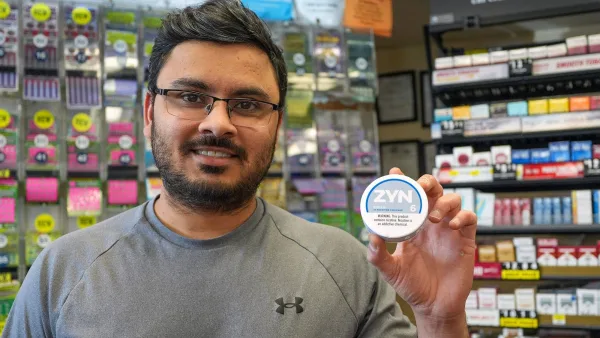
Zyn containers (or the packaging of a competitor) are more or less ubiquitous when chatting with 20 something males around New York City. Whereas a cigarette pack rolled up into the sleeves was part of the “greaser” uniform in the 1950s, the 2026 look is a sleeveless vest, trendy sneakers, and Zyn tin. We hit the streets and asked people buying their Zyn tins what they think about an increased tax on their beloved pouches. “It was the one cheap nicotine product on the market, and now it’s not going to be. It’s also being taxed already, right?” And I was able to tell the young man — yes — they are taxed. But only the standard 4% sales tax, and nothing higher — meaning Zyn pouches are exempt from the 75% wholesale tobacco tax.
If Hochul’s legislation is passed, nicotine pouches would be brought in line with other tobacco products. Cigarettes face a $5.35 per pack state excise tax, and other products (such as cigars or snuff) are already hit with the 75% wholesale tax. Vapor products (vapes) incur a separate 20% supplemental retail sales tax.
The proposal effectively closes a loophole for nicotine pouches, aligning their taxation with other tobacco alternatives — but not exactly matching cigarette taxation. Estimates vary slightly in terms of potential revenue for the state. Some reports say the tax is projected to generate approximately $18 million in state revenue for Fiscal Year 2027 (which begins April 1, 2026).

At a newsstand in Midtown, one man said: “Seems like a way for Hochul to take more money from the working man!” Another bitterly offered: “It’s very indicative of New York. They will bend over the common man any chance they get.”
Suffice it to say the move is less-than-popular with regular users of the nicotine pouches. It’s not clear how much that would impact Governor Hochul’s bid for re-election, or how her GOP counterpart Bruce Blakeman feels about the issue.
Looking ahead to Fiscal Year 2028, Hochul’s budget plans on an annual $50 million deposit from overall tobacco products tax revenues (including this new tax) into the Health Care Reform Act (HCRA). That would theoretically fund hospital care and other health initiatives. The proposal is part of broader tobacco and nicotine control efforts, including a separate new $0.55 distributor fee per vapor product (for vapes) and expanded enforcement against illegal sales, such as a state registry for vaping products and authority for seizures of contraband.
Critics, including manufacturers like Philip Morris (Zyn’s parent company), argue the tax undermines public health by discouraging smokers from switching to less harmful alternatives like pouches, potentially driving users back to cigarettes or creating a black market. Supporters view it as a way to curb youth nicotine use and fund health programs.
The overall $260 billion budget avoids income tax hikes, relying on this and other measures (e.g., extending corporate taxes) to balance spending increases on education, Medicaid, and child care amid a $10.3 billion federal funding drop.
The proposal requires approval by the New York State Legislature during budget negotiations, with a final budget due by April 1, 2026 (though it’s been late several times in recent years). Leftists have criticized the lack of wealth taxes, while right-leaning conservatives oppose new fees like this one.
At the end of the day, you really can’t fight City Hall — or Albany, in this case. One Zyn customer told us: “Doesn’t matter. I’m addicted, so. I’ll pay the tax.”