





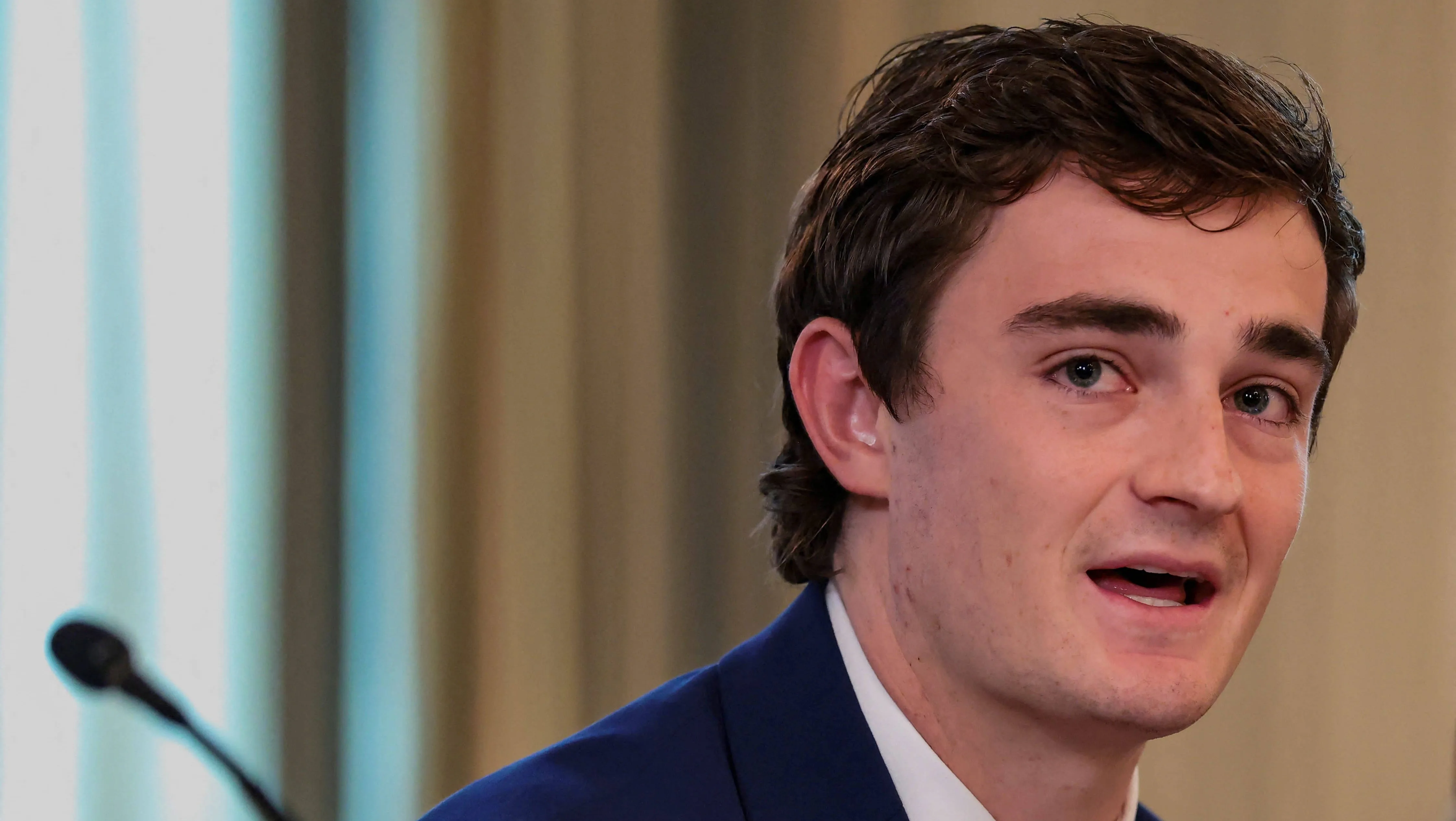
Nick Shirley speaks during a roundtable on antifa, an anti-fascist movement U.S. President Donald Trump designated a domestic "terrorist organization" via executive order on September 22, at the White House in Washington, D.C., U.S., October 8, 2025. REUTERS/Evelyn Hockstein
(New York, New York) – Conservative commentator Nick Shirley is raising new questions about how hundreds of millions of taxpayer dollars are spent on medical interpreter services, alleging widespread abuse within publicly funded healthcare systems. In a recent interview with host David, Shirley argued that language services intended to help non-English speakers are being exploited at an enormous cost to American taxpayers.
According to Shirley, counties routinely pay outside interpreters up to $100 an hour- often with an eight-hour minimum, to accompany Somali-speaking patients to doctor visits, even when those patients are otherwise fluent in English. Shirley claimed the costs quickly balloon into the tens or hundreds of millions of dollars annually once interpreter fees, administrative overhead, and repeated visits are factored in.
“When a Somali goes to the doctor, magically, they forgot how to speak English,” Shirley said during the interview. “So the county brings in an interpreter at $100 an hour, minimum eight hours. And it’s millions and millions of dollars all on its own.”
Shirley described the practice as a largely unexamined layer of waste, and potentially fraud- within government-funded healthcare programs, arguing that it highlights deeper problems with oversight, accountability, and incentives in public spending. While officials defend interpreter services as necessary to ensure proper care and compliance with federal language-access laws, critics like Shirley say the system invites abuse and lacks meaningful safeguards.
No government agency has formally accused providers or patients of wrongdoing, but Shirley’s comments have fueled renewed calls among fiscal conservatives for audits, tighter eligibility rules, and greater scrutiny of how taxpayer dollars are spent in healthcare settings.