





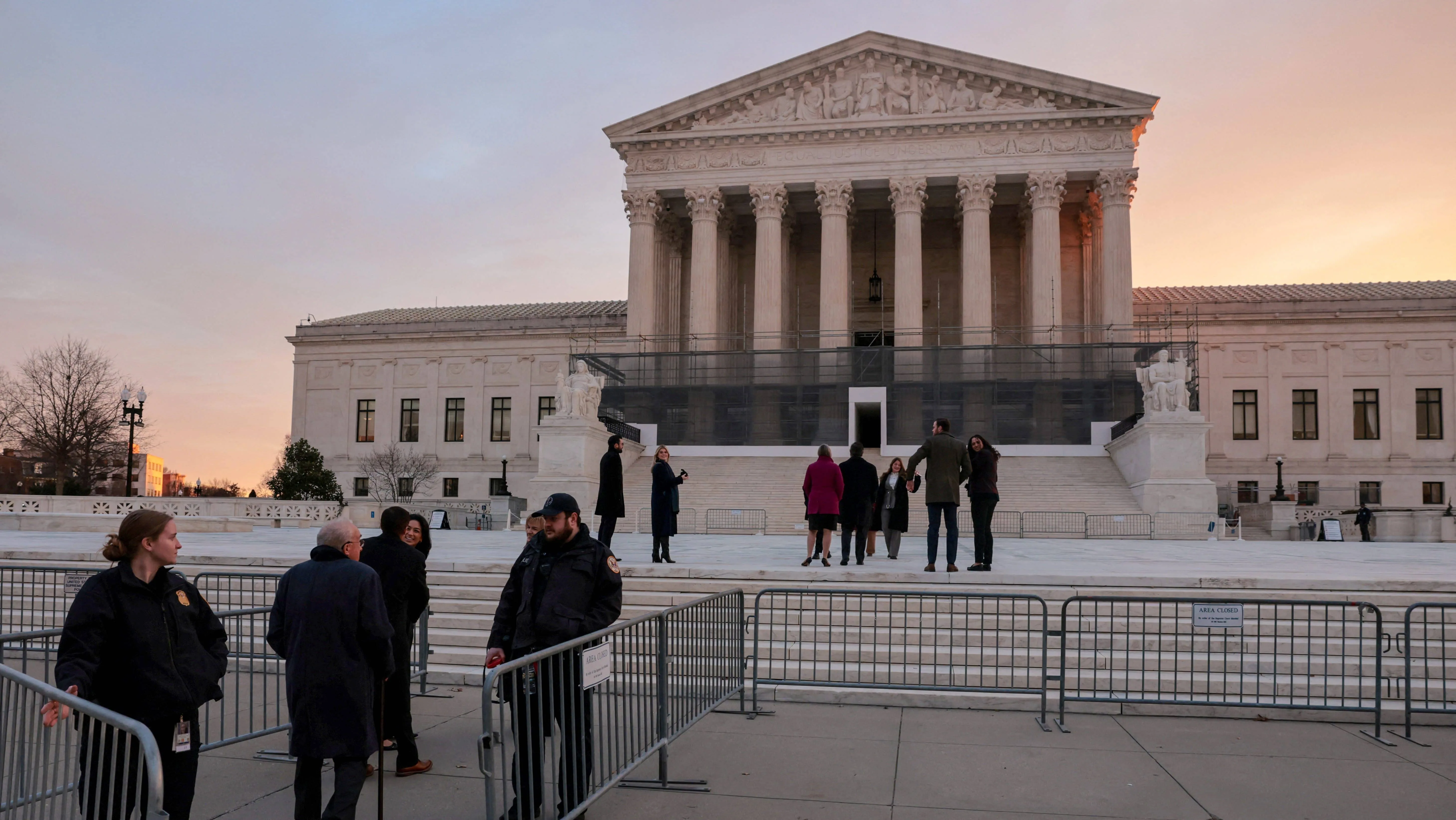
U.S. Supreme Court police control access to the plaza in front of the court building at the start of the day in Washington, D.C., U.S., January 12, 2026. REUTERS/Jonathan Ernst
(New York, New York) – U.S. importers are preparing for a potential legal and financial battle that could stretch for years as the Supreme Court considers whether President Donald Trump had the authority to impose sweeping global tariffs under emergency powers. If the court strikes down the tariffs, companies estimate the federal government could face up to $150 billion in refund claims for duties already collected.
During oral arguments late last year, both conservative and liberal justices expressed doubts about whether the decades-old law authorizes tariffs at that scale, raising expectations that the court may rule against the administration.
Even if the tariffs are invalidated, importers fear the refund process will be anything but smooth. Trade lawyers and executives warn that Customs and Treasury officials could slow-walk payments or force companies into lengthy litigation to recover funds. Several major corporations have already filed preemptive lawsuits to protect their refund rights, arguing that a favorable Supreme Court ruling alone may not guarantee repayment.
Some smaller businesses, wary of delays, are selling their refund claims to hedge funds at steep discounts, while others are racing to preserve documentation before refund deadlines expire. Industry experts caution that without clear guidance from the court, disputes over eligibility, timing, and proof of payment could drag on for years- turning what could be a historic refund into another test of Washington’s ability to unwind its own policies.
The case carries broader implications beyond refunds, potentially limiting how future presidents use emergency powers to influence trade and economic policy, and setting a precedent that could reshape the balance between Congress, the White House, and the courts.