







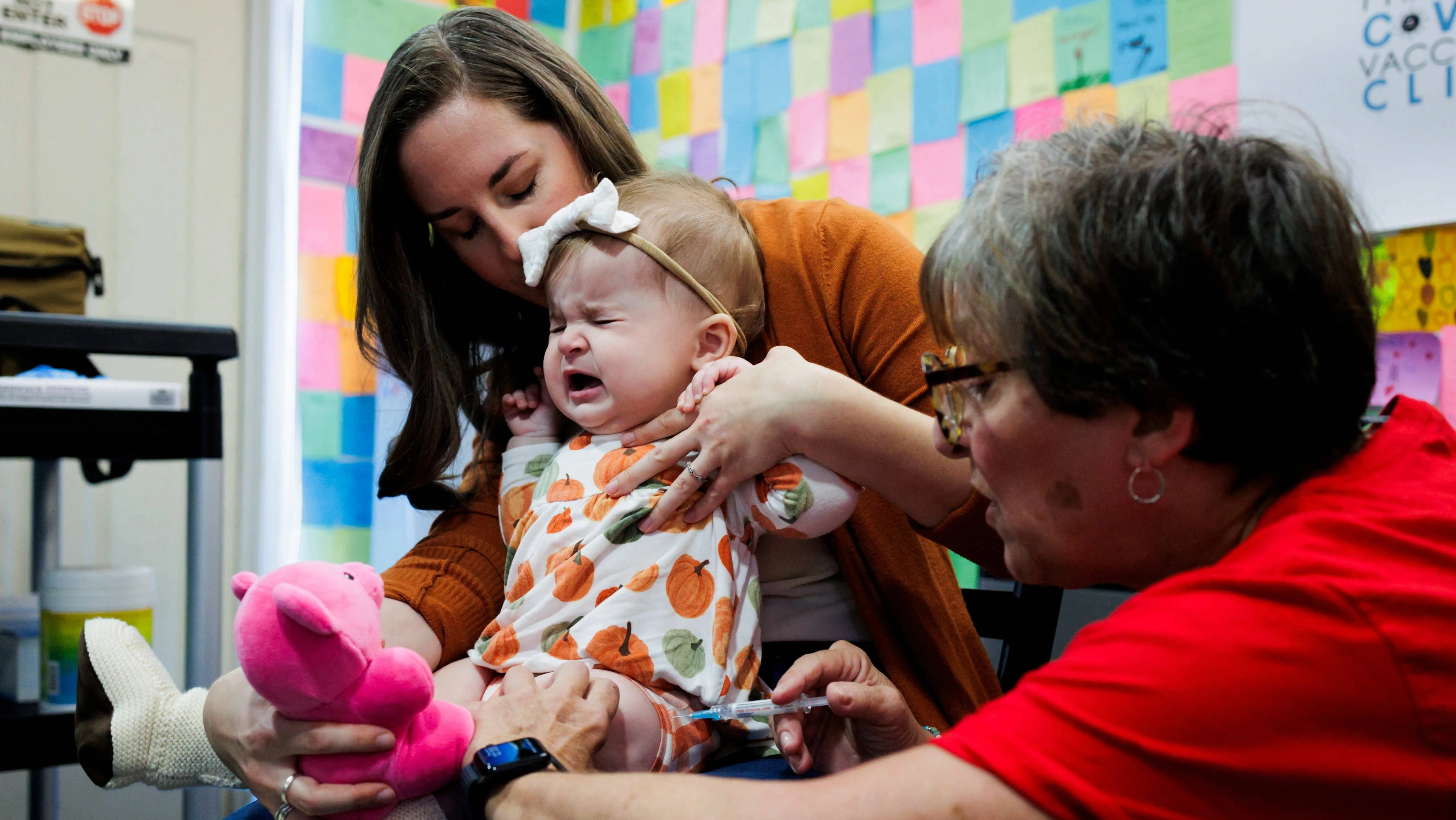
A seven-month-old receives a dose of Moderna Spikevax (COVID-19 Vaccine, mRNA) while her mother Karissa Patberg, 41, holds her at Skippack Pharmacy in Schwenksville, Pennsylvania, U.S. October 2, 2025. REUTERS/Hannah Beier
Kids receive Moderna Spikevax (COVID-19 Vaccine, mRNA) at Skippack Pharmacy in Schwenksville
(Washington, D.C.) –On Monday, The Centers for Disease Control and Prevention (CDC) announced a sweeping revision to the U.S. childhood vaccination schedule, reducing the number of vaccines routinely recommended for all children and shifting several shots to a more selective approach.
The updated guidance, which takes effect immediately, now advises immunization against 11 diseases for most children, down from as many as 18 under the previous schedule. Federal health officials say the changes are intended to rebuild public confidence in vaccination following declines in routine immunization during and after the COVID-19 pandemic. According to the scientific assessment that informed the decision, “the loss of trust during the pandemic not only affected the COVID-19 vaccine uptake. It also contributed to less adherence to the full CDC childhood immunization schedule, with lower rates of consensus vaccines such as measles, rubella, pertussis, and polio.”
The childhood vaccine schedule is not a federal mandate but serves as a framework for insurance coverage and school and daycare requirements, which are set by states. Traditionally reviewed annually by the CDC’s Advisory Committee on Immunization Practices, the panel was reconstituted last year after HHS Secretary Robert F. Kennedy Jr. dismissed its prior members. Under the revised schedule, the CDC continues to universally recommend vaccines for measles, mumps and rubella; polio; diphtheria; tetanus; whooping cough; Haemophilus influenzae type B (Hib); pneumococcal disease; human papillomavirus (HPV); and chickenpox. Other vaccines will now be limited to children considered at higher risk or offered through “shared clinical decision-making,” a process that requires parents and clinicians to weigh benefits and risks together. Vaccines restricted to high-risk groups include those for RSV, hepatitis A, hepatitis B, dengue, and two forms of bacterial meningitis. Flu, COVID-19, rotavirus, hepatitis A, hepatitis B and meningococcal vaccines fall under shared decision-making for otherwise healthy children.
The overhaul comes amid an active flu season, during which the CDC has reported nine pediatric deaths so far. While officials stressed that vaccines remain accessible, parents may now face additional steps, including doctor consultations, when seeking immunizations no longer routinely advised for all children.