

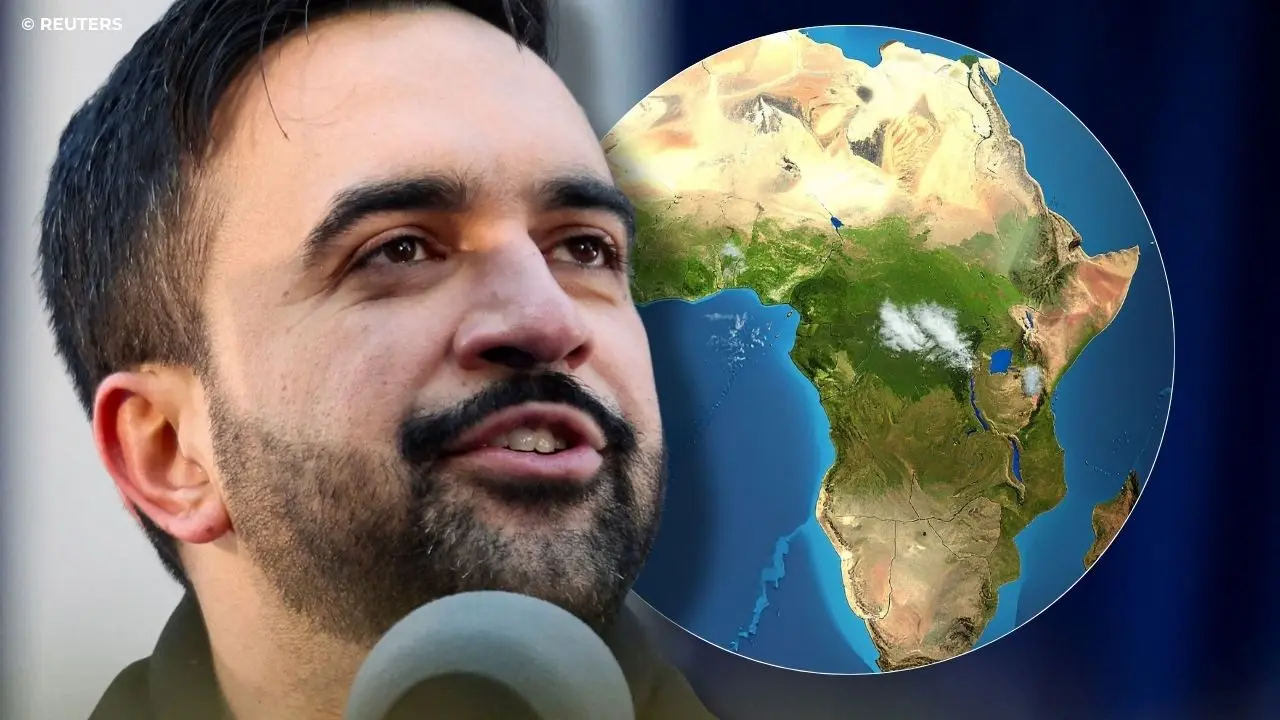
New York City Mayor Zohran Mamdani delivers a speech during his inauguration ceremony in New York City, U.S., January 1, 2026. REUTERS/Kylie Cooper
(New York, New York) – New York City didn’t just swear in a new mayor on New Year’s Day. It unveiled a new political experiment – and the Democratic establishment looked less than thrilled to be part of it.
Mayor Zohran Mamdani delivered an inaugural address that played less like a governing roadmap and more like an ideological manifesto. In blunt terms, Mamdani made clear that his victory was not merely personal, but philosophical. “I was elected as a Democratic Socialist and I will govern as a Democratic Socialist,” he declared, celebrating what he called an “era of big government” and promising to govern “expansively and audaciously.”
The crowd loved it. Party leadership did not.
Seated behind Mamdani, Senate Majority Leader Chuck Schumer wore the expression of a man who knows a political reckoning is coming. Schumer has yet to publicly endorse the mayor or even confirm he voted for him, and the discomfort was unmistakable. With midterm elections looming and a presidential cycle close behind, Democrats will soon have to decide whether Mamdani’s brand of politics is the future of their party — or an albatross.
Mamdani offered a preview of his governing philosophy by invoking Nelson Mandela and the South African Freedom Charter, urging New Yorkers to see their city through the lens of systemic injustice. The comparison was striking. The charter, which shaped post-apartheid South Africa, framed society as fundamentally illegitimate and in need of sweeping redistribution. That model has not aged well. South Africa today struggles with crime, failing infrastructure, and capital flight – hardly a reassuring template for America’s largest city.
Yet Mamdani’s rhetoric followed the same familiar script: identify villains, promise redistribution, and frame inequality as moral theft. He pledged to raise taxes on “whiter neighborhoods,” portrayed billionaires as corrupt actors who “buy our democracy,” and argued that New York has been controlled for too long by “the wealthy and well-connected.”
But the numbers tell a different story. Fixing the city’s “broken” property tax system would not primarily hit billionaires – it would land squarely on middle-class homeowners. Even the liberal Fiscal Policy Institute has acknowledged that funding Mamdani’s universal childcare proposal would require far more revenue than taxes on corporations and millionaires can generate. Governor Kathy Hochul, who must approve any such changes, has already signaled hesitation.
Outside City Hall, reality is intruding. Subway ads promoting “No-Flo” – North Florida developments promising lower taxes and fewer regulations – are popping up across the city. This isn’t just about hedge fund managers. Roughly 40 percent of New York City’s income tax revenue comes from a small share of earners, and once they leave, the burden doesn’t disappear – it shifts downward.
Mamdani framed his mission as cultural as much as economic. He promised to replace “rugged individualism” with collectivism, arguing that New Yorkers “yearn for solidarity.” Many voters thought they were backing relief from high prices and rent. They may not have realized they were also voting for a city less entrepreneurial, less self-directed, and more dependent on centralized control.
The mayor also made a clear effort to solidify support from New York’s growing Muslim population. He took the oath of office on the Quran, spoke in Urdu, highlighted halal cart vendors, and referenced Palestinian New Yorkers in Brooklyn. With nearly one million Muslims – about nine percent of the city’s population – the political calculation was obvious.
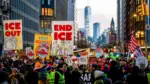
What cannot be denied is Mamdani’s ability to command a crowd. Thousands waited in freezing temperatures for his post-inauguration celebration. Supporters booed former Mayor Eric Adams, cheered calls to “tax the rich,” and listened intently as Mamdani promised to “return the city’s resources to workers.” Emotion ran high. Tears flowed.
An arts student turned rapper once known as Young Cardamom, Mamdani has moved from niche activism to center stage, backed by progressive heavyweights like Alexandria Ocasio-Cortez and Bernie Sanders. He is now the face of a political movement that Democrats nationally will be forced to confront.
New York has seen grand promises before. What remains to be seen is whether Mamdani’s vision produces prosperity – or whether the city becomes the latest cautionary tale of ideology outrunning reality.