





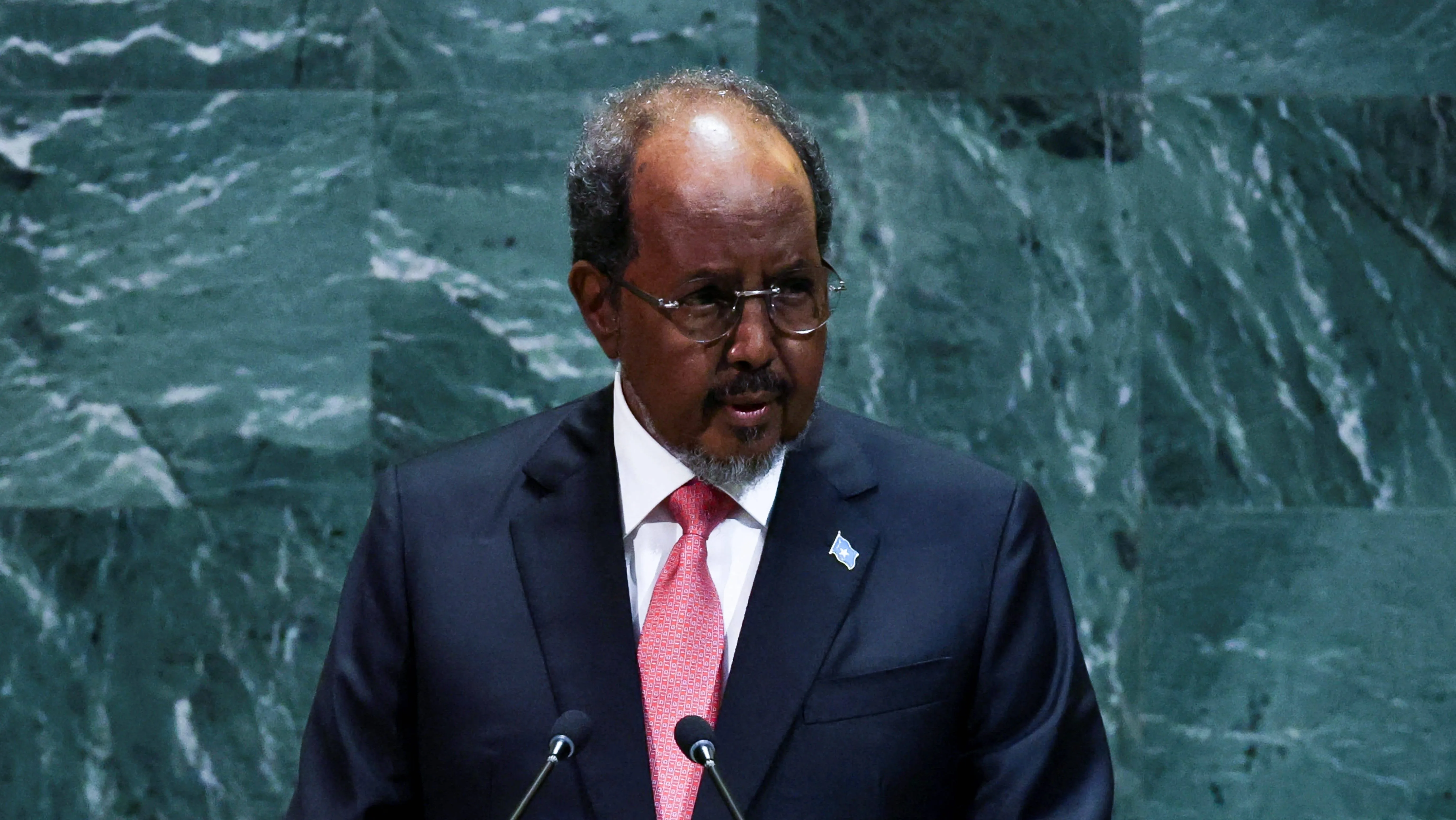
Somalia's President Hassan Sheikh Mohamud addresses the 80th United Nations General Assembly (UNGA) at the U.N. headquarters in New York, U.S., September 25, 2025. REUTERS/Jeenah Moon
(New York, New York) – The United Nations Security Council opened its first formal meeting of 2026 this week, welcoming new members and setting the tone for the year ahead – even as the session triggered a wave of backlash on social media.
The meeting, the 10,085th session of the Security Council, was called to order with a New Year greeting to member states, the UN, and its Secretariat. The presiding officer welcomed new Council members Bahrain, Colombia, the Democratic Republic of the Congo, and Latvia.
While the opening remarks were procedural, the meeting quickly became the focus of intense criticism online after discussions turned toward U.S. actions involving Venezuelan leader Nicolás Maduro. Social media users claimed the session functioned as an “emergency meeting” criticizing the United States, though the UN has not characterized the gathering that way.
Much of the online outrage centered on claims that Somalia was presiding over or leading the meeting – prompting angry reactions from critics who questioned the legitimacy and value of the UN itself.
Posts on X described the session as “pathetic” and “a joke,” with some users calling for the United States to withdraw from the UN entirely or to cut funding. Others argued the organization routinely undermines U.S. interests while providing little benefit in return.
The United Nations Security Council rotates leadership among its members, meaning presiding roles do not necessarily reflect agenda-setting power or institutional endorsement of positions raised during meetings.
U.S. officials have not commented on the online backlash, and the UN has not responded directly to the criticism circulating on social media.
The episode highlights growing skepticism among parts of the American public toward international institutions – particularly when UN proceedings intersect with U.S. foreign policy and national security decisions.