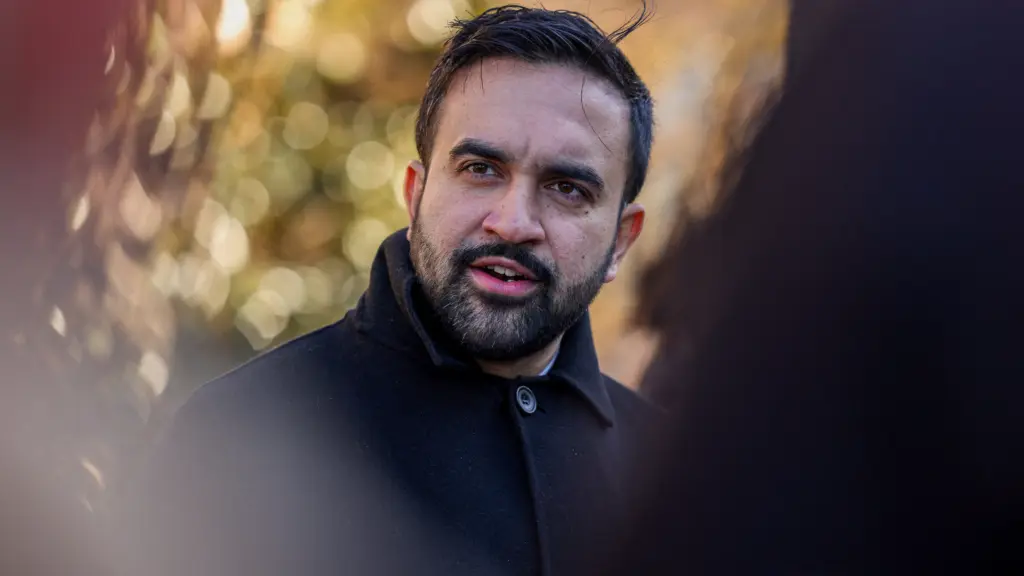






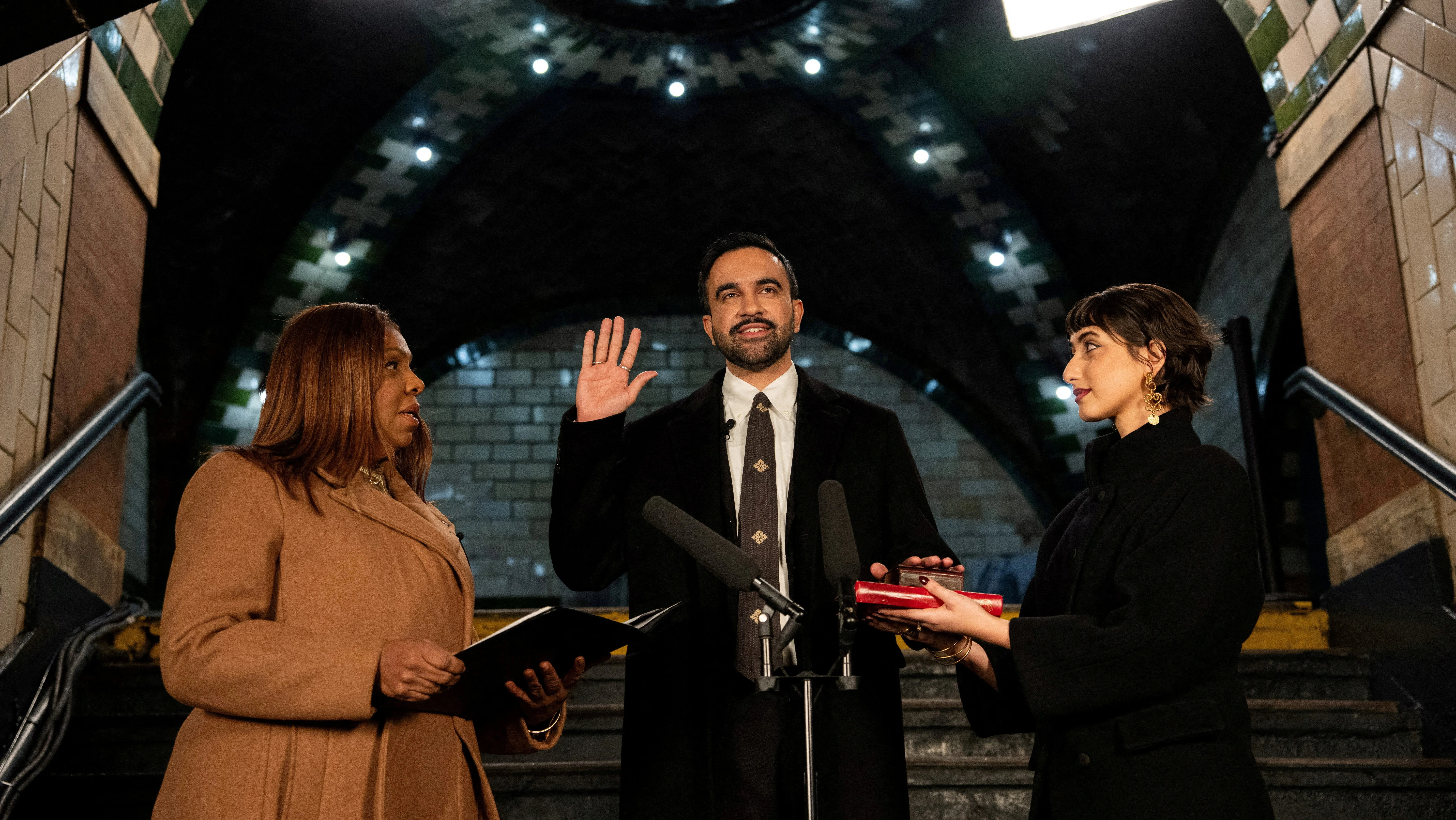
Zohran Mamdani is sworn in as mayor of New York City, flanked by his wife Rama Duwaji and New York Attorney General Letitia James, at Old City Hall Station, New York, U.S., Thursday, Jan 1st 2026. Amir Hamja/Pool via REUTERS TPX IMAGES OF THE DAY
(New York, New York) – In another sharp departure from City Hall tradition, new Mayor Zohran Mamdani chose to be sworn into office on the Quran rather than the Bible – the first mayor in New York City history to do so. The midnight oath, administered inside the long-closed Old City Hall subway station, was framed by Mamdani’s team as a celebration of diversity and inclusion. To critics, however, the moment symbolized a broader shift away from the shared civic customs that have long defined the city’s leadership.
For generations, New York City mayors – regardless of party – have taken the oath of office on a Bible, a tradition rooted less in religion than in continuity and civic symbolism. The Constitution does not require any religious text at all, but the choice has historically reflected a common cultural baseline meant to unify the city during moments of transition. Mamdani’s decision to use the Quran, including a historic copy tied to his family heritage, was unmistakably deliberate and deeply personal – and, to many conservatives, overtly political.
Supporters hailed the move as historic, emphasizing that Mamdani is the city’s first Muslim mayor and arguing that the oath reflected the changing face of New York. But critics argue the symbolism goes beyond representation. Paired with Mamdani’s self-identification as a democratic socialist and his rejection of governing “norms,” the inauguration raised concerns that tradition itself is now being treated as an obstacle rather than a stabilizing force.
The choice also underscored a recurring theme of Mamdani’s first day in office: breaking expectations. From holding the official swearing-in underground to openly embracing socialism in his inaugural address, Mamdani appeared intent on signaling that his administration will not simply bend the rules, but redefine them. For supporters, that represents progress. For skeptics, it feels like intentional provocation – a reminder that long-standing customs may no longer hold weight under the new leadership.
Whether viewed as inclusion or disruption, the moment marked a clear turning point. Mamdani did not merely assume office; he reshaped the symbolism surrounding it. And for a city already divided over crime, affordability, and governance, the use of the Quran instead of the Bible on day one reinforced a central question conservatives are now asking: if tradition is dismissed at the inauguration, what guardrails remain once governing truly begins?