






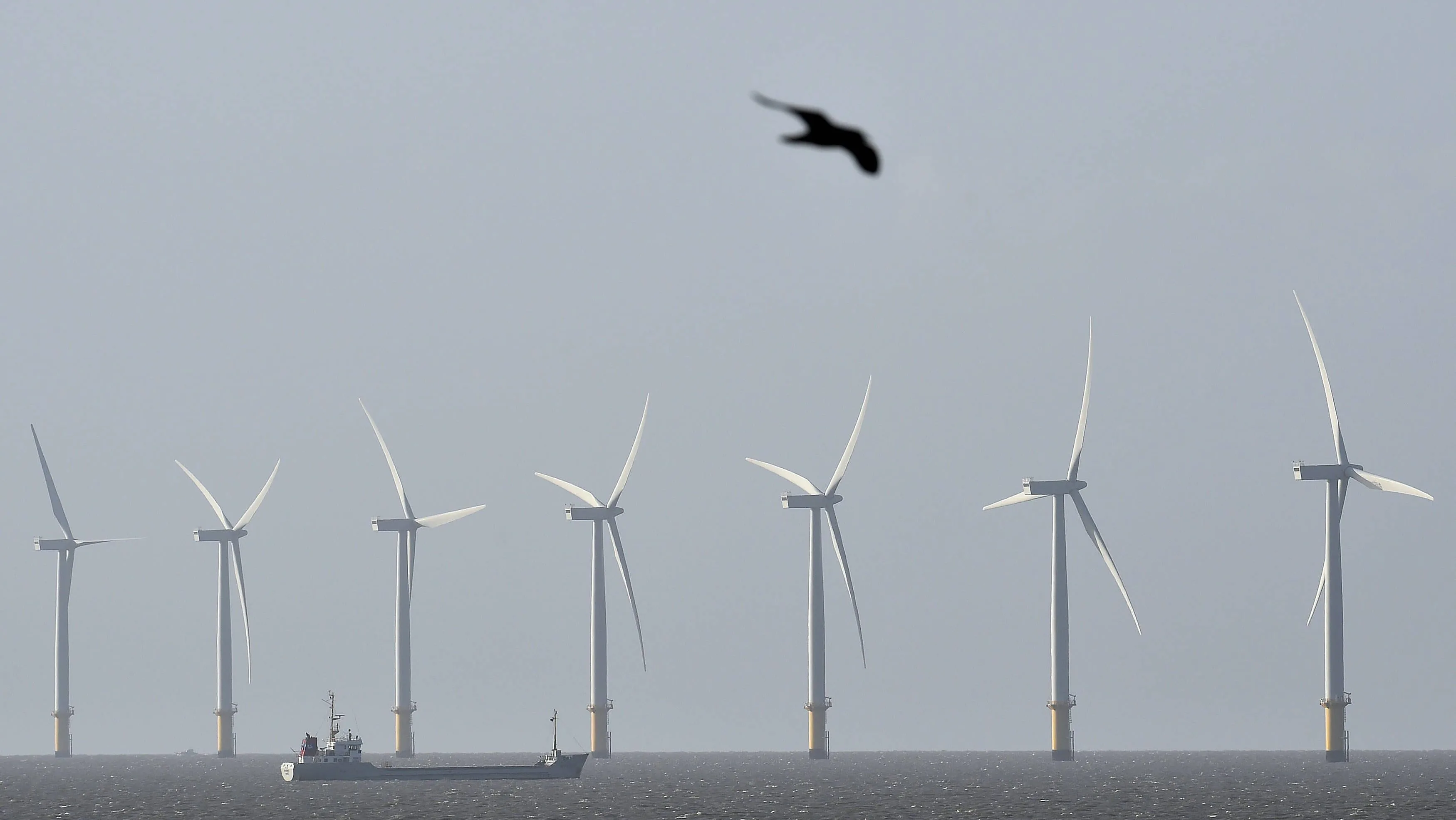
A cargo ship passes in front of an off-shore wind farm in the English Channel, south east England, August 29, 2014. © REUTERS/Toby Melville
(Montauk, NY) – Off-shore wind projects are a dream of many leftists. The stated upside for wind power is that it represents “clean” energy — and given the planet’s ability to endlessly generate wind — it seems like a no brainer. So why did many activists (successfully) rally against the projects in and around New York City — including 77 WABC owner-operator John Catsimatidis?
There are many reasons. Aesthetics, for one. The beautiful shoreline enjoyed by beachgoers on Long Island and along the Jersey Shore have been threatened by wind turbines, some of which stretch 30 to 40 feet into the sky. The risk to wildlife and marine life has also been a point of focus. Bonnie Brady has been executive director of the Long Island Commercial Fishing Association in Montauk for over 12 years. She notes off-shore wind projects will kill whales, ground ships — and there’s other risks.
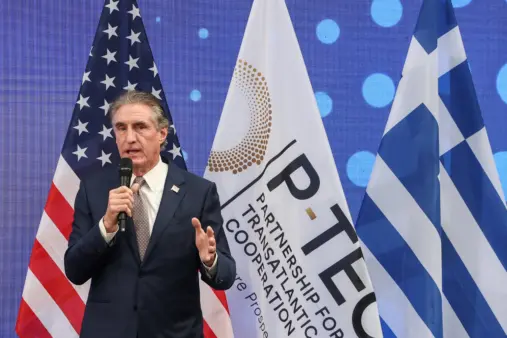
Now, it seems the Trump Administration agrees with the “other risks” category in particular. Secretary of the Interior Doug Burgum cited national security concerns while suspending five leases for off-shore wind projects on Monday, December 22.
The projects affected include Orsted’s Revolution Wind and Sunrise Wind projects — both located off the coast of Martha’s Vineyard, and Montauk — respectively. Avangrid and Copenhagen Infrastructure Partners’ Vineyard Wind 1 project, Dominion Energy’s Coastal Virginia Offshore Wind, and Equinor’s Empire Wind 1 project — located south of Long Island — and that’s according to a press release.
New York Governor Kathy Hochul and Connecticut’s Attorney General William Tong said both their states will review the legal options available to them. Hochul railed against the pausing of the leases, arguing thousands of jobs will be lost. Yet the economic impacts and environmental fallout are seemingly secondary to the safety aspect, according to Secretary Burgum. He mentioned the way off-shore wind turbines can cause radar to malfunction.
Brady, who has been outspoken about the impact on wildlife as a result of her position with commercial fishermen, agrees with the national security aspect of the decision. While admitting she was very happy to see the leases suspended, Brady noted the way wind turbines can hamper radar. Apparently the turbines are two to three times taller when used off shore as opposed to on the mainland. In essence that creates a “forest of steel” that some radar systems cannot see past. Echoes are sent back to the radar systems, resulting in “false targets” being identified.

More specifically, Air Traffic Control systems, NORAD, and even technology used to track tornadoes can be impacted by wind turbines. General weather radar can also fouled up at times. And in Sweden, officials have blocked some wind turbine projects — because of the way it allows drones to move in undetected. Or, at the very least, the turbines can cause a delayed response time to attack drones.
The “radar clutter” concern echoes earlier Department of Defense reports warning of such risks in areas with line-of-sight to defense installations. Much like with cell phone signals — large, steel turbines can interfere with “line of sight” systems.
Setting aside the national security concerns, which the Trump Administration listed as the main reason for suspending the leases, environmentalists are undoubtedly pleased. Wildlife advocates have long discussed the alleged harms to marine life — including disruptions to whale migration patterns from construction noise. There’s also the potential for birds to crash into the turbine blades, and ecosystem changes affecting dolphins — and other species.
Earlier this year, protesters argued that increased whale strandings can be traced to wind farm development. But federal agencies and scientists, including the NOAA, have maintained there is no credible evidence linking the projects directly to whale deaths — or significant marine mammal harm. Potential impacts include temporary disruption of fish larvae during construction, although some have said fully-operational farms could benefit some fish populations, by creating artificial reefs.
It’s also wort noting that there are lingering questions about whether or not wind power is a viable option, even if there were no security or wildlife concerns. President Trump and other conservatives have blasted off-shore wind energy as a “woke” pursuit rooted in environmental activism rather than efficiency or societal growth. In contract to the Biden Administration, Trump White House officials have focused on how off-shore wind is high cost and wasteful — not to mention less than pleasing to the eye. President Trump has repeatedly called the turbines “ugly” and “bird killers,” aligning with conservative narratives that view the projects as symbolic of overreaching green policies rather than practical energy solutions.
Supporters counter that these developments were advanced through bipartisan infrastructure laws — and represent significant investments in domestic energy independence.
Critics have routinely cited the short shelf life of these projects as an additional drawback. Performance can degrade by about 4.5% annually due to blade wear, environmental exposure, and component fatigue — leading to a 12% output reduction over 20 years, as well as increasing costs. Blades may have to be stopped up three times a year for repairs, reducing output — and rare instances of them breaking have also been reported.
Broadly stated, off-shore wind is risky for the environment and national security. Combined with the perception it’s less reliable than fossil fuels — the entire sector is in question — and so the White House suspended the five leases as 2025 came to a close.