







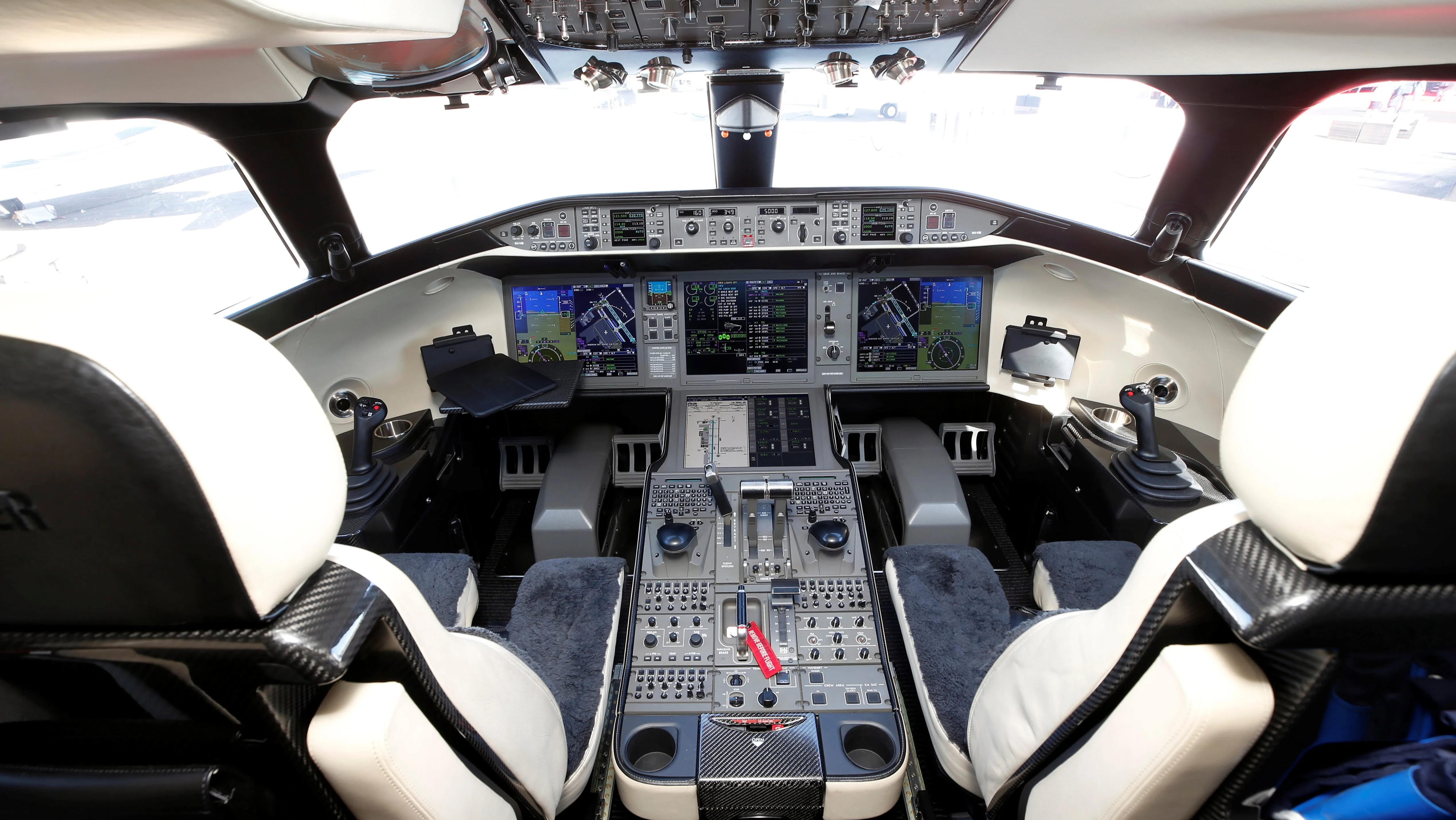
A view of the cockpit in Henderson, Nevada, U.S., October 12, 2021. © REUTERS/Steve Marcus
(Denver, CO) – It’s still not clear what smashed the windshield of a Boeing 737 jet — at 36,000 feet in the air. The incident unfolded last week on a United Airlines flight from Denver to Los Angeles, ultimately forcing an emergency landing in Salt Lake City. Photos that have been posted online show one of the plane’s pilots was left cut and bruised — wounds that are typically caused by shattered and flying glass.
Separate photos show broken glass covering the cockpit and dashboard. There are also scorch marks where the impact occurred with that mystery item. Some online commenters have suggested it could have been space debris or even a meteor that hit the jet. It’s certainly a remarkable incident, if that’s what happened. The New York Post reports the FAA has calculated the odds of space debris causing an injury during a flight are 1 in 1 trillion.
For sure, an electrical malfunction could cause the windshield to crack, but experts say the scorch marks make a strike more likely. The jet was at an altitude where other types of strikes (birds, hail, etc.) are considered less likely. And, space debris itself is becoming more common: NASA currently tracks over 25,000 pieces that are larger than four inches.
Reports say the jet remains grounded in Utah. United Airlines released a statement: “On Thursday, United flight 1093 landed safely in Salt Lake City to address damage to its multilayered windshield. We arranged for another aircraft to take customers to Los Angeles later that day and our maintenance team is working to return the aircraft to service.”