





Scientist examining virus structures on screen-immune system discoveries
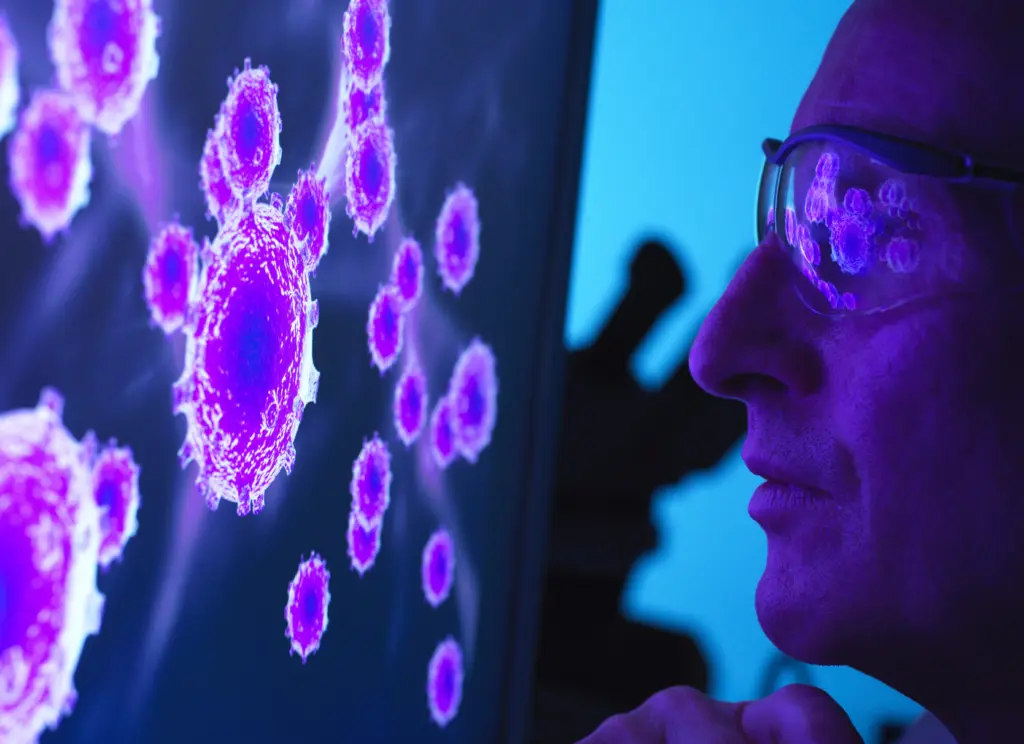
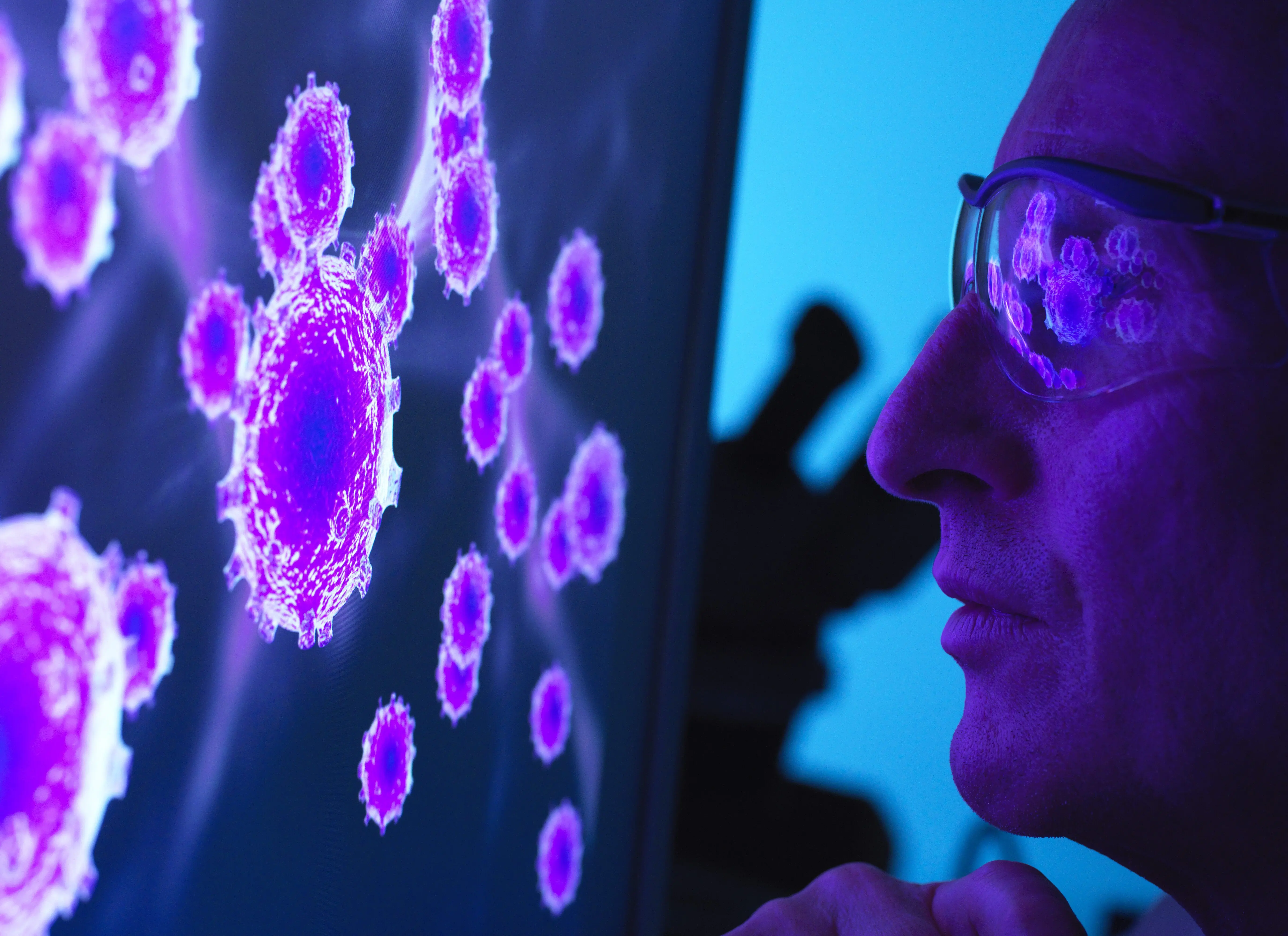
Scientist viewing a image of virus using a electron microscope in the laboratory.
The 2025 Nobel Prize in Physiology or Medicine went to Mary E. Brunkow, Fred Ramsdell, and Shimon Sakaguchi for discoveries that explain how the immune system restrains itself, a safeguard known as peripheral immune tolerance. Their work clarified why immune defenses normally avoid attacking healthy tissues and how failures in this restraint can contribute to autoimmune diseases. (Nobelprize.org)
Beyond the Thymus Gland
For decades, immunology emphasized the thymus gland’s role in training developing T cells (central tolerance). The laureates’ research established that control mechanisms also operate outside the thymus (peripheral tolerance), Adding an important step in how the body avoids attacking itself. Nobelprize.org
The Treg Discovery
Back in the 1990s, Dr. Shimon Sakaguchi discovered a special group of immune cells called regulatory T cells, or Tregs. These cells act like peacekeepers, helping to keep the immune system from going too far and attacking the body’s own healthy tissues—a problem often seen in autoimmune diseases. (Source: Nobelprize.org)
The FOXP3 Gene Breakthrough
A few years later, in 2001, scientists Mary Brunkow and Fred Ramsdell found a key gene, called FOXP3, that tells these peacekeeping Treg cells how to work. When this gene is faulty or missing, the immune system can lose control and start attacking the body, leading to serious autoimmune disorders. This discovery helped scientists understand both the genetic and cellular “switches” that keep the immune system in check. (Source: Nobelprize.org)
Why it Matters
These discoveries show that the immune system doesn’t just fight off infections, but it also has built-in controls to stop it from attacking the body itself, a key idea in understanding autoimmune diseases.(Scientific American)
From discovery to therapy
The discovery of Tregs and the FOXP3 gene has inspired a surge in research aimed at turning this knowledge into treatments. Reporting indicates over 200 clinical trials exploring Treg-based or tolerance-shaping strategies across autoimmunity, transplant acceptance, and cancer. Companies and academic groups are testing ways to expand, engineer, or modulate Tregs for durable, targeted immune control. (Reuters)
Personalized immune medicine
The laureates’ work suggests a bright future in which doctors may not simply suppress the immune system, but balance and fine tune it. Early diagnostics could detect immune imbalance long before symptoms manifest, allowing preventive intervention.
Sources: NobelPrize.org press release & background; Reuters news coverage Reuters; Scientific American explainer(Scientific American); Science/AAAS reporting; Nobel “Popular” and “Advanced information” pages. (Nobelprize.org)