







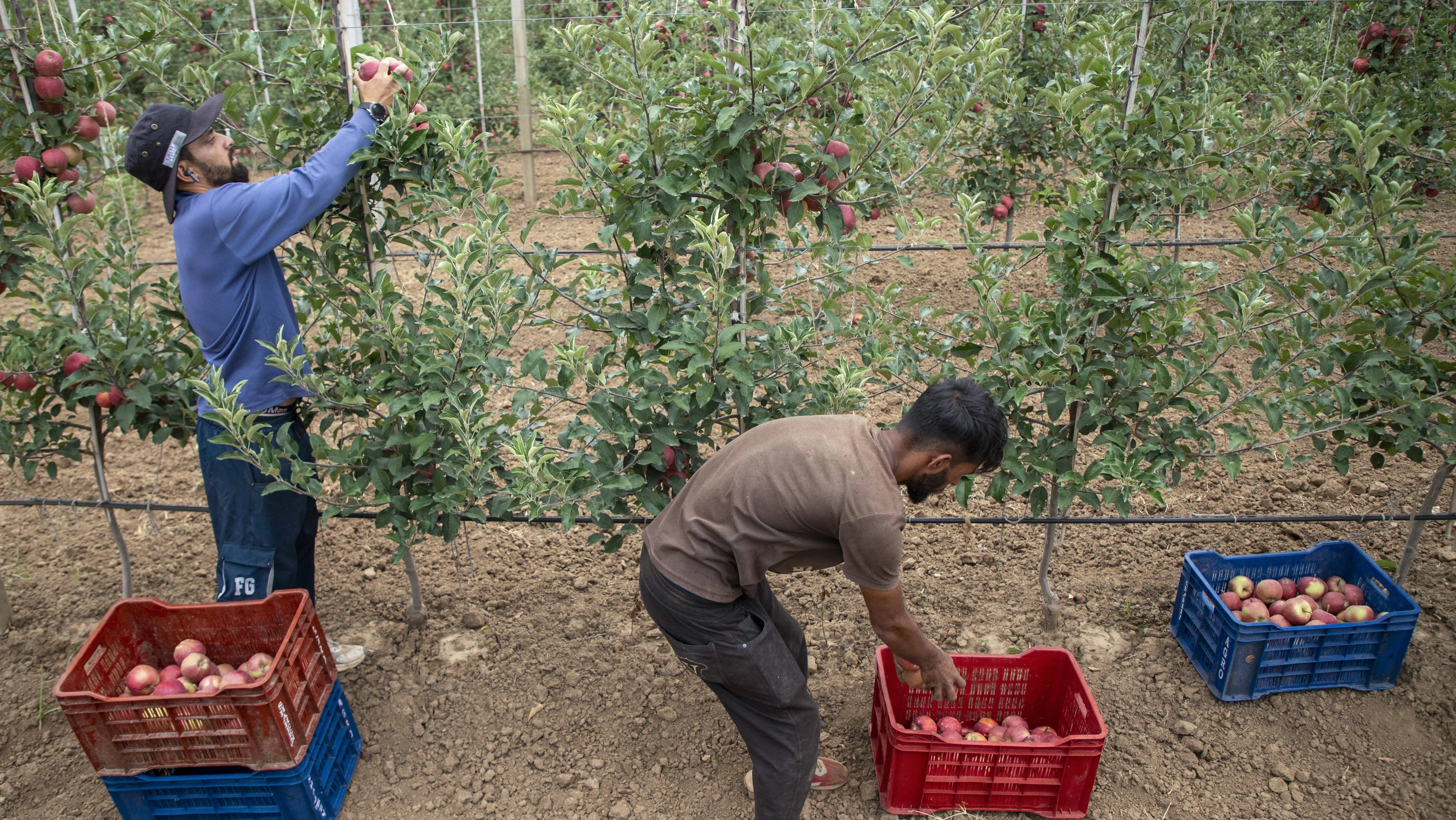
Kashmiri farmers harvest hybrid apples at an orchard in Pulwama district, south of Srinagar. Apple growers in Indian-administered Kashmir have raised concerns amid tariffs and trade talks. © Faisal Bashir / SOPA Images/Sipa USA
(Washington, DC) — President Trump’s sweeping slate of tariffs has taken effect. Import taxes will reach levels not seen in the country in almost 100 years, with over 60 countries and the European Union facing rates of 15 percent or more. A wide variety of products will be affected ranging from appliances, cars, food and furniture. In a post on Truth Social just after things went into effect, Trump said billions of dollars are “now flowing” into the U.S. The tariff range will vary, depending on where trade talks stand with each country. Deals have yet to be hammered out with some key U.S. trading partners, including Mexico and Canada. The President has been complaining for months about the trade imbalance, claiming the U.S. has been getting “ripped off” for decades.
Treasury Secretary Scott Bessent says President Trump’s tariffs should boost American manufacturing over the “next couple of years.” According to Bessent, the Trump administration is seeing “very large commitments” with “trillions of manufacturing” that’s expected to return. The tariffs will impact shipments of goods from both trading allies and adversaries.
Trump slapped an additional 25% tariff on India, one of the main producers of Apple’s flagship iPhone. Apple CEO Tim Cook met with President Trump today (August 6th), to announce 600 billion dollar investment over the next four years in U.S. manufacturing. Part of the investment includes new facilities in Texas, Arizona, Utah, and New York.

The move on India would take effect Aug. 27, and will increase the total US tariff rate on India to 50% . It comes ahead of Trump’s Friday deadline for Russia to make peace with Ukraine or else face secondary tariffs or sanctions — penalties on countries that continue purchasing energy from Moscow.
At 50%, India would face one of the highest import tariffs levied by the U.S. on any country. Other nations facing similar high tariffs include Brazil at 50%, Syria at 41%, Myanmar at 40%, and Switzerland at 39%.
India’s Ministry of External Affairs pushed back in response to the latest tariff escalation, stating that the Trump administration’s targeting of India over Russian oil imports was “unjustified and unreasonable” and that it “will take all necessary measures to safeguard its national interests and economic security.” India has previously claimed that its purchases of Russian oil were made with the knowledge and backing of the United States.
India is the second-largest importer of Russian energy after China. Trump has singled out India in recent days, but New Delhi has been defiant in the face of his duty threats. “Like any major economy, India will take all necessary measures to safeguard its national interests and economic security,” India’s foreign ministry said in a statement earlier this week responding to Trump.
President Donald Trump said last Wednesday (Aug 6th) that he will impose a 100% tariff on computer chips, likely raising the cost of electronics, autos, household appliances and other goods deemed essential for the digital age. The president said that companies who make computer chips in the U.S. would be spared the import tax.