




© Jack Gruber-USA TODAY + © Yuri Gripas / Abaca Press / SIPA USA
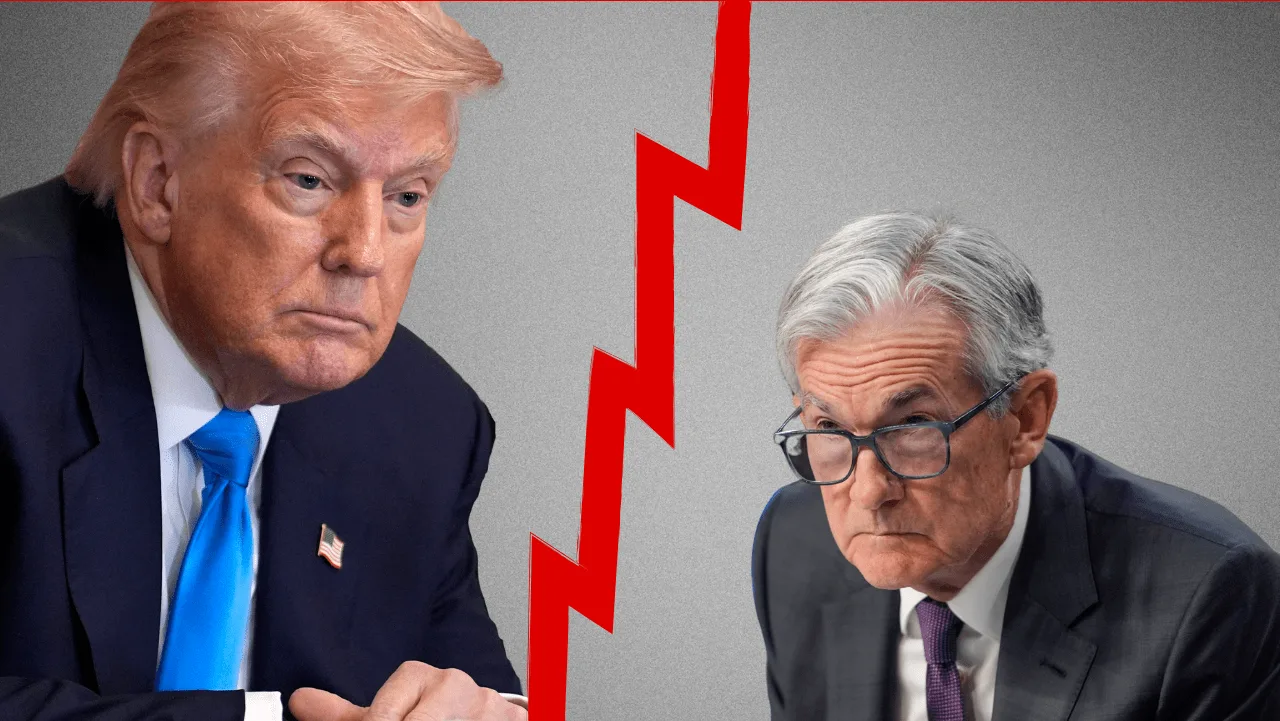
(Washington, DC) – It remains murky as to whether or not President Trump has the ability to fire Federal Reserve Chair Jerome Powell. On a straight-forward basis, the Fed chair is not subject to termination — but rather serves out a specific term, after being appointed. And, during first term, Trump appointed Powell. His term is up in another nine months.
But there’s another possibility. Namely, any cental bank chair can be fired “for cause,” and some have said that could happen in Powell’s case. A $2.5 billion renovation is underway at the Federal Reserve — and some have blasted Powell for the price tag, as well as alleged cost overruns. So there exists the possibility that Powell could be ousted prior to the end of his term — though the chair has showed no willingness to step down, up to this point.
No matter the mechanics of Powell’s perceived lack of job security, why is there beef between him and the president? It comes down to rates and how the central bank controls the effective “price” or borrowing money. As inflation ran rampant during the COVID pandemic and resulting supply chain inelasticity, Powell and Biden White House officials said the situation was “transitory.” The argument was made — including by New York Times columnist Paul Krugman — that inflation would quickly work itself out. Many have noted the folly of that assertion, given inflation hit numbers that hadn’t been seen in 40 years.
And so, despite the earlier claims of “transitory,” inflation proved sticky — and the Federal Reserve acted. Beginning March of 2022, the central bank enacted 11 rate hikes — taking on a hawkish policy following years of “easy money.” The central bank always looks to balance its dual responsibilities of keeping inflation in check and protecting the job market. Progress was made in terms of slowing inflation — which took off after COVID stimulus money resulted in the classic conditions of “too many dollars chasing too few goods,” in the market.
Now, following several rate cuts enacted during the Biden Administration, inflation is close to the Fed’s 2% target, on an annual basis. Still, the central bank refuses to cut rates further. Following a 25 bps cut in December of last year, the Fed has opted to hold rates steady since. That’s frustrated President Trump who has suggested Powell’s decision making is rooted in politics. Trump has also argued the US economy would “take off” if rates were cut — and he maintains the situation has led to a stagnant housing economy. Mortgage rates remain elevated and would-be sellers are arguably less willing to sell, because any new acquisition would be at a higher rate than their current note.
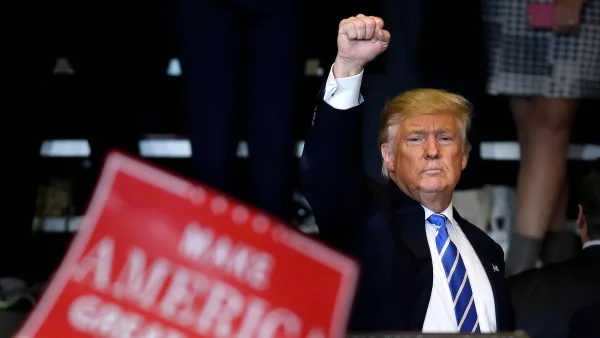
At the Fed’s July meeting of the FOMC (Federal Open Market Committee) — rates were again held steady. President Trump said he has heard a rate cut will be enacted at the September meeting. This would fall in line with Powell’s position — as he has said uncertainty over Trump’s tariffs argue for restraint. But past the August 1 deadline, that situation could become more clear.
Numerous economists have come out in support of Trump’s comments regarding Powell. Larry Kudlow, heard on Saturday afternoons on 77 WABC, recently asked “what are we waiting for?,” on his Fox Business show. Owner-operator John Catsimatidis has consistently railed against Powell for being slow to cut rates.
With tariffs and trade coming into focus — especially as we move into August — the pressure will be on the Fed to cut rates. It’s also true that the US government continues to take in revenue as a result of tariffs. And to date, the most extreme “sky is falling” scenarios have not come to pass. It’s almost as if having a president with a deep understanding of markets, business, and economics helps the nation’s residents.