





© Steve Heaslip /Cape Cod Times / USA TODAY NETWORK
(New York, NY) – Windmills are old technology. It would have been sometime around the year 700 AD when windmills first emerged — in Persia (modern-day Iran) — to grind grain and move water. Now, the old tech is generating controversy — by being placed in the water, off shore.
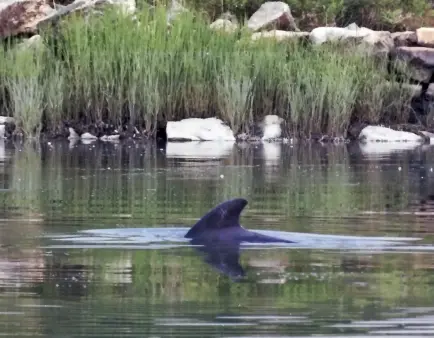
Beginning in early 2022, dead whales starting popping up in the waters off New York City — out in Long Island, and down along the Jersey Shore. Immediately, environmentalist groups rushed to the defense of wind turbines — attempting to bat down the idea that they could be causing health issues with whales.
But there’s a lot of reasons to think that wind turbines and off-shore energy products are highly disruptive to the environment. There’s the noise factor: installing wind turbines, specifically pile-driving, generates a significant amount of high decibel low-frequency underwater noise. Given the fact that large whales hear in low-frequency sound — this can be deadly. It can also mean disrupted communication between pod members, decreased mating, difficulty when migrating, added stress — and disorientation.
An outsized number of whale deaths were recorded in the last three years, all while multiple offshore wind survey vessels and construction projects were operating along the east coast. And the consensus among marine mammal “experts” was that whales were being struck by passing ships. They suggested this could be a result of more baitfish in the water causing whales to enter areas they had not migrated into
before — among other things. But blasting equipment and the installation of underground piles doesn’t just create noise — it’s absolutely destructive to the existing marine ecosystems in our oceans.
Some scientists have described the way “kill zones” are created by seabed mapping equipment — and they can spread out up to a mile and half wide. This can harm the plankton some species of whale rely on for their primary food source.
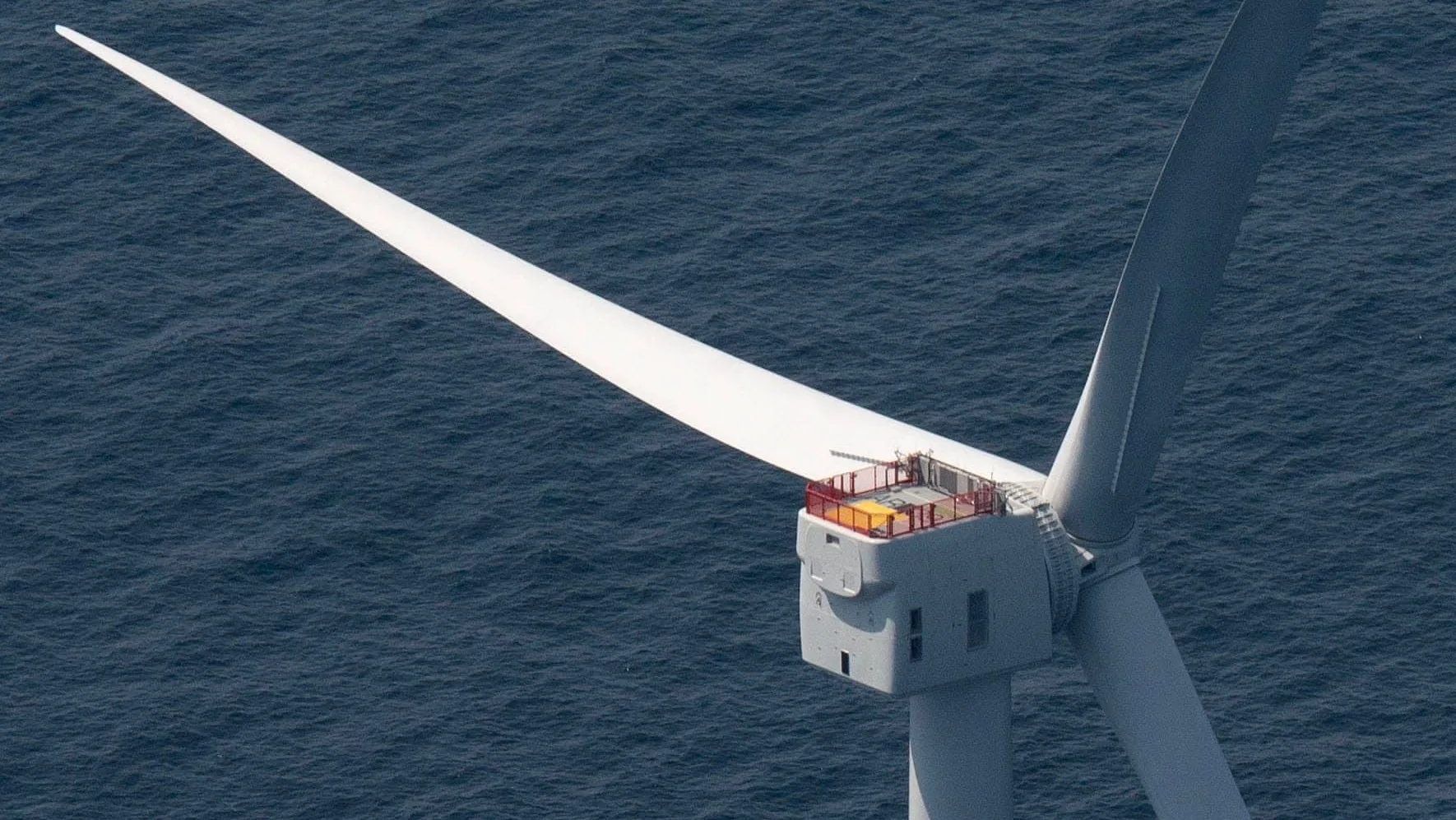
And it’s not just whales and dolphins that are impacted. Obviously, the wind turbines rise high into the sky — those being constructed now are between 850-965 feet tall — approximately the height of the Chrysler building— so our planet’s winged creatures are also at risk. That’s something President Donald Trump noted while commenting on wind turbines in Scotland.

Trump pointed out that individuals risk arrest and prosecution if they kill bald eagles in the US — but there’s no corresponding level of accountability for companies that set up wind turbines. As for marine life, activists opposed to the wind turbines note they’ve been set up in areas that are important for marine ecosystem-wide feeding and migration. This includes the areas south of Martha’s Vineyard and Nantucket, down to South Carolina. Endangered species such as the North Atlantic right whale is especially at risk — and the species has been among those washed ashore in the past three years — in and around wind turbines lease areas being surveyed or constructed.
The National Oceanic and Atmospheric Association has acknowledged the potential that wind turbines could be a factor in whale deaths. Their website has a section discussing the unusual number of Humpback whale deaths dating back to 2016. Still, there is no definitive consensus among the scientific community as to what is causing the deaths. Some have shown signs of entanglements with fishing nets and vessel strikes — which could be impacted by diminished hearing and disorientation. Level B harassment, which is allowed by NOAA, includes inducing “Temporary Threshold Shifts” in hearing, otherwise known as temporary deafness.
In an overarching way, many who are concerned with or outright opposed to offshore wind turbines suggest a lack of transparency is apparent. Many federal agencies are arguably incentivized to downplay any link between offshore wind power (a “green” technology) and something destructive, such as whale strikes. Stated plainly — anything green is considered “virtuous” — and potentially profitable. Green initiatives mean more government jobs, new agencies — and contracts that go out to companies, including offshore wind energy firms.
To be clear, there are also outspoken offshore wind power proponents who insist there’s no link between the wind turbines and sea mammals being killed. This includes the Marine Mammal Commission, which suggests there’s no definitive link. Other peer-reviewed studies have come up with the same conclusion.
Mitigation efforts have been set up in a bid to reduce the potential impact of wind turbines when it comes to sea life. Bubble curtains have been set up near the pilings themselves. Whale-spotting observers are employed to try see the whales before pile driving begins, and steer vessels away from the mammals. When seasonal patterns of migration are a concern, construction has been paused in spots.

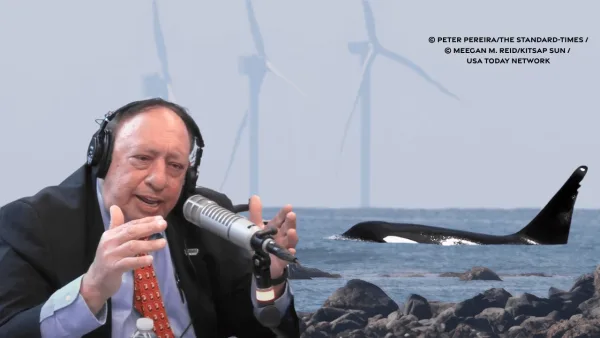
On 77 WABC, standing up in defense of animals is a passion. That’s been true during the defense of ostriches in Canada, and now amid renewed focus on off-shore wind farms. Health Secretary Robert F. Kennedy Jr. joined owner-operator John Catsimatidis on his radio show recently and noted how many many Humpback whales have been killed. The pair also discussed how inefficient wind power is, with Kennedy Jr. notably saying “The energy that they produce is three times the cost of an onshore wind plant. They make no economic sense.” President Trump raised similar concerns during his comments in Scotland.
Trump has also pointed out the wind turbines themselves are wasteful in terms of their shelf life. “When they start to rust and rot in eight years you can’t really turn them off, you can’t burn them. They won’t let you bury the propellers, the props, because there’s a certain type of fibre that doesn’t go well with the land.” In response to that point, left-leaning news outlet The Guardian countered “actually they last up to 20 years.” Wow! Well in that case, forget our objections altogether! And — allow me to bury my sarcastic spirit for this one — the Guardian wholeheartedly agreed with Trump that the turbines are made in China.
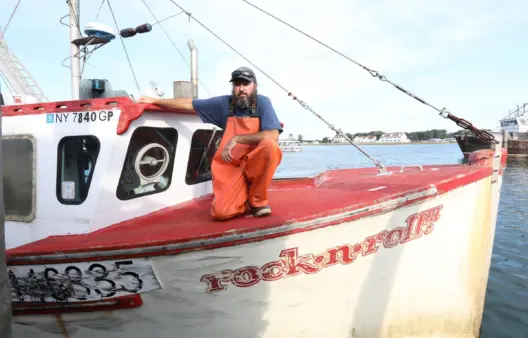
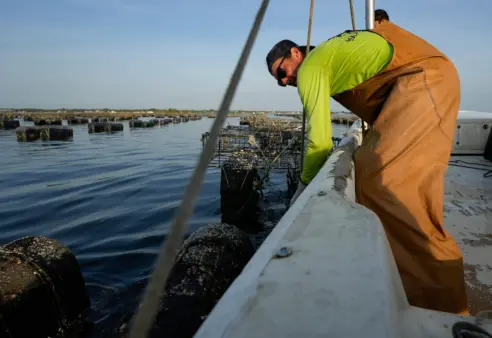
That means they present problems in terms of national security and the economic — as well as the potential environmental risk. Plus, it’s not just crunchy, hippy, tree huggers who are paying attention to this. Blue collar workers, such as the fish mongers at Fulton Fish Market in the Bronx, have rallied in opposition to off-shore wind projects — such as the Empire Wind Project. The group hopes President Trump can stop the whole thing.
The cliches and long-standing tropes are appropriate to list here: we only get one planet. As long as we have our health, we have everything. Take care of mother nature. Of course, we also yearn for progress and realize the need to come up with more and more energy in our modern times. But can we really risk destroying our beautiful shorelines, and the oceans that give us life? Said differently, you don’t destroy the environment to save it.
Birds being knocked from skies, whales being battered among the waves — and inefficient power production as a result. That hardly seems like good sense, or effective policy. Keep the lights on, sure. Grow the economy, of course. But save the whales! It’s a prerequisite from which we aren’t willing to budge.
LISTEN to more on the off-shore wind turbine issue: