





© TOM KISKEN / THE STAR + © Alicia Devine/ Tallahassee Democrat / USA TODAY NETWORK
(Louisville, KY) – Could you ever imagine a doctor harvesting organs from a living patient? Sadly, this isn’t the plot for an upcoming horror film. Following an investigation into a Kentucky organization — it appears to be a macabre and grisly reality.
The Department of Health and Human Services now has plans to reform the entire country’s organ donation system, as a result of this disturbing discovery. A four-year investigation touched off back in 2021, when the case of Anthony Thomas “TJ” Hoover II came to light. The Kentucky man was admitted to Baptist Health Richmond hospital — suffering from a drug overdose. He eventually was declared brain-dead, and — in accordance with his wishes — plans were made for the donation of his organs.
But while plans were being made, in tandem with Kentucky Organ Donor Affiliates, Hoover was showing signs of life. These included the patient opening his eyes, tracking movements in his room, thrashing on the bed, crying visibly, and even pulling his legs up to his chest. Despite all of this — allegedly — KODA pushed for the start of surgery. A living, breathing patient was being treated as nothing more than spare parts — if the allegations are to be believed.
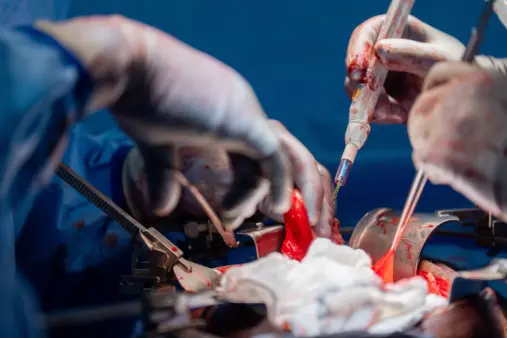
The Health Resources and Services Administration (HRSA) headed up the investigation, which came to a close this March. In all, around 350 cases of “incomplete organ donations” were examined. That vague term apparently refers to any patients who were prepped for organ removal — only for it to not happen.
Our findings show that hospitals allowed the organ procurement process to begin when patients showed signs of life, and this is horrifying. The organ procurement organizations that coordinate access to transplants will be held accountable. The entire system must be fixed to… https://t.co/DeiFa2FlEJ
— Secretary Kennedy (@SecKennedy) July 22, 2025
But the real bombshell lies in what investigators say they found while examining those individual cases: upward of 100 patients had concerning “red flags” in their files — and as many as 30 people could have still be alive when organ harvesting began.
Take Hoover’s case, for example. Staff at the Kentucky hospital expressed their discomfort with the situation, per reports — and some even said the entire situation was akin to “euthanasia.”
Certainly, the debate over assisted suicide and what to do when patients’ near the end of life — often painfully — is a robust one. Around the Tri-State, “mercy killing” or “physician assisted suicide” is legal in New Jersey and Connecticut. Pending legislation will allow for the same in New York.
As for Hoover — his organs were never harvested. A doctor stepped in and halted things — after noticing the patient was moving and even groaning — while being transported to the operating room. It’s still been a long road for Hoover after narrowly avoiding that horror. He’s faced struggles walking, talking, and with memory recall — requiring constant care from his sister. Still, organ donation is intended to help extend lives, not lead to a devastating end for a living patient.
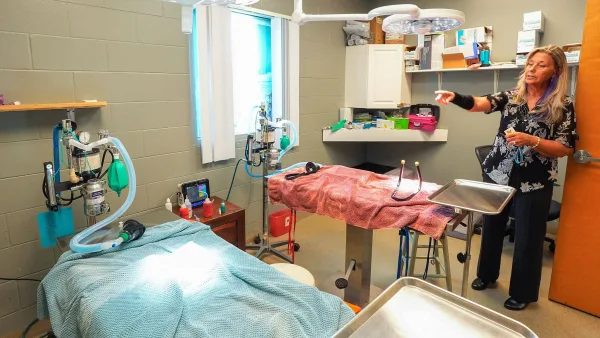
The question now turns to how hospitals, family members, and networks like KODA deal with organ donation. Is there undue pressure on people to authorize the donations — outweighing even basic medical concerns? Are family’s wishes not being honored when it comes to organ donation? Certainly the concept of a still-living person being cut open in order to harvest organs is horrific and devastating — but does the problem go even deeper?
As of this week, the US Department of Health and Human Services (HHS) has announced reforms to the organ donation system to address these safety lapses and restore public trust. Some key measures include:
-
- Mandating regular neurological assessments for potential donors.
- Requiring OPOs to adopt formal procedures to halt donations if safety concerns arise.
- Creating a website for reporting concerns about the organ donation process.
- Conducting a “root cause analysis” of failures at Network for Hope.
As for KODA, and parent company Network for Hope — the organization says it is “fully committed to transparency,” while complying with Centers for Medicare & Medicaid Services regulations. They also note the implementation of additional safeguards — such as checklists for nurses and physicians, as well as an explanatory video to clarify roles in the donation process. Network for Hope is also conducting its own investigation.
Sadly, in situations like this it’s never just the immediate patients and family’s involved who are negatively impacted. Posts on social media indicate the situation has made people feel less confident in organ donation, and it could mean fewer willing donors in the future. Of course, there’s an argument to be made that some of these donation centers are under so much pressure to come up with organs due to overwhelming demand. Still — others will wonder (and worry) financial gain is the main motivator.