





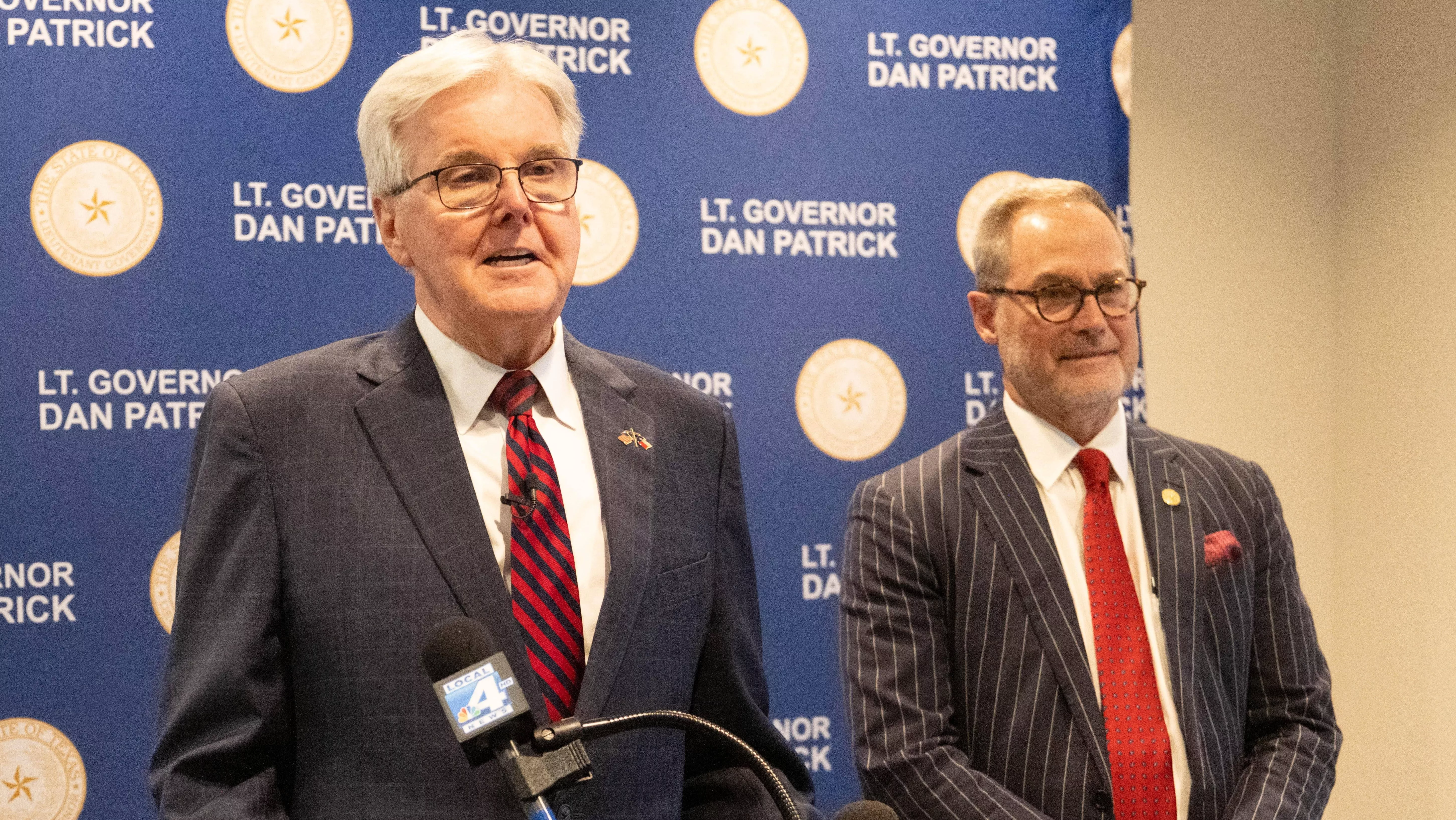
Lt. Governor Dan Patrick defends Ten Commandments class room bill during his June 10 Amarillo visit. © Michael Cuviello / Amarillo Globe-News / USA TODAY NETWORK via Imagn Images
Syndication: Amarillo Globe-News
(Baton Rouge, LA) – A significant ruling has been issued in the ongoing dispute over Louisiana’s Ten Commandments law. The law, signed by Governor Jeff Landry in June 2024, mandated that every public school classroom and state-funded university classroom display a poster of the Ten Commandments by January 1, 2025. But a federal appeals court in Baton Rouge upheld a lower court’s ruling — blocking their display.
The appeals court declared the law is “facially unconstitutional” for violating the First Amendment’s Establishment Clause, which prohibits government endorsement of religion. Originally, a lawsuit challenged the law — as initiated by a coalition of parents from diverse religious backgrounds, including Christians, Jews, and nonbelievers. They argued that the mandate infringed on their First Amendment rights and imposed religious beliefs on students.
The blocked law, known as House Bill 71, required an 11-by-14-inch poster of the Ten Commandments in a “large, easily readable font,” accompanied by a four-paragraph “context statement” asserting their historical significance to US law. Proponents, including Governor Landry and Republican lawmakers, argued that the Ten Commandments are a foundational historical document, not solely a religious text, and cited a 2005 Supreme Court ruling permitting their display in certain government settings. However, opponents, represented by groups like the ACLU, Americans United for Separation of Church and State, and the Freedom From Religion Foundation, contended that the law lacked a secular purpose and effectively coerced students into exposure to a specific religious doctrine.
This ruling sets the stage for a potential Supreme Court showdown, as Louisiana officials, including Attorney General Liz Murrill, have signaled their intent to appeal, possibly as early as January 2025. The case could test the current Supreme Court’s stance on church-state separation, especially given its recent rulings favoring religious expression in public settings.